
Infrastructure
Malaga works on large-scale incinerator plans due to EU restrictions on burying waste in landfills
After recent visits to facilities in the UK, the provincial authority and western Costa del Sol municipalities are leading the initiative, highlighting the plants' environmental safety and energy production capacity
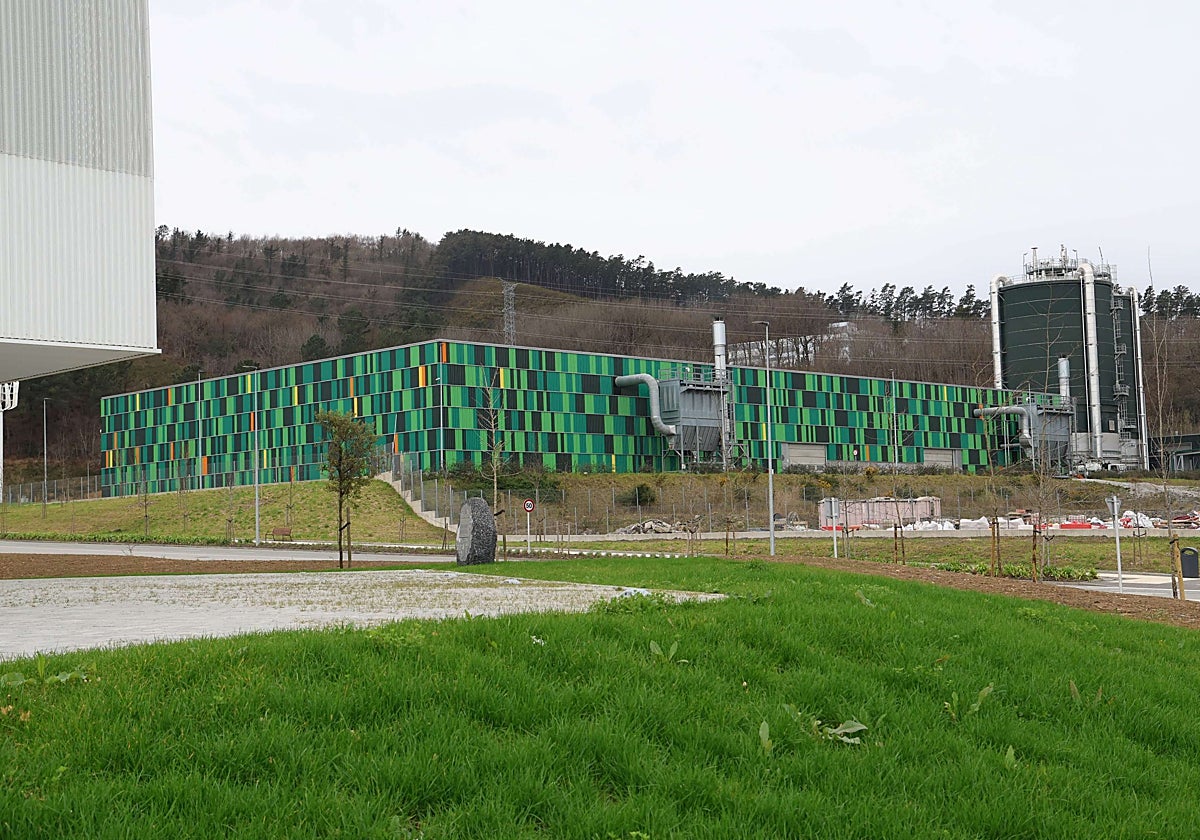

The European Union's waste management requirements are very strict and follow a set timetable. They include, for example, the requirement that municipalities pass on the full cost of collection and treatment through waste disposal fees. Another regulation concerns the ban on taking waste to landfills, which is currently subject to a tax. Malaga province's landfills are anyways reaching the end of their useful life, which has led authorities to consider the construction of large incinerators that would also generate energy.
State-of-the-art waste plants
We are talking about large installations with high costs, ranging between 200 and 300 million euros, depending on capacity. However, it is not their cost that most worries the authorities: it is the exhaustive environmental procedures that must be carried out, as the idea is not to build the plants that release large clouds of smoke, but rather to follow European models that create architectural structures, sometimes with public spaces and sports facilities such as climbing walls.
The provincial authority sets the pace
The three main environmental centres in Malaga province are Los Ruices (Limasam, Malaga city council), Casares (managed by Urbaser for the Mancomunidad Occidental) and Valsequillo (managed by the same company with FCC, for the provincial authority).
Luis Rodríguez is a provincial deputy and president of the waste corporation. The provincial authority is the first institution to have taken a step in the EU's direction.
10% target
The provincial body is considering carrying out the necessary procedures within the existing environmental centres. Otherwise, procedures would be multiplied, although no option is ruled out at the moment. Rodríguez says that they are already working on fine-tuning proposals, with the help of Urbaser's technical knowledge. However, he states the need to have an Andalusian map.
Mancomunidad's and the provincial authority's presidents visited two facilities in the UK a month ago
The aim is for these plants to bring Malaga closer to the European objective to increase recycling. Only about 10% of whatever waste is not recycled should need to be buried in a landfill after screening. This would also extend the landfills' lifespan. At the moment, the capacity of Los Ruices is exhausted.
"If we set up one in Valsequillo, we could provide service to at least part of Cordoba," Rodríguez says, alluding to the need for a global vision. He provides an example with Catalonia, where the Mataró plant is only 150 metres from the beach, with a university nearby, although nobody realises that the waste infrastructure is even there thanks to its environmental model. Rodríguez also points to other plants, like Sogama in Galicia for example, where "waste is transported by train", which limits road traffic.
Energy from waste
For some time now, the provincial authority has been working on the modernisation of plants to eliminate non-recyclable waste, generate green energy and reduce the energy bill for residents.
In search of inspiration, Diputación president Francisco Salado and head of the Mancomunidad Manuel Cardeña visited two such facilities in Lincoln and Buckingham in the UK last month.
According to Rodríguez, the modernisation of plants could also benefit town halls in terms of income of between 20 and 30 million euros.
Urbaser's waste director in Andalucía Óscar Naranjo told SUR that the proposal will be discussed during a conference held on 20 November.
Planning and studies
The preliminary studies will assess how many plants and with what capacity should be located in the province. The previous waste plan expected a need for around ten plants in Andalucía as a whole.
Transport must be studied in depth. The transfer of heavy vehicles could make some service clusters unprofitable. For example, the Campo de Gibraltar and the Costa could have a joint service, but this factor makes things much more complicated.
The profitability of these plants comes from the generation of energy to be sold through the physical and chemical processes that the residual fraction of waste undergoes. Naranjo states that this is a mature, efficient technology the environmental consequences of which are perfectly controlled.
Malaga city council has still not responded to questions regarding the local government's thoughts on this plan. However, sources suggest that the city is studying another, less established formula to recover its waste.
![[]](http://static.vocstatic.com/voc26/latest/assets/images/favicon/surinenglish/apple-touch-icon-57x57.png)