
Animal welfare
Vets offer eight key measures to curb spiralling wild boar numbers in Malaga province
The local association of veterinarians has warned of at least a dozen dangerous diseases that the animals can transmit to humans, pets and livestock

Malaga
A group of veterinarians have offered eight solutions to curb the population explosion of wild boar as the animals continue to wreak havoc in many towns throughout Malaga province.
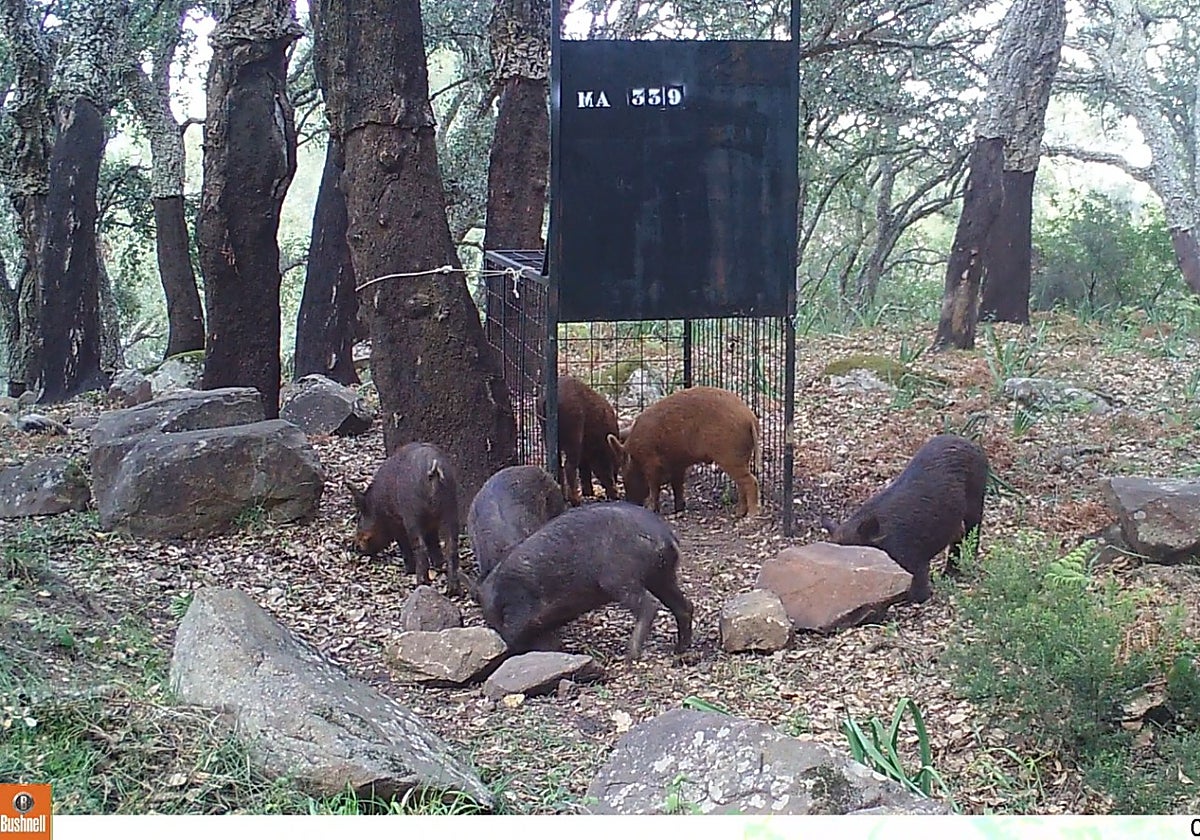
While the public sector is in favour of archers, traps, placing water troughs in their habitat to keep them away from urban areas and, in reserves and areas designed for hunting, animal lovers however, propose measures that result in less suffering such as tranquiliser darts, euthanasia, sterilisation and controlling and punishing people who feed them.
The issue came before the environment committee of Malaga city hall last week with the council looking at other options against the use of archers.
The Colegio de Veterinarios de Málaga has weighed in on the issue, offering its advice on solutions with eight key measures in a letter to administrations, seen by SUR.
Key pointers
"The wild boar is a native wild animal whose natural habitat in our province is the mountains and highlands of Malaga. In the last decade there has been a demographic explosion of these animals, increased in turn by the appearance of a new population of feral pigs (hybrids) that arise from the crossbreeding of wild boar and domestic pigs. Wild boars are wild animals that under no circumstances should live or coexist with humans in the urban environment, due to the problem they pose to public health as possible transmitters of zoonotic diseases and more likely to cause accidents/attacks with members of the public and their pets," the association said in the letter.
The vets offered eight solutions in terms of measures to control the population:
1. Intensify hunting of the animals.
2. Changes to streetscape to make it difficult for these animals to obtain food and water. For example, installing anti-tipping litter bins; eliminating swinging litter bins; changing the vegetation of roundabouts on urban fringe roads of municipalities by replacing grass with bushes. The latter reduces the need for water, bearing in mind water is a big reason the wild boar are attracted to urban areas.
3. Public education to inform residents about the risks of overpopulation of these animals. "These animals are potential transmitters of zoonotic diseases (salmonellosis, biovar 2 brucellosis, hepatitis E); transmitters of diseases common to domestic livestock (porcine pleuropneumonia, porcine circovirus type 2 (PCV2), Porcine Reproductive and Respiratory Syndrome (PRRS), Enzootic Pneumonia, lymphadenitis); to hunting dogs (Aujeszky's disease), and to wildlife (tuberculosis, trichinellosis). This is why the vets see it as key to prohibit feeding them, neither in town nor in the wild.
4. "To convey our position of opposition to the hunting of these animals with arrows by archery or crossbow, due to the suffering involved, which is a breach of the regulations on animal protection and welfare."
5. To introduce, as an alternative, the use of traps or cages in urban areas. Stunning the animals by specialised technicians and their sanitary slaughter (euthanasia) by registered veterinarians.
6. Remove the use of watering troughs for wild boar and feral pigs in the bush and/or mountain range. "These can become a source of indirect transmission of diseases among the wild boar and feral pig population itself."
7. Delimit cat colonies and shelters on the outskirts of the city to prevent wild boar access and eating the food of the cats, as well as contaminating the environment of these colonies.
8. Study the feasibility of implementing sterilisation measures among the feral pig population.
![[]](http://static.vocstatic.com/voc26/latest/assets/images/favicon/surinenglish/apple-touch-icon-57x57.png)