
Income
Which is the Costa del Sol town with the highest per capita net income in Malaga?
It is the only municipality in the province with a figure higher than the national average

Malaga
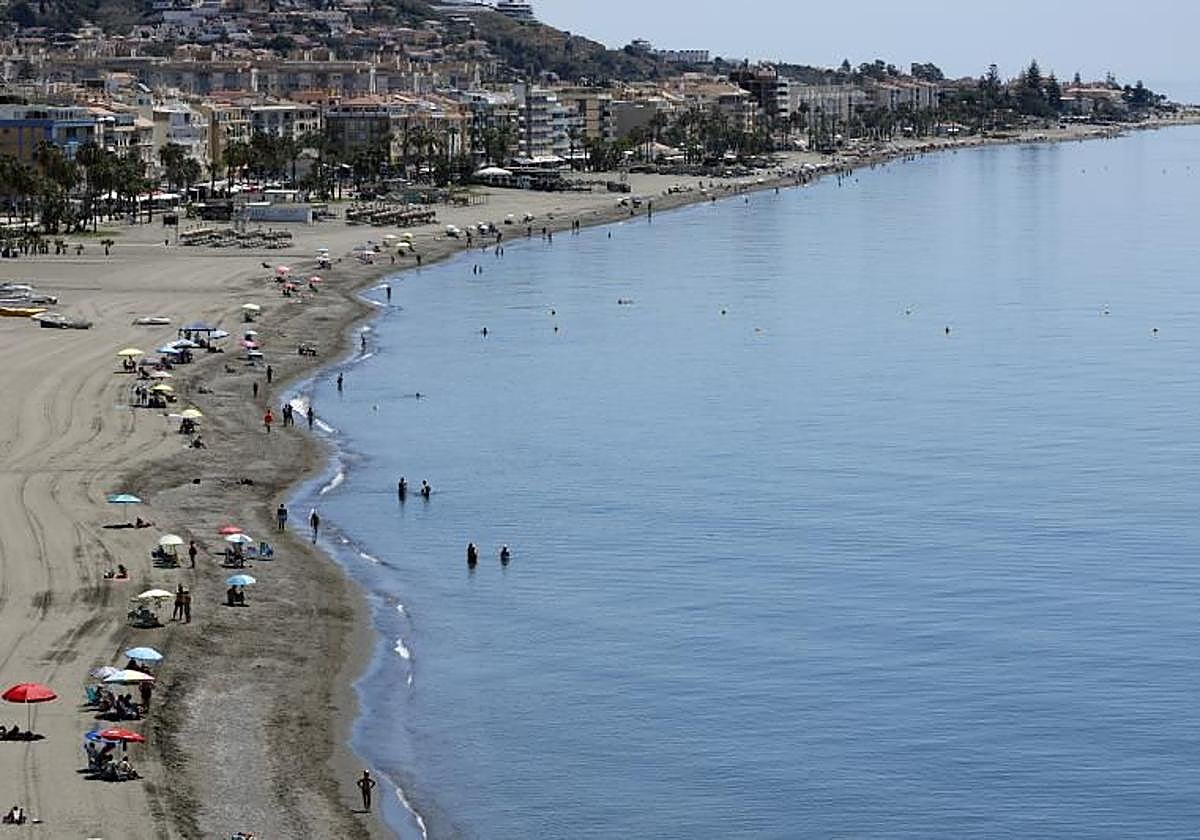
Rincón de la Victoria, on the eastern Costa del Sol, is the municipality in Malaga province with the highest net annual income per capita, standing at 15,614 euros, according to the latest statistics published by Spain's INE national statistics institute, based on tax return data for 2023. It is followed by Cartajima, Benahavís and Alhaurín de la Torre, all three with figures exceeding 14,000 euros net per person. This group of municipalities therefore surpasses the average per capita net income of Malaga city (13,847 euros) and Marbella (13,384 euros).
If, instead of considering per capita net income, we look at the average household net income, then the tables are slightly turned because, in this case, Alhaurín de la Torre takes the lead, with a net income of over 43,000 euros, while Rincón de la Victoria drops to second place, as the average family there has an average net income of almost 38,000 euros.
This change in the ranking, observed depending on whether average income per person or per household is considered, is presumably due to the fact that households in Alhaurín have on average more members than those in Rincón. The INE methodology states that income per person is obtained by dividing the net household income by the number of people in each home. Indeed, this is what the INE demographic data shows: while families in Alhaurín de la Torre have an average of three members, Rincón's average is 2.4 people.
15,036
euros
is the average net income per person in Spain. The average net income per household in the country is 38,326 euros. Rincón de la Victoria, therefore, exceeds the national average per capita, while Alhaurín de la Torre surpasses the national average per household.
When average household net incomes are taken into consideration, Alhaurín de la Torre and Rincón de la Victoria rank first and second respectively, ahead of Marbella (37,606 euros), Benahavís (37,268) and Malaga city (36,640 euros). They also rank higher than other large municipalities along the Costa del Sol and inland too, such as Estepona (34,480 euros per household and 12,741 per capita), Benalmádena (33,901 and 13,418 euros), Torremolinos (33,655 and 13,845 euros), Antequera (32,934 and 12,633 euros) and Ronda (32,294 and 13,057 euros).
30,524
euros
is the average annual net income per capita in Pozuelo de Alarcón (Madrid). It is the wealthiest municipality in Spain using this metric.
The gap between the Malaga town with the highest average net income per person (Rincón de la Victoria with 15,614 euros) and the one with the lowest, (Benamargosa at 8,872 euros), is almost as striking as the gap between the town with the highest average net household income (Alhaurín de la Torre with its 43,020 euros) and the municipality with the lowest average net income per household, Salares, where it falls below 20,000 euros, the same as in Benamargosa. The gap in household income, as well as the amount of income per person, is also influenced by demographics. This is evident in Salares and Benamargosa, where the number of household members is 2.1 and 2.2 respectively, below both the 3.0 in Alhaurín de la Torre and the 2.4 in Rincón.
There is another possible factor to consider when examining the reasons why some towns have higher incomes than others. The two municipalities with the highest household incomes, Rincón and Alhaurín, have populations with an average age of 41 and 40 years respectively, compared to around 47 or 48 years in Salares and Benamargosa. That said, the "oldest" municipality in the province by average age is Sedella (54 years).
Indicators of inequality
2.8
nearly triple
are the earnings of the richest 20% in Spain compared to the poorest 20%. Meanwhile, the Gini index stands at 32.1 points nationally.
The data published by the INE also provides information on the degree of equality or inequality in income distribution. This is based on two indicators. Firstly, the Gini index, which measures inequality using a coefficient ranging from 1 to 100, depending on whether the distribution of resources is completely equal among all individuals (1) or concentrated in a single person (100). Secondly, the 80/20 index, which compares the income of the 20% of the population with the highest income against the 20% earning the lowest. Whichever indicator is used as a reference, the most unequal municipality in Malaga is Benahavís: the Gini index stands at 43.6 points, well above the 36 points of Genalgualcil and Fuengirola, and also above the 35.4 of Marbella. Furthermore, Benahavís is twice as unequal as the municipality with the most balanced income distribution, which is Serrato (its Gini index rating is 22.1 points).
If we take the 80/20 indicator as a reference, the INE reports that, in Benahavís, the top 20% of the income earners actually earn four times more than the lowest 20%. The next most unequal municipality is Genalguacil, where the ratio is 3.5 times. Fuengirola and Benalmádena also have ratios above 3.0. However, Marbella is below this, with a ratio of 2.9 times. Meanwhile, in Villanueva de Tapia, the least unequal municipality in Malaga province according to this indicator, the richest 20% earn 1.9 times more than the poorest.
So, Benahavís is the most unequal municipality in Malaga, yet it is also the one where average net household income has grown the most in the last five years (2018 to 2023). It has gone from 8,466 to 14,248 euros, an increase of nearly 70%. However, it appears that this progress has not come about in a very egalitarian manner.
![[]](http://static.vocstatic.com/voc26/latest/assets/images/favicon/surinenglish/apple-touch-icon-57x57.png)