
Hiking in Malaga
A thrilling hike that links inland Axarquía with the Mediterranean
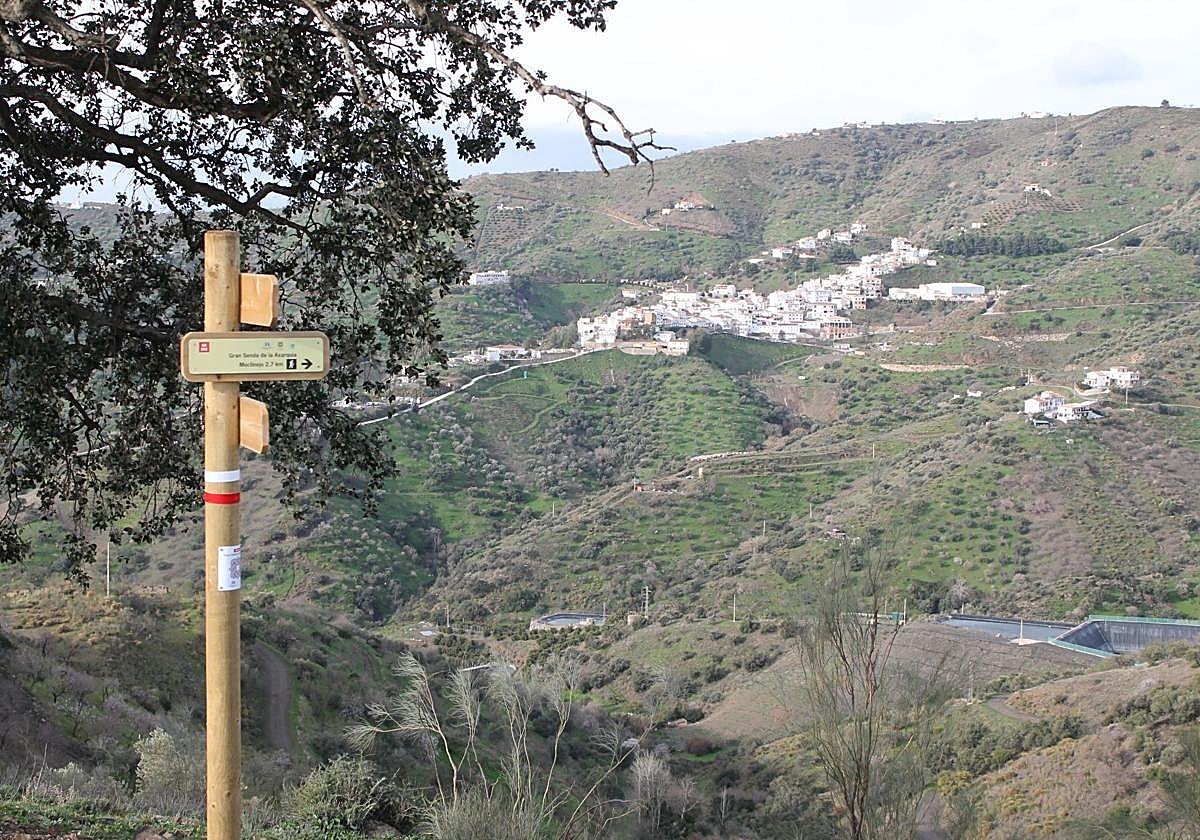
Along the Gran Senda de la Axarquía there is an exciting route between Riogordo, Comares, Cútar, El Borge, Almáchar, Macharaviaya, Moclinejo and Rincón de la Victoria
Javier Almellones
Axarquía
From north to south. From the rugged landscapes that as a child the rebel Omar Ben Hafsun is supposed to have seen, to the abrupt coastal strip of El Cantal Bajo. Between Riogordo and Rincón de la Victoria there is a fast-paced and exciting route that can be done on foot or even by bike. It is divided into four stages.
Spanning roughly 45km the Gran Senda de la Axarquía is a magnificent authorised trail that traverses half a dozen municipalities. These villages share their similarities but as the hiker soon discovers, they are are also marked by clear differences. Riogordo, Comares, Cútar, El Borge, Almáchar, Machariaviaya, Moclinejo y Rincón de la Victoria are the six towns and villages that are joined by this path as it connects the gorges of Axarquía with the western coast of the Mediterranean at Malaga.
From ancient fortresses and steep vineyard slopes to hills offering views of the Mediterranean and small towns displaying their Andalusian past, this adventure offers a myriad attractions. Whether on bike or by foot, this challenging path is a rewarding experience.
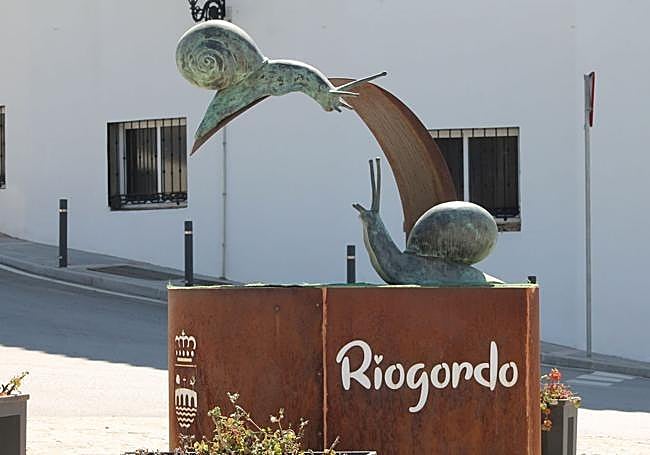
The first of the stages links Riogordo, famous for its culinary use of snails, with Comares, known as el Balcón de la Axarquía for its spectacular views. This is certainly the most demanding part of the trail both for its length and the difficulty of its climbs.
Of the 14km of trail between these two towns, the first ten are almost entirely flat or downhill. The path runs alongside the Río de la Cueva, with its fluvial terrain, and past wheatfields and olive trees. This stage reaches its end with a difficult climb up to the village of Comares and the views are well worth the wait.
The path joins the route of Las Fuentes de Comares and passes some of the most important (La Teja, Delgada and Gorda) before arriving at the village along an old Roman road. Now all that remains, is to enjoy the village's labyrinthine streets and what is left of its ancient castle, La Tahona. The church Nuestra Señora de la Encarnación and the magnificent zip line are other attractions not to be missed. Fortunately, there are also hotels and hostels to stay in and recharge your batteries before the next day.
The second stage begins with a major descent to a collection of small villages that act as an introduction to one of the most important places on this itinerary, the delightful village of Cútar. The village boasts a recently built interpretation centre that is focused on the discovery of a Qur'an and documents detailing the last imam of the village's mosque.
From Cútar, there is a slight incline up to the last stretch which runs between muscatel vineyards before arriving at El Borge. The village offers the possibility of staying in a cosy rural hotel and counts the Bandolero Gallery and the church Nuestra Señora del Rosario among its attractions.
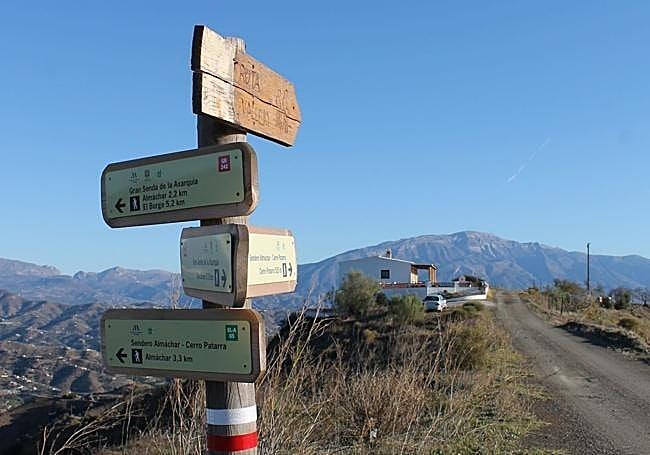
The third stage starts from this village and reaches Moclinejo with a route of about 11 kilometers that oozes muscatel. The first milestone, Almáchar, is very close, and is reached along a flat path. From this small town, known as the birthplace of the ajoblanco, you must undertake a demanding climb. The route arrives at the bottom of the hill of Patarra as the Mediterranean begins to come into view. After passing through the small and delightful village of Vallejos, in Macharaviaya, you arrive at the town of Moclinejo, where murals, mosaics and even a small home for the Ratoncito Pérez weclome the visitor.
The last section starts in Moclinejo and descends to Rincón de la Victoria, taking advantage of the Granadillas riverbed, which is dry for most of the year. This last stretch coincides with the local trail that goes to La Capitana. The route is the easiest of all, since it is about eight kilometres long and is an obvious descent. Eventually the path connects with the sea, the Senda Litoral and the Gran Senda de Málaga.
![[]](http://static.vocstatic.com/voc26/latest/assets/images/favicon/surinenglish/apple-touch-icon-57x57.png)