
Economy
Residents in 'poorest' village in Malaga react to latest statistics
For the second consecutive year, it has been declared the poorest municipality in the province and one of the most economically disadvantaged among those with more than 1,000 inhabitants in Spain
Eugenio Cabezas
For the second consecutive year, the village of Benamargosa in the Axarquía area has been declared the poorest municipality in Malaga province and one of the most economically disadvantaged among municipalities with more than 1,000 inhabitants in Spain.
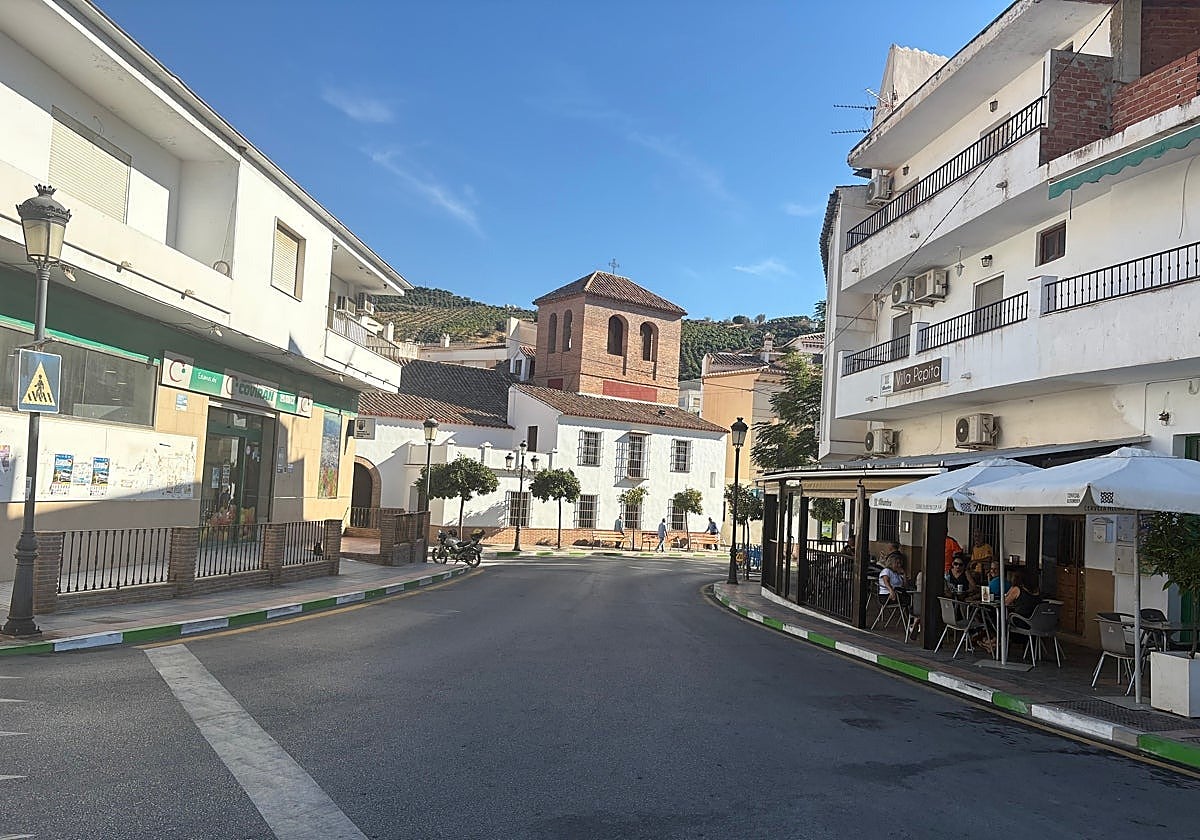
However, when you walk through the streets of the centre of this village, you do not get the impression that this is the case. There are bars, terraces, supermarkets, bakeries, agricultural supply shops, mechanical workshops, a Covirán supermarket and even two banks, Cajamar and Unicaja.
There are two arguments that are repeated in every conversation SUR had with local residents on a sunny and warm Friday 3 October, looking for answers to explain the cold statistics compiled annually by the Tax Agency under the Ministry of Finance: "Drought and the underground economy".
Related story
-
 Nuria Triguero / Encarni Hinojosa
Some residents are happy to talk about the first subject on camera, be recorded and give their names. They do not want to be mentioned when they talk about the latter. "There are nice cars here, nice houses, there is money... another thing is where it is kept and whether everything is declared," repeat a few people gathered on the terrace of a local bar.
Terrible harvests
"We may be the poorest in the statistics, but people here are happy and live well," says María Valverde, a pensioner who shops at the Covirán supermarket. Antonia Jiménez is in a hurry and points out to SUR that the mango and avocado harvests "were terrible in 2022 and 2023" and predicts, "Last year we had the flood, so next year don't expect us to get out of there, out of the red of the poorest in Spain."
José Muñoz also cites the drought, "which has greatly affected subtropical and citrus fruits in recent years and there was no water for bathing or cooking either," he recalls, referring to the significant restrictions on supply that lasted up to twelve hours a day until just a year ago, when heavy rainfall from the Dana storm on 13 November 2024 caused extensive damage to the village in the Axarquía.
"Since I became mayor in 2019, it's been nothing but misfortune and problems, first the pandemic, then the brutal drought and last year the flood," laments the mayor of Benamargosa, Salvador Arcas (PSOE), who governs in coalition with Izquierda Unida (IU). "That statistic does not reflect reality," says the mayor, who is confident that after last year's heavy rainfall, "the situation will definitely improve in the coming years."
He believes "it's a temporary situation. We've had many years of severe drought, which has been a big problem, but we're definitely on the road to recovery".
He also points out that the ageing population also explains the tax agency's statistics: "In recent years, we have not lost population, many empty houses are being rented out and we have gained inhabitants,"
Drought
The opposition Partido Popular (PP) spokesperson, José Gallego, who was mayor between 2007 and 2019, believes that "more powerful economies with greater financial freedom have moved to places like Vélez-Málaga to live, with more benefits and services and that is causing people to leave."
The former mayor of Benamargosa also refers to the "damned drought", which means that "with very low incomes, with little money, they are forced to declare it and that is a dividend that lowers the average". Looking to the future and after the abundant rains of the last year, Gallego is not entirely optimistic and believes that "it will continue along these lines, we'll see what happens with the 2024 accounts".
Tatiana Kakorina has been running a small bakery and pastry shop in the Cuatro Vientos area of the village for just a year and a half. "Three months after opening we had the flood that destroyed everything and I had to start from scratch," recalls the 51-year-old Russian resident.
"The village is declining, business is not picking up, there are few people around, bars are closing. Before the Covid pandemic, there were twelve bars and now there are two or three left, and they don't open on Sundays," Tatiana says. In her opinion, the population has not decreased, "but there is not much work, either in the bars or in the fields. Many residents have cut down avocado and mango trees," she explains.
![[]](http://static.vocstatic.com/voc26/latest/assets/images/favicon/surinenglish/apple-touch-icon-57x57.png)