
Horticulture
Posthumous recognition for 'father of modern agriculture' in southern Spain
The production of red fruits in Huelva, fruit and vegetable growing under plastic in Almería and the subtropical crops of the Axarquía and Costa Tropical in Granada would not be possible without the pioneering contributions of Dr Dieter Wienberg, who died on 18 December 2023
Eugenio Cabezas
Algarrobo
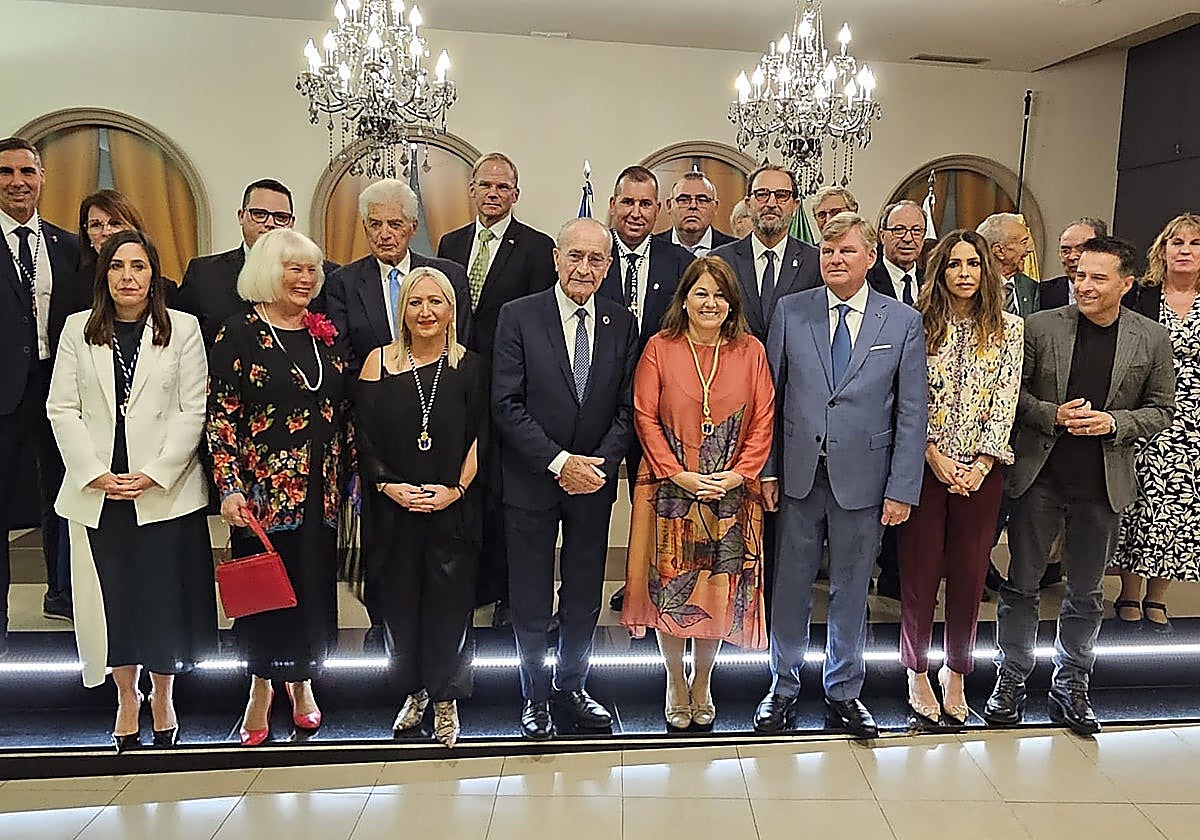
The town of Algarrobo in the east of Malaga province paid a posthumous tribute to Dieter Wienberg, the German researcher who revolutionised modern agriculture on the Costa del Sol, on Saturday 15 November.
The town hall presented Wienberg's three children an award declaring him an 'adoptive son' of Algarrobo for his work which led to the founding of the Instituto de Hortofruticultura Subtropical y Mediterránea (IHSM) La Mayora, which is based in the town.
The production of red fruits in Huelva, fruit and vegetable growing under plastic in Almería and the subtropical crops of the Axarquía and Costa Tropical in Granada would not be possible without the pioneering contributions of Wienberg, who died on 18 December 2023, aged 94, in Germany 94. He is considered the true “father” of modern agriculture in southern Europe.
Mayor of Algarrobo Natacha Rivas said it was "a well-deserved and deeply symbolic recognition", not only because of Dr Wienberg's scientific importance, "but also because of the love and commitment he always showed towards Algarrobo". She went on to say, "Wienberg didn't just transform crops, he transformed lives. He was a pioneer who helped to lift up a municipality that had been through difficult times," the councillor said in a statement. With this tribute, Wienberg has become only the second 'adoptive son' in the history of the municipality.
Award
The ceremony was attended by the mayor of Málaga, Francisco de la Torre, who was a personal friend of Wienberg, as well as representatives of the Diputación de Malaga, the Andalusian regional government, the Spanish National Research Council (CSIC) and the German Embassy, as well as members of the security forces, local associations and neighbourhood groups and other councillors from the Axarquía.
The doctor's family, including his children Carlos, Peter and Carolina, attended the ceremony and accepted the title "with emotion and gratitude".
During the ceremony, the protagonists highlighted the work of Dr Wienberg, who in the 1960s, discovered the potential of the land in Algarrobo and personally led the purchase and launch of the La Mayora experimental station, which went on to become an international centre of excellence.
Under his leadership, key transformations were promoted in the Andalusian and wider Spanish countryside: the introduction of avocados as a viable crop in Europe, the development of strawberries in Huelva, the introduction of hybrid tomatoes in Almería and the first export of strawberries by air in Europe. Thanks to these advances, today the crops derived from that vision have an economic impact of over one billion euros per year.
Spanish-German cooperation
Dieter Wienberg was born on 14 June 1929 in Thuringia (Germany) and was an agricultural engineer and doctor of economics. In August 1954, he moved to Zaragoza on a Spanish-German exchange scholarship, to the National Institute of Colonisation. Just five months later, in January 1955, he joined the Higher Council for Scientific Research (CSIC).
Wienberg was one of the driving forces behind the bilateral Spanish-German cooperation agreement in La Mayora, which was signed in 1961 at the Ministry of Foreign Affairs in Madrid and under which the CSIC purchased the La Mayora estate, where the research centre's Experimental Station in Algarrobo is located today. Dieter Wienberg was appointed director of this new agricultural research centre, where he remained until the Spanish-German collaboration agreement ended in late 1976.
In 1961 La Mayora made its first export of strawberries to Europe by plane. In 1962, under the direction of Wienberg, the first large-scale trials of tomato production for export began in Almería. New varieties of beans were introduced and work began on hybrid tomatoes.
However, La Mayora's greatest impact undoubtedly came in 1966, after Wienberg's trip to the University of California. He brought back new varieties and techniques for growing strawberries, which he soon transferred to the town of Lepe in Huelva, revolutionising agriculture in that province. Although the first trials with red fruits were carried out on the experimental farm in Algarrobo, Wienberg decided to extend cultivation to the province of Huelva.
Subtropical fruit
He did so after discovering another crop that was barely known in Spain at the time and that would also change agriculture on the Andalusian coast forever in the decades that followed: the avocado. Later, mangoes were added, along with a long list of other tropical fruits, such as cherimoya, papaya, pitaya, carambola, lychee, lucuma and coffee.
In those early years of La Mayora as an experimental farm, the presence of Spanish scientists and technicians was symbolic, although there were many agricultural workers, with the massive incorporation of women into the workforce, demanded by the needs of strawberry cultivation, having a significant impact.
After his time as director of the centre, Wienberg had a diplomatic career and worked for the German Ministry of Agriculture. However, he had a house in Marbella where he spent long periods of time and he often visited the La Mayora to find out about the latest advances and research at the centre. In fact, according to the centre's staff and scientists, in recent years he had been "very concerned" about the extreme drought and lack of rainfall and how this could affect mango and avocado plantations.
Dieter Wienberg was honoured with a number of titles in Germany, Spain and Italy. On 23 May 2016, he was awarded an honorary doctorate by the University of Malaga and on 10 March 2017, Algarrobo town hall named an avenue after him and inaugurated a statue. As a final recognition during his lifetime, Wienberg was named a member of the Royal Academy of Engineering on 22 February 2023.
![[]](http://static.vocstatic.com/voc26/latest/assets/images/favicon/surinenglish/apple-touch-icon-57x57.png)