
Wildlife
Green group flags issues after reptiles found dead in Costa del Sol irrigation channel
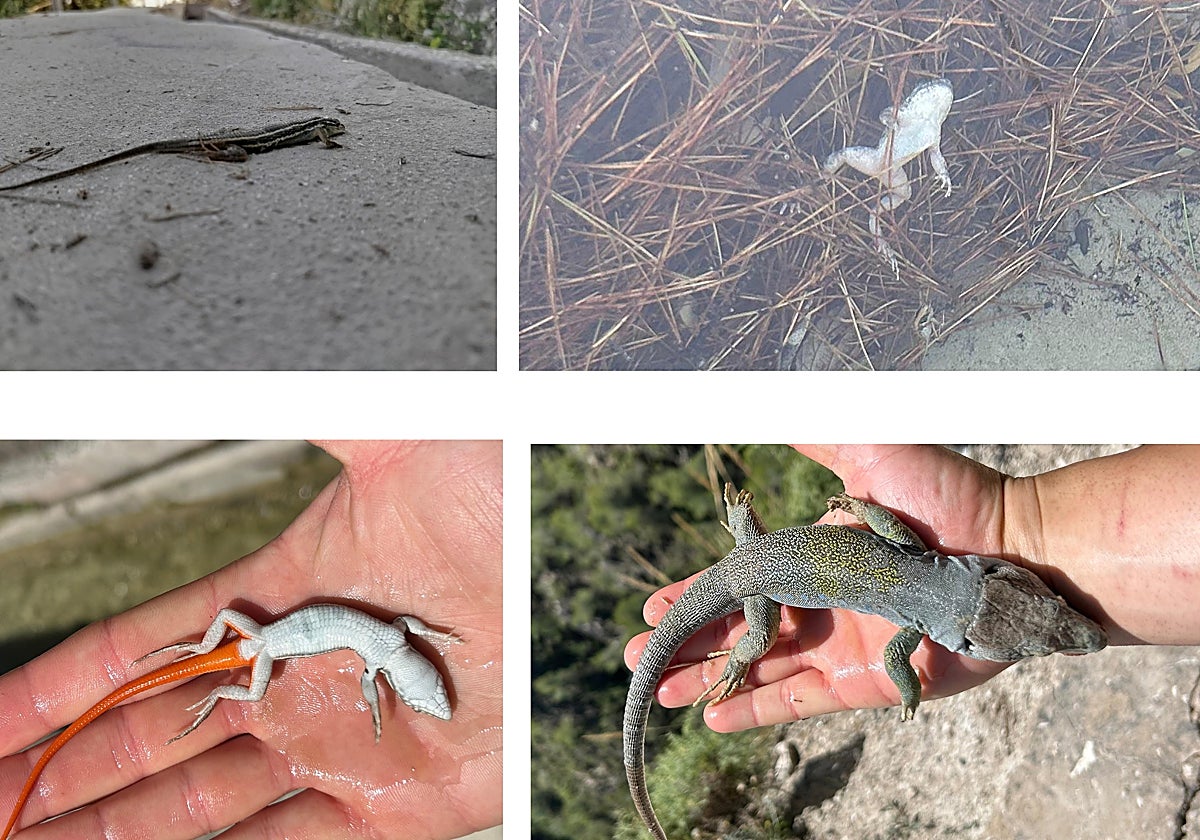
GENA-Ecologistas en Acción have reported the death of dozens of lizards, snakes and toads in the Lízar canal in Frigiliana and have proposed measures to reverse the situation

Frigiliana
The Malaga-based environmental group, Gabinete de Estudios de la Naturaleza de la Axarquía (GENA)-Ecologistas en Acción, as a member of the governing board of the Sierras Tejeda, Almijara y Alhama natural park, has reported to the Andalusian regional government the "numerous irregularities" in the area known as Acequia de Lizar. Located on the banks of the Higuerón river in Frigiliana in the east of the province, they claim that the irregularities are having "catastrophic results" for the amphibians and reptiles trapped in the area which forms part of the protected natural park area shared by Malaga and Granada provinces.
In this way, as reported to GENA by PhD researcher Eduardo Fernández , who specialises in amphibians and reptiles, in the Acequia de Lizar, "numerous irregularities have been observed in the exit systems for trapped wildlife, with catastrophic results for amphibians and reptiles in this area located in the Tejeda and Almijara Natural Park".
The canal constitutes a habitat of enormous ecological value, hosting populations of herpetofauna species
This irrigation channel, which is several kilometres long, constitutes a habitat of enormous ecological value that is home to significant populations of species, some of which are listed as vulnerable or even endangered according to Andalusian regulations, as explained by the coordinator of GENA-Ecologistas en Acción, the Velez biologist Rafael Yus, in a press release.
The environmentalists argue that the current design turns the ditch into "a lethal trap", so that "numerous specimens of reptile and amphibian species fall into it and do not manage to get out", causing massive and continuous mortality in species such as the red-tailed lizard (of special interest), the Colilarga lizard (of special interest), the Betic lizard (catalogued as vulnerable), the horseshoe snake (vulnerable), the snub-nosed viper (vulnerable), the Betic midwife toad (in danger of extinction). "The presence of species such as the Betic midwife toad, an Andalusian native species catalogued as endangered, makes this situation an absolute priority from a legal and conservation point of view," Yus said.
Rudimentary ramps
Although environmentalists and experts have noted that there are some escape devices (rudimentary ramps and few plastic screens), "their number and design are totally insufficient". They explain that "the ramps occupy only a tiny fraction of the width of the ditch and do not adequately fulfil their function. Only the mesh screens have shown some effectiveness, although their distribution along the length of the ditch can be described as anecdotal".
For this reason, GENA-Ecologists in Action has presented the complaint to the the Junta de Andalucía's sustainability department, urging it to ensure that the necessary exits are put in place and maintained.
"I volunteer to evaluate the effectiveness of the measures and even write follow-up reports"
Firstly, the environmental group has opted to install full-width plastic mesh in strategic sections of the canal, resistant, permeable to water and with a mesh that facilitates the escape of the wildlife. Secondly, they propose to complement this with functionally designed exit ramps, distributed periodically along the canal, approximately every 300-400 metres. Thirdly, GENA proposes monitoring and evaluating the effectiveness of these measures with regular inspections and the collaboration of reptile experts. "I volunteer to evaluate the effectiveness of the measures and even write monitoring reports," said Fernández.
"We insist that these actions, of obligatory action in a protected natural area, are technically simple, low cost and of enormous positive impact on the conservation of local biodiversity, while contributing to the fulfilment of legal obligations for the protection of wildlife imposed by regional, national and European legislation, with the researcher Eduardo Fernández offering his advice," concluded GENA-Ecologistas en Acción.
![[]](http://static.vocstatic.com/voc26/latest/assets/images/favicon/surinenglish/apple-touch-icon-57x57.png)