
The small village of Totalán becomes latest cardio-protected area in Malaga province
Malaga is the province with the highest number of cardio-safe areas in Andalucía with 389 at present
Eugenio Cabezas
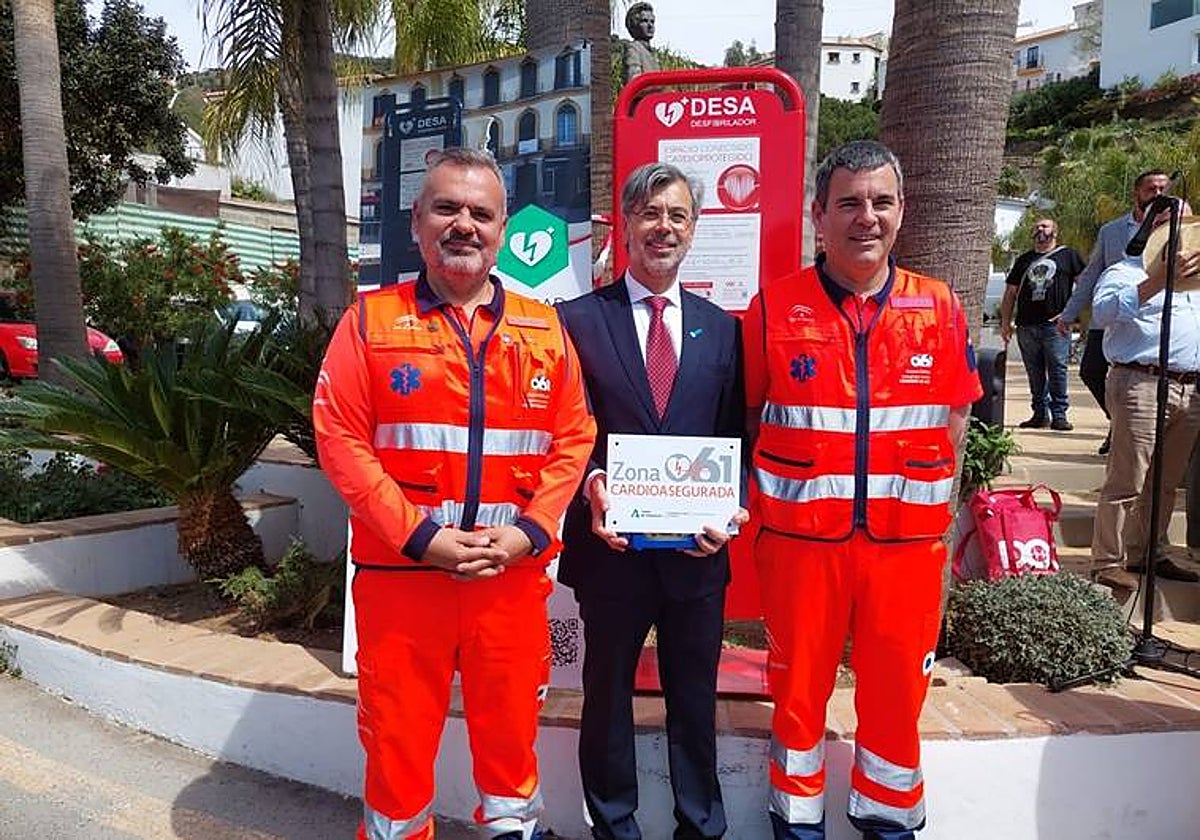
Andalucía's 061 emergency service has awarded the distinction of 'cardio-protected area' to Totalán town hall. The Axarquía village, which has just 750 registered residents, has fulfilled the requirements in terms of training and the installation of two semi-automatic external defibrillators.
The managing director of the 061 Health Emergency Centre, Fernando Ayuso, accompanied by the provincial director of 061, Alejandro Salazar, presented the awards to the mayor of Totalán, Miguel Ángel Escaño, in the village’s Plaza Antonio Molina, where one of the two defibrillators is located.
These defibrillators, which are connected to the emergency services, have been installed strategically so that they can be accessed from anywhere in the village in less than four minutes. In addition to these defibrillators, there are a further three located in the town hall, on the football pitch and in the municipal swimming pool.
Designed to reduce mortality
The professionals who work in municipal facilities have been trained in cardiopulmonary resuscitation techniques and are able to act immediately in the event of a cardiorespiratory arrest. The delegate for health and consumer affairs emphasised that "the cardio-safe zones programme aims to reduce mortality and the serious after-effects that can occur from suffering a cardiac arrest with excellent initial action".
Malaga is the province with the highest number of cardio-safe areas in Andalucía with 389 at present, all of which have been recognised since the programme was set up.
Cardiovascular diseases are the leading cause of death in the western world. Correct attention to cardiorespiratory arrest consists of the early application of a series of actions known as the Chain of Survival, which includes, in order: recognition of the situation and activation of the health emergency system, the immediate initiation of basic life support manoeuvres, early electrical defibrillation and the rapid implementation of advanced life support techniques.
First four minutes
In a situation of suspected cardiorespiratory arrest, the 061 emergency coordination centres encourage and explain to callers how to perform these basic manoeuvres while waiting for emergency services to arrive. It has been shown that trying to apply these techniques even without first aid knowledge helps many patients.
The four minutes following a cardiorespiratory arrest are key and it is therefore essential that the person helping the victim acts immediately by alerting the health emergency teams and applying, in the meantime, basic resuscitation techniques such as mouth-to-mouth resuscitation and external cardiac massage.
The availability of early electrical defibrillation equipment, which can be used by non-healthcare professionals with a basic training course minimises the risk of death. The survival of many victims depends on basic cardiopulmonary resuscitation techniques being applied within the first three to four minutes, which can increase the chances of survival in more than 50 per cent of those affected.
![[]](http://static.vocstatic.com/voc26/latest/assets/images/favicon/surinenglish/apple-touch-icon-57x57.png)