
Día de la Hispanidad
Spain, 'the land of rabbits'
On 12 October the country celebrates its national holiday commonly known as Día de la Hispanidad. Few people, however, know that the word 'Hispanidad' refers to Hispania and… the humble rabbit
Alekk M. Saanders
Malaga
On 12 October Spain celebrates its national holiday commonly known Día de la Hispanidad (Hispanic Day). However, few people know that the word 'Hispanidad' refers to Hispania and… rabbits.
Cuniculosa due to rabbits
When the Phoenicians arrived on the Iberian Peninsula, they named it ‘itI-shephan-im’ - ‘the land of rabbits’. Later, this name evolved into the Greek ‘Sphania’ until the Romans transformed it into Hispania, which eventually became España (Spain). It is not surprising that ‘Spain’ was depicted as a matron with a rabbit at her feet on some Roman coins from the reign of Andalucía-born Emperor Hadrian. It is also interesting that the Latin poet Gaius Valerius Catullus called the Iberian Peninsula ‘Cuniculosa’ (cuniculus: 'a rabbit' in Latin).
Most modern historians agree that rabbits originated on the Iberian Peninsula. Catalonia is believed to have been the epicentre of the spread of rabbits. Later, the animals 'colonised' the Balearic Islands. For example, one of the islands near Ibiza is called Conejera (Illa Conillera: ‘rabbit island’ in Catalan).
It is reported that the incredible fertility of rabbits turned into a real disaster. The animals destroyed crops and undermined the ground and houses to make their burrows. Therefore, in order to get rid of the animals, the locals turned to the Romans for help, who sent troops from Africa with ferrets, natural predators of rabbits.
The wild rabbit of the UK originates from the Iberian Peninsula. Some say the rabbit was brought to the UK by the Romans, while others say it was the Normans. Both cases refer to the Iberian rabbit. Apparently, hunting enthusiasts brought Iberian rabbits to Great Britain at the very beginning of the 14th century. In 1859 Iberian rabbits were introduced to Australia.
Valuable meat
Rabbits were easily domesticated. Their breeding began in ancient times. In the Roman Empire, wild rabbits were often given shelter and cages in convents. However, centuries passed before rabbit was considered a truly valuable meat and technically advanced rabbit breeding appeared. Today, rabbits can be found in any butcher's shop in Spain. Even foreign supermarkets (such as Lidl) have rabbits in their meat department.
Many traditional Spanish dishes are prepared with rabbit. The famous paella, in its original Valencian recipe, is made with chicken and rabbit. Conejo en salmorejo (rabbit in marinade) is considered a signature dish of Canary cuisine. The rabbit meat is marinated, then fried and finally cooked in the marinade until done. Conejo en salsa estilo andaluz (rabbit in Andalusian sauce) is known throughout Andalucía, with different variations in preparation.
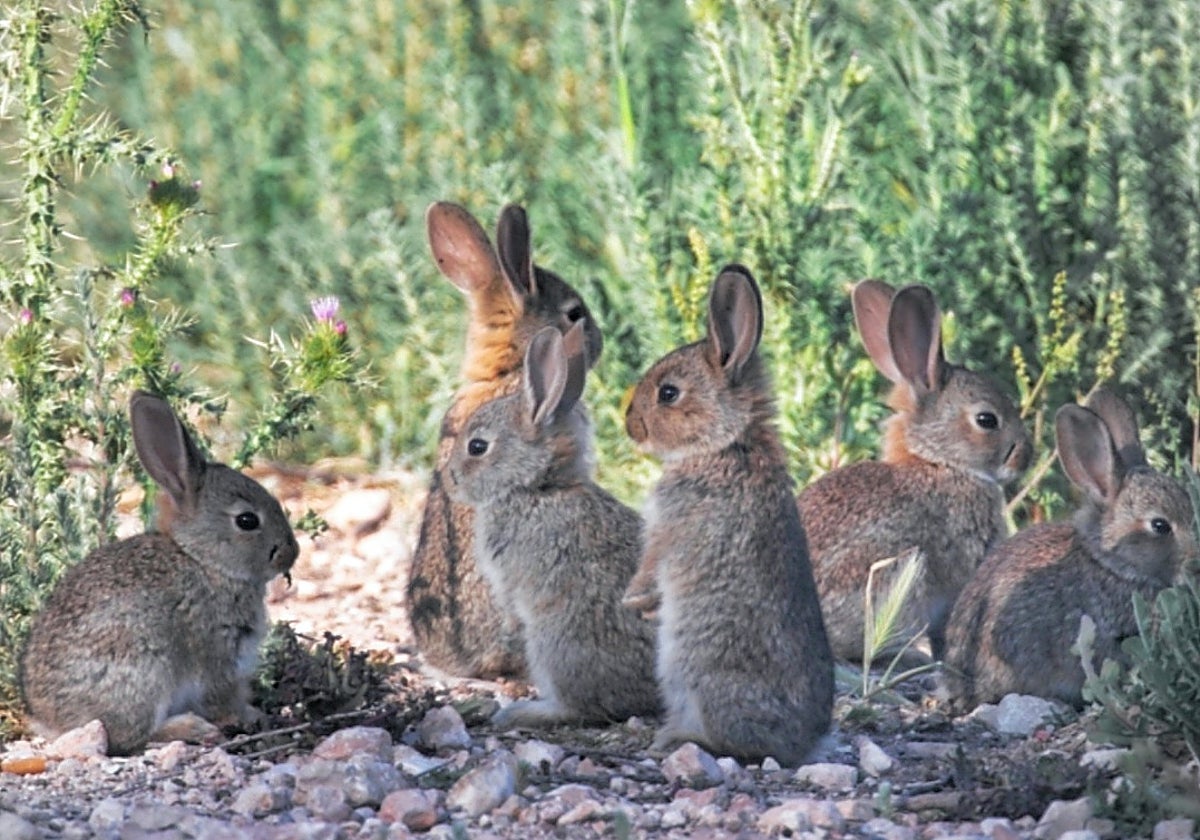
If you go to the forests of Andalucía, you are bound to encounter rabbits. This key species of Mediterranean forests is the basic prey of most predators and endangered species inhabiting these areas. Incidentally, rabbits are easily confused with hares, although rabbits are much smaller in size. They do not have white fur on their bellies like hares, and their ears are shorter and without black spots on the tips. Their tails are also different, with no black spots.
In the province of Malaga, wild rabbits mainly live in the north, in the Antequera and Ronda areas, especially near Fuente de Piedra and the Genil River. So observing rabbits or tasting them in local restaurants could be an alternative way to celebrate ‘Hispanidad’ Day.
![[]](http://static.vocstatic.com/voc26/latest/assets/images/favicon/surinenglish/apple-touch-icon-57x57.png)