
Culture
Russian museum shares Tabacalera with a new exhibition space
The MEET gallery is currently hosting a collection of 180 iconic images from the last half-century of Spanish history by photojournalist Marisa Flórez
Regina Sotorrio
Malaga
The posters flanking the entrance reflect the change. The old cigarette factory, the Tabacalera, in Malaga's Huelin district, is no longer the Russian Museum, or at least not just that. The nearly 3,000 square metres of exhibition space in the historic building will now be divided between two different brands: the well-known Russian museum collection (without St Petersburg since Putin's invasion of Ukraine) and the new Tabacalera (MEET) exhibition space. Alongside the exhibition dedicated to the Russian ballerina Anna Pavlova, a new exhibition of more than 180 photographs traces the last half-century of Spain's history through the lens of Marisa Flórez, one of the pioneers of photojournalism.
Malaga city council is reacting in this way to a war that continues to drag on and which makes the short-term return of works from St Petersburg unfeasible. At the same time, it is responding to the "interest shown" by public and private collections in exhibiting in Malaga. However, officials insist they are not giving up on continuing to host high-quality Russian art already present in the West in order to preserve "a brand"' that is now well established in the city. In fact, these galleries will soon be occupied by Belarusian-born photographer Valery Katsuba, who is based in Madrid.
MEET is now presenting its second proposal focused on paintings from the period of the Spanish Habsburgs. Both lines of work will coexist flexibly within the building.
With this new concept, Tabacalera is reclaiming its name and hopes to reverse the decline in visitor numbers following a steady drop since the start of Russia's invasion of Ukraine. "It will provide a new boost for this nerve centre of Malaga's cultural life," says Luis Lafuente, head of the public agency that manages the city's municipal museums.
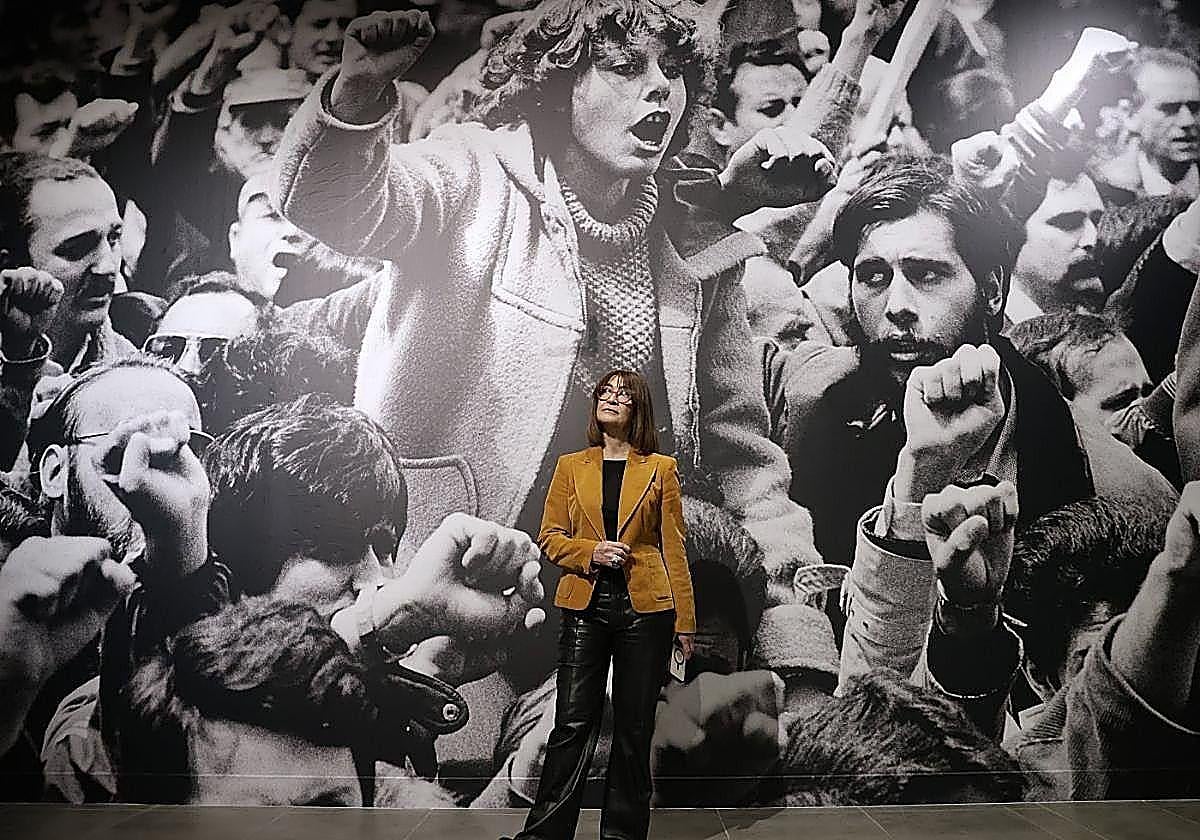
Marisa Flórez. A Time to Look (1970-2020) was the first exhibition to take on this role and it will run until 30 May 2026. The photojournalist, winner of the national photojournalism award in 1981, brings together a carefully curated selection of her work over 50 years in the media, much of it spent in various roles at El País newspaper. Through her lens she witnessed Spain's transformation, always seeking out the human and intimate side of the figures who shaped it. "I've never been one for official photographs," she admitted at the opening of the exhibition, feeling "overwhelmed" now that she finds herself at the centre of attention.
Key moments in history
Her camera was present at key moments that are now studied in history books. She captured life in parliament during the first legislative terms, with revealing images such as the one that shows the loneliness of Adolfo Suárez in the final years of the transition, with the then prime minister sitting in his seat surrounded by empty benches.
She was at the funeral of the communist politician Dolores Ibárruri - La Pasionaria, with her coffin carried on the shoulders of Julio Anguita, a member of the central committee of the communist party of Andalucía who was born in Fuengirola in 1941. She also waited with excitement for the arrival at Barajas Airport of Pablo Picasso's Guernika, the return to Spain of "the last exile".
Through her images, we are reminded of the first demonstrations in favour of abortion; a militant raising his fist during the 1 May 1978 demonstration in Madrid; one of the first intakes of women into the Guardia Civil; and a photograph she admitted she felt especially fond of - an elderly couple showing support for a protest from their balcony, yet still afraid to be seen, half-hidden behind their shutters.
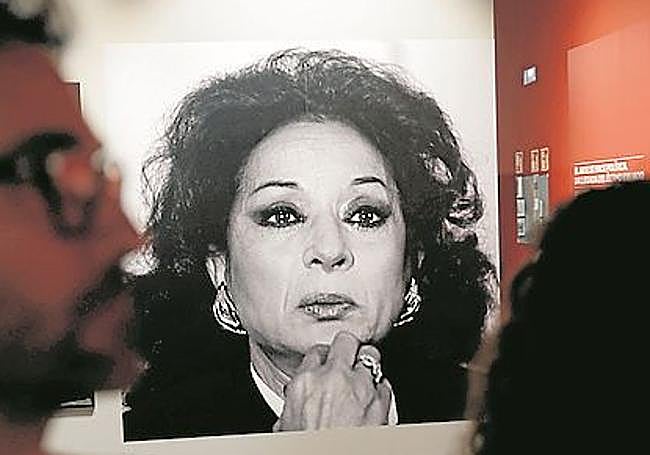
There is also folkloric Spain: Lola Flores with tears in her eyes asking each Spaniard for "one peseta" to pay off her debt to the tax authorities; the Spain that attracted international film shoots with stars such as Anthony Quinn; and the Spain that was finally opening itself up to rock music from bands such as The Rolling Stones. She photographed the Duchess of Alba on her wedding day to Jesús Aguirre, not in a bridal pose, but crouching down to talk to Cayetano, her youngest son from her marriage to Luis Martínez de Irujo.
The Royal Family
The Royal Family appear at different moments. The exhibition opens with a giant image entitled The King's Generation, showing Juan Carlos I at the Zarzuela palace in 1991 surrounded by prominent figures of the time, from Antonio Gala and Montserrat Caballé, to Nuria Espert and Adolfo Suárez. In another snapshot taken at the wedding of Infanta Elena, Flórez captures a look of affection between the monarchs that had not been seen for years. Elsewhere in the exhibition, Queen Sofía draws all the attention, dressed in mourning and with a distant look, as she waited to repatriate her mother's body to Athens.
![[]](http://static.vocstatic.com/voc26/latest/assets/images/favicon/surinenglish/apple-touch-icon-57x57.png)