
Music review
Rosalía breaks pop barriers as she turns to God in her new album Lux
A clear departure from her last album Motomami, the Catalan singer ponders the immaterial in her newest album - as well as touching on love, heartbreak and the divine
Anya Soares
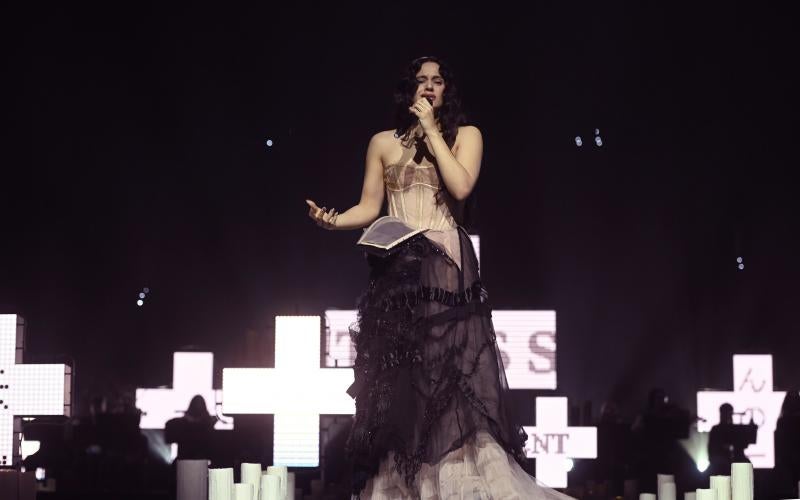
Rosalía’s Lux is the artist’s most ambitious project to date, encompassing a range of sonic influences, with many sudden tonal shifts, yet never haphazard. She plays with the listeners’ expectations with ease, stripping away their pop music preconceptions. Never once formulaic, one gets the impression that her goal was not to play it safe by creating TikTok-friendly soundbites. In fact, this was made abundantly clear with her lead single, Berghain, released on 27 October, just before the album’s official release on 7 November.
Berghain: it is perhaps more suitable to call this song an orchestral anthem, the grand overture that preludes a bitter heartbreak. It features household names Björk and Yves Tumor, alongside the unmissable London Symphony Orchestra, who accompany Rosalía throughout the entirety of Lux.
The introduction is thunderous. A choir frantically chants in German “Seine Angst ist meine Angst / Seine Wut ist meine Wut / Seine Liebe ist meine Liebe / Sein Blut ist mein Blut”. Translating to, “His fear is my fear / His rage is my rage / His love is my love / His blood is my blood.” The lyrics invoke themes of love and religion: of a codependent relationship with a lover as well as Catholic tradition, specifically Jesus’s self-sacrifice for the sake of humanity. In a feverish turn for the worse, Rosalía sings about sacrificing herself to keep a relationship going.
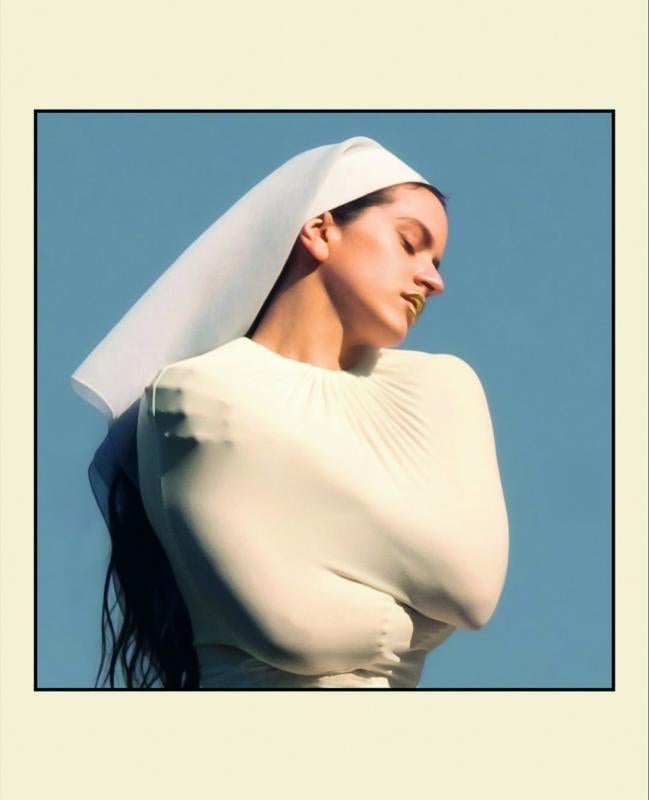
Björk’s iconic verse cuts through the unsettling noise, singing in English, “The only way to save us is through divine intervention / The only way I will be saved (Is through) divine intervention”. This proclamation sets the stage for the religious underpinnings of the entire album.
If her previous album, Motomami, is about fame and earthly riches, then Lux - stemming from the latin word for light - is about the holy and the divine. In the album’s opener, Sexo, Violencia y Llantos, Rosalía yearns for an equilibrium: “Who could live between the two?” Here, she begins her ascension into the divine realm, a bid for certainty over life’s greatest mysteries.
This maximalist musical project is divided into four movements, following a traditional symphonic structure. As if that wasn’t daring enough, Rosalía charts new territory by singing in thirteen different languages, Arabic, Catalan, Japanese, Ukrainian, just to name a few. In a review of Lux, music publication Rolling Stones Brazil emphasised that “These aren't just random words, they are entire verses, complex melodies, perfect pronunciations that she mastered after a year dedicated exclusively to lyrics.”
Mio Cristo Piange Diamanti (My Christ Cries Diamonds) exemplifies this. Rosalía draws her listeners in with baited breath, exercising truly impressive vocal control. Classical opera aficionados will be able to recognise the vocal techniques utilised, such as messa di voce, where the singer will sustain a single note until they reach a crescendo and then decrescendo. The song is a lament about two embittered lovers, who she views as her Christ, whose tears are worth diamonds. It is sung entirely in Italian, and the operatic vocal finish arguably deserves a standing ovation.
Other signature elements, such as flamenco will always be infused into Rosalía’s craft. Professionally trained at La Escola Superior de Música de Catalunya (ESMUC) in flamenco, she expertly enriches tracks such as De Madrugá. Here, the ‘palmas’ (flamenco clapping) serve to heighten the tension in the chorus, as she embodies the 13th-century Ukrainian saint, Olga of Kyiv, who sought vengeance after her husband was killed by an enemy tribe. The most Andalusian out of the fifteen tracks is La Rumba del Perdón, featuring the legendary flamenco singers, Estrella Morente and Silvia Pérez Cruz. The song is a delicious blend between traditional rumba flamenco and sharp orchestral strings, highlighting the ingenious collaboration between the pop star and the London Symphony Orchestra.
Transcendence is at the heart of Lux. It’s an album that transcends genre, language barriers, and on a philosophical level, it's about transcending the physical body, with all of its desires and pangs of longing, to reaching the divine. Her last track, Magnolias is a requiem. It draws to a close her journey on this earth that she initiates in Sexo, Violencia y Llantas, turning her death into a beautiful thing, as she ascends to meet God.
Undoubtedly, Lux is a showstopper, recognised by her audience and professional critics alike as one of the best albums of the year.
![[]](http://static.vocstatic.com/voc26/latest/assets/images/favicon/surinenglish/apple-touch-icon-57x57.png)