
Health
Malaga maternity hospital leads national paediatric ECMO care
It is the only facility capable of transferring extracorporeal membrane oxygenation life support patients across Andalucía, Murcia, Alicante, Badajoz, Ceuta and Melilla
José Antonio Sau
Malaga
The Malaga maternity hospital, part of the regional university hospital, was recently designated as one of three national reference centres for transporting critically ill children requiring extracorporeal membrane oxygenation (ECMO) life support. This sophisticated technology temporarily replaces heart and lung function in reversible multi-organ failure cases when all other intensive treatments have failed.
The hospital is now the only facility capable of transferring ECMO patients across Andalucía, Murcia, Alicante, Badajoz, Ceuta and Melilla. The other two specialised centres are Madrid's 12 de Octubre and Barcelona's Vall d'Hebrón hospitals.
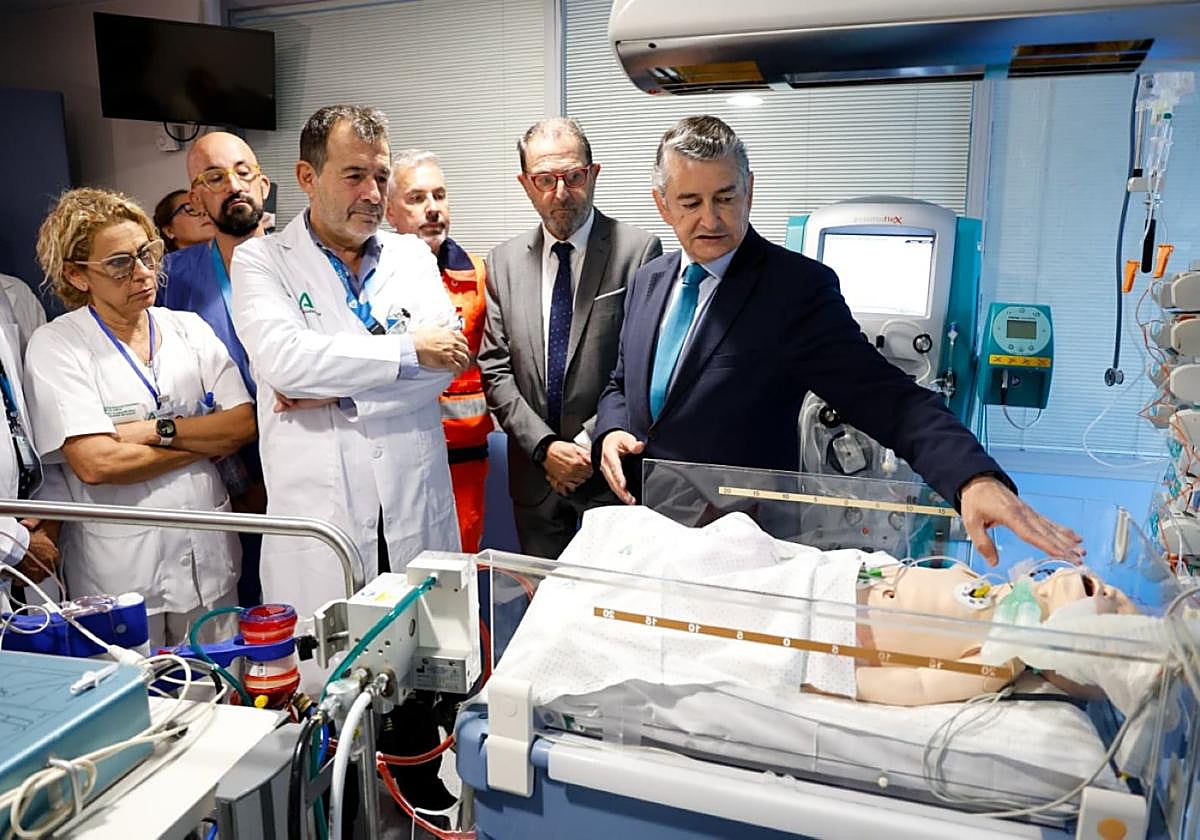
Antonio Sanz, regional minister of health, announced the activation of the Paediatric ECMO protocol during a visit to the hospital's paediatric ICU. "This protocol places the Andalusian public health system at the forefront of healthcare in Spain and makes the regional hospital a benchmark for transport and treatment," he stated, adding that it represents "hope and life for critical paediatric patients".
This Materno Infantil hospital earned CSUR recognition for "its medical excellence, organisational commitment and the solidarity shown by its professionals".
While 14 Spanish hospitals offer paediatric ECMO therapy - including three in Andalucía (Reina Sofía, Virgen del Rocío and Regional in Malaga) - only the Materno coordinates transfers in its geographical area.
Since 2017, the regional hospital has conducted 21 ECMO transports from other centres, 19 of which were primary transfers where teams travel to the originating hospital, initiate ECMO and transport the child. These missions have reached hospitals across Andalucía and as far as Castilla y León and Extremadura, achieving an impressive 82% survival rate.
Saving lives
Sanz emphasised that these interventions "save lives in practically irreversible situations - children who would die directly from multi-organ failure". The complex transports involve multidisciplinary teams of intensivists, perfusionists, cardiovascular surgeons and specialised nurses, supported by the 061 emergency service.
José María Camacho, head of the paediatrics service, noted that success depends on "close collaboration" between the Paediatric Intensive Care Unit staff, cardiovascular surgeons, perfusionists and 061, along with institutional support enabling procedures at hospitals outside their standard service portfolio.
This designation firmly establishes Andalucía's healthcare system as a national leader in advanced paediatric intensive care.
![[]](http://static.vocstatic.com/voc26/latest/assets/images/favicon/surinenglish/apple-touch-icon-57x57.png)