
Extra Clínica Dr. Nebro
Clínica Dr. Nebro: leaders in cataract surgery
Extensive experience, continuous training and the use of the latest technological advances in ophthalmology have placed this Fuengirola clinic at the forefront of this type of treatment
SUR in English
Fuengirola
Cataracts are the leading cause of vision loss in older people. They’re a particularly subtle condition, as their gradual progression often means sufferers don’t initially realise their sight is deteriorating. However, in recent years, ophthalmology has undergone a true technical and technological revolution, leading to precise operations with extremely high success rates and almost immediate recovery.
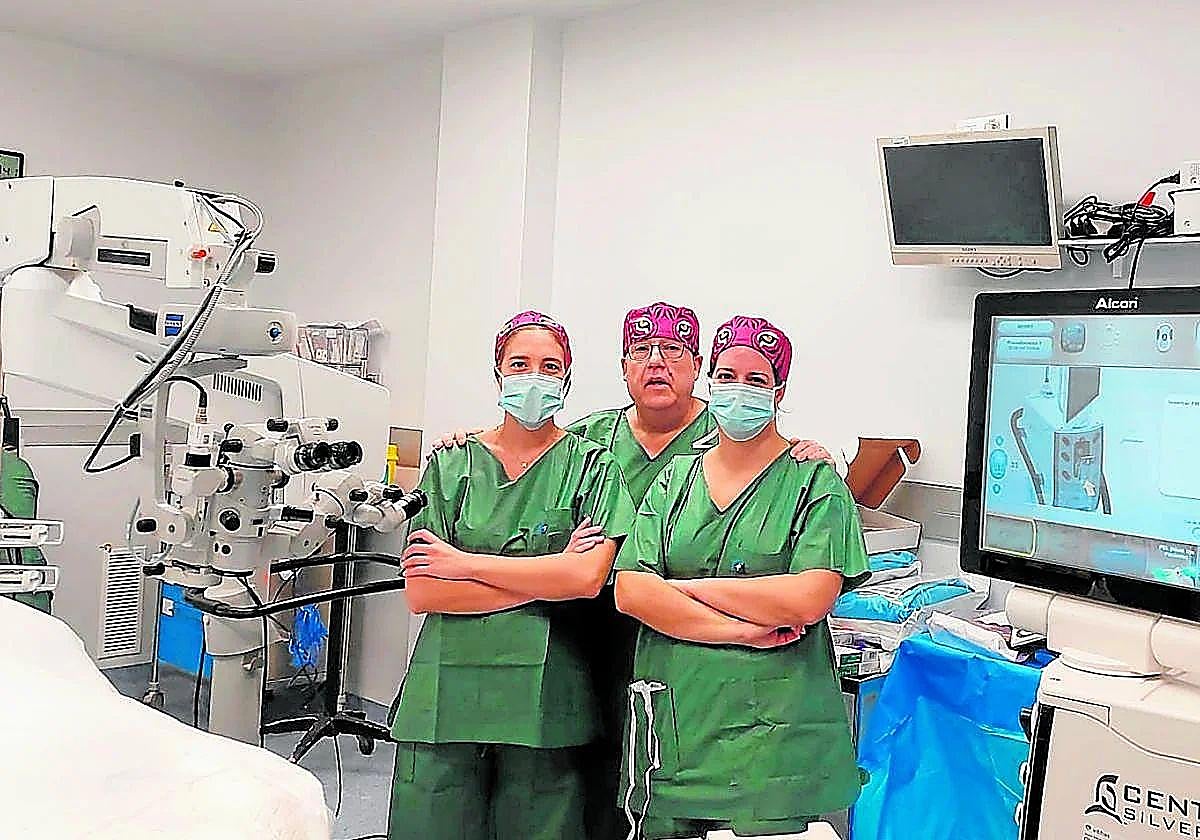
If there’s one medical centre that’s become a benchmark for cataract surgery in Malaga and along the Costa del Sol, it’s, without doubt, the Clínica Oftalmológica Dr. Nebro. Their deep knowledge and experience, combined with a constant commitment to innovation and the adoption of new systems and treatments that enhance patient care, have positioned them at the cutting edge of this branch of medicine.
“Ophthalmology is going through a golden decade, with technological development improving both diagnostic and therapeutic devices, for medical and surgical purposes,” says Dr Nebro about the advances this field has experienced over the past ten years. “We’ve improved in practically every area, which means you need a multidisciplinary team to keep up with all the latest knowledge,” he adds.
Causes and diagnosis of cataracts
“The causes of cataracts are varied, but the vast majority are related to ageing. They usually appear from around the age of 60, although it’s not unusual for them to occur earlier, and some are even congenital,” explains Dr Salvador Nebro, director of the clinic and ophthalmologist specialising in eye diagnosis, treatment and surgery.
“The diagnosis of cataracts is actually quite simple for an ophthalmologist. Through a careful examination, we can see a loss of transparency in the lens, and confirm that there’s no other condition that could explain the reduced vision,” he says.
A highly effective surgery
The treatment for cataracts is surgery, which is a highly effective solution. “Sometimes it’s possible to slightly improve vision by changing the glasses prescription, but that improvement is usually temporary,” explains the doctor. However, surgery isn’t always necessary. “Depending on the patient’s age and habits, it may not be needed if their vision is still good enough for their expectations, and in any case, if their sight worsens, surgery can always be done later,” he adds.
Choosing the right moment for surgery is another key factor. “The ideal time is when the cataract starts to limit your quality of life. It’s best not to delay it too much, because the cataract hardens over time, which makes surgery more difficult,” says the doctor.
When it’s time for the operation, patients can choose from different types of lenses. “Basically, there are monofocal lenses, which offer good visual quality but focus only at one distance, and multifocal lenses, which focus at several distances but can’t be used in patients with other eye conditions such as advanced glaucoma. Both types can also be toric if astigmatism correction is needed,” the doctor explains.
“In every case, we recommend the lens that best suits each patient, aiming to meet their expectations through careful assessment and pre-surgery planning,” he stresses.
Ultrasound-based procedure
The most common cataract surgery technique uses ultrasound technology. The operation is short, usually lasting between 15 and 25 minutes, and patients can resume their daily activities the next day, from watching TV to reading, cooking or going for a walk.
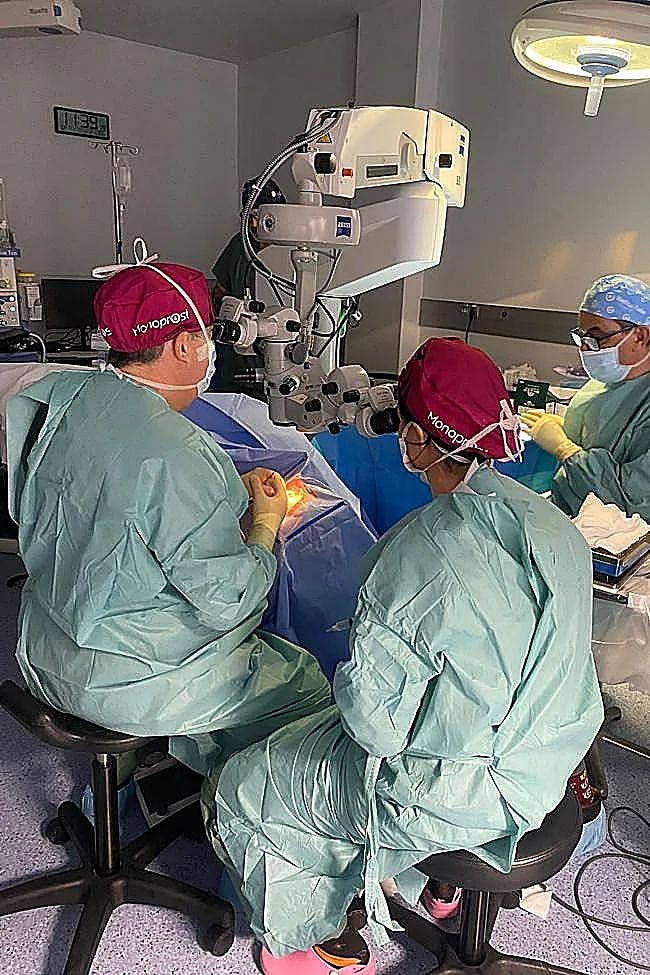
After surgery, it’s common for vision to appear blurred, but in most cases, this doesn’t mean anything is wrong. “Although mild side effects can appear in the first hours or days after surgery, it’s important to understand what’s considered normal in these cases,” the doctor notes.
“When a cataract forms, the only treatment is to replace the lens with an artificial one that allows normal focusing. It’s normal for the eye to take a little time to adapt, so some vision issues can appear in the first few days,” Dr Nebro confirms.
Other common temporary symptoms after surgery include increased sensitivity to bright light, a gritty feeling in the eye, redness, flashes of light or excessive tearing. “For a quick recovery from these temporary effects, it’s best to follow your ophthalmologist’s instructions closely, especially the prescribed course of antibiotics and anti-inflammatory treatment,” he emphasises.
Specular microscope for more precise surgery
As part of its commitment to state-of-the-art ophthalmic technology, Clínica Dr. Nebro has introduced a specular microscope. “It’s a tool that allows us to examine the endothelium, the innermost layer of the cornea, in detail. This lets us count the cells and perform cataract surgery with greater precision and efficiency,” explains Dr Nebro.
Among the clinic’s advanced surgical equipment for cataract operations is also the Centurion phacoemulsifier. “We’re talking about cutting-edge technology for cataract surgery,” the doctor stresses.
It uses an aspiration pump to remove lens fragments and includes a vitrectomy scalpel. This instrument has been designed with advanced technology to provide maximum safety at every stage of surgery, even in the most complex cases.
More information:
Address: C/ Marbella, nº 6, 2º 4 y 2º 1 y local nº 4. 29640 Fuengirola (Málaga).
Phone: 952478342.
Website: https://clinicaoftalmologicanebro.com/
![[]](http://static.vocstatic.com/voc26/latest/assets/images/favicon/surinenglish/apple-touch-icon-57x57.png)