
Green fingers
Gardening in southern Spain: Stauntonia hexaphylla
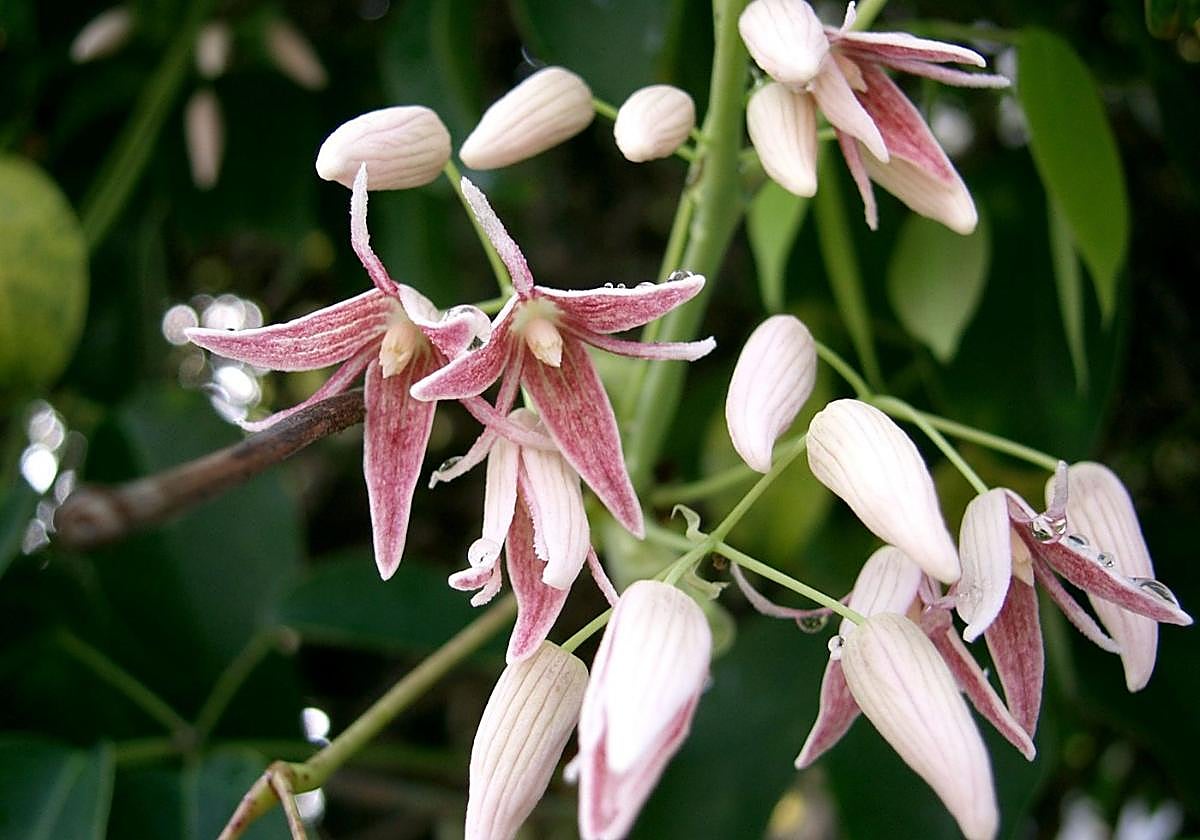
Stauntonia hexaphylla is a woody, evergreen climbing vine native to southern Japan. This vigorous plant can reach 8-12 metres, using other plants for support as it climbs
Denise Bush
Malaga
Stauntonia hexaphylla is a woody, evergreen climbing vine native to southern Japan. This vigorous plant can reach 8-12 metres, using other plants for support as it climbs.
In spring, the vine produces attractive racemes of pinkish-white flowers, each bloom measuring approximately 2cm long. These delicate flowers appear in clusters of up to seven per raceme, contrasting with the plant's distinctive foliage. The leaves are leathery and long-stalked, composed of 3-5 leaflets that provide year-round interest.
After flowering, the plant may produce egg-shaped purplish fruits that are not only ornamental but also edible. In Japan, these fruits are grown commercially and eaten both raw and cooked.
Stauntonia hexaphylla thrives in a warm, sheltered position with partial shade, making it ideal for training against a sunny wall where its roots can remain cool and shaded.
Extracts from the whole plant are used in cosmetic preparations as a skin protector and in traditional Japanese medicine, various parts of the plant - including the roots, stems and fruits - are used as an analgesic, antirheumatic, diuretic, and sedative. The juice of the fruit is used to treat eye complaints.
Stauntonia hexaphylla is diecious: both male and female plants are needed for fruit to form. Propagation is by seed (which can take 18 months to germinate) or by heeled cuttings.
![[]](http://static.vocstatic.com/voc26/latest/assets/images/favicon/surinenglish/apple-touch-icon-57x57.png)