
Green fingers
Gardening in southern Spain: Corokia cotoneaster
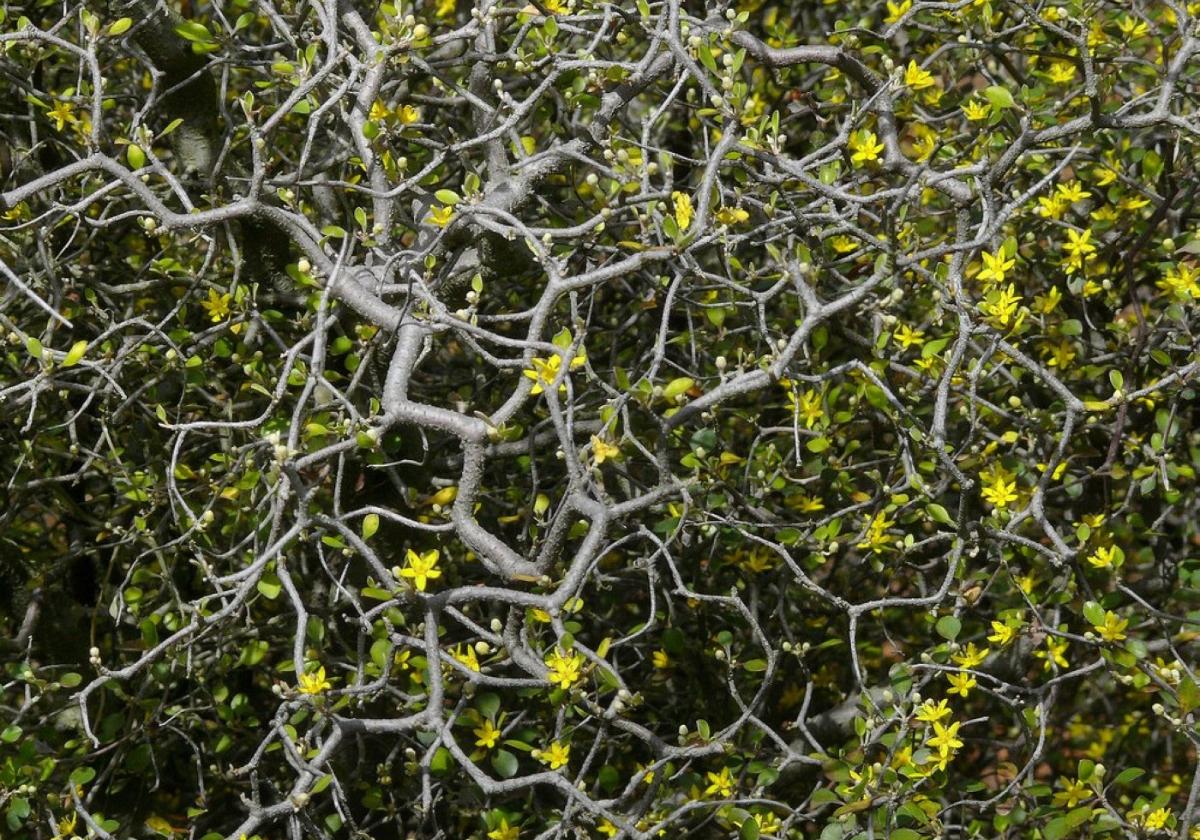
It is commonly called the wire-netting bush because of its wiry, contorted branches which are nearly black in colour
Denise Bush
Malaga
Corokia cotoneaster is one of ten species in the Corokia genus. It is commonly called the wire-netting bush because of its wiry, contorted branches which are nearly black in colour.
This evergreen shrub, native to New Zealand, has small, rounded, leathery green leaves which are almost silver on the undersides. In spring, it produces masses of tiny, scented, star-shaped flowers and best of all, in autumn clusters of drupes in red, yellow or orange form.
In its natural habitat it grows in dry, stoney soils with good drainage and can reach three metres tall by two metres wide. Corokia can grow in most soils and in coastal locations and will withstand heat and humidity becoming drought resistant once established. It is very slow growing and beyond the obvious uses such as an impenetrable hedge, or xeriscaping, the wire-netting bush is a popular plant for bonsai. It can grow in a container or as a specimen plant in a border where it can receive plenty of bright, indirect sunlight.
There are several varieties of Corokia, a variegated form, Corokia vigata Sunsplash, has attracted gold and green leaves while Corokia 'Frosted Chocolate' has bronze tinted leaves, especially in colder weather.
Traditionally the leaves were boiled and the resulting tea drunk to ease stomach pain and ulcers. The hard wood was used to make fish hooks and knives.
![[]](http://static.vocstatic.com/voc26/latest/assets/images/favicon/surinenglish/apple-touch-icon-57x57.png)