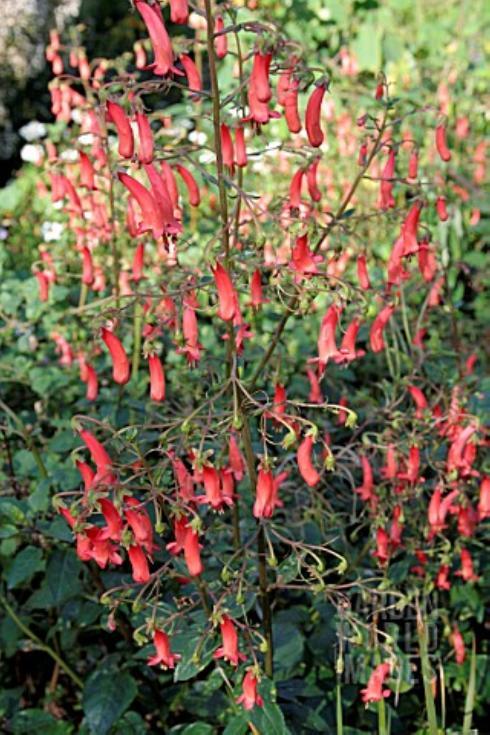
Phygelius x. rectus
An upright perennial shrub with fuchsia-like blooms that will keep flowering right though the summer until autumn
Denise Bush
Viernes, 18 de mayo 2018, 10:16
Also called Cape Fuchsia or Cape figwort, Phygelius x. rectus is a hardy perennial shrub native to South Africa. It forms an upright mound of bright green foliage 60 cm to one metre tall by about 1.20 metres wide and once established, is drought hardy for short periods. The fuchsia-like flowers form in showy panicles from mid-summer through to mid or end of the autumn and are in shades of salmon-red through to orange, with a yellow throat. There is also a creamy yellow version called P. x. rectus 'Moonraker'.
What does it all mean?
-
Remembering and pronouncing binominal plant names are hard enough (unless you know some Latin or even Greek), but did you ever wonder what the x in the middle of some botanical names stood for? Its simply to indicate that the plant is a hybrid of two species within a genus, although it doesnt tell you who the parents are. An example is the plant in the article, Phygelius x. rectus. In this case it is a cross between P. aequalis and P. capensis. To make it a bit more complicated, there may be cv. followed by another name in commas; an example of this is Rhododendron cv. Sayling. The cv. stands for cultivar and identifies a plant that does not occur naturally and has been purposely bred to produce certain characteristics. This gives some fabulous variations to an already extensive range of plants within each genus but keep in mind that hybrids and cultivars are unlikely to produce offspring that is true to the parent from seed. Often the seed will revert to one of the parents or be infertile. And then theres var. Var. stands for variety, and unlike cv., refers to a plant that has evolved naturally, such as Kalmia latifolia var. occidentalis. Saving seed from varieties, as long as they havent been cross pollinated, should come true to the parent plant.
Phygelius is a member of the Scrophulariaceae family related to snapdragons and fox-gloves. It needs an organically rich, well-drained soil and will increase in size but sending up suckers. It can be invasive if growing in ideal conditions but it is easy to remove the suckers which will provide new plants if potted up. It can also be propagated from soft wood cuttings in the spring. Besides making a good border plant it can also be grown in a container which will prevent it from spreading.
After a couple of years, the base of the Cape Fuchsia may become quite woody so it is a good idea to cut it back hard every spring. Although not frost tolerant, it should survive in cooler, inland areas if given a thick layer of mulch in the autumn.
Dead-heading will promote new blooms which attract bees and butterflies. According to English botanist and botanical illustrator W. J. Hooker, the genus name could possible come from the Greek word 'phyge' meaning 'flight or avoidance'. He wrote in 1855 that this was because it has so long escaped the research of botanists.
A present that keeps on giving
Maria Hillen is very grateful to her nice neighbours for this pot of petunias which she was given for her birthday earlier in April. Now over a month later it is getting more and more beautiful by the day and smells beautiful too she says.