
Science
Malaga researchers help identify molecules responsible for heart cell regeneration
Research teams from the universities of Jaén and Granada in Andalucía, alongside other science institutions in Spain, were also involved in the discovery
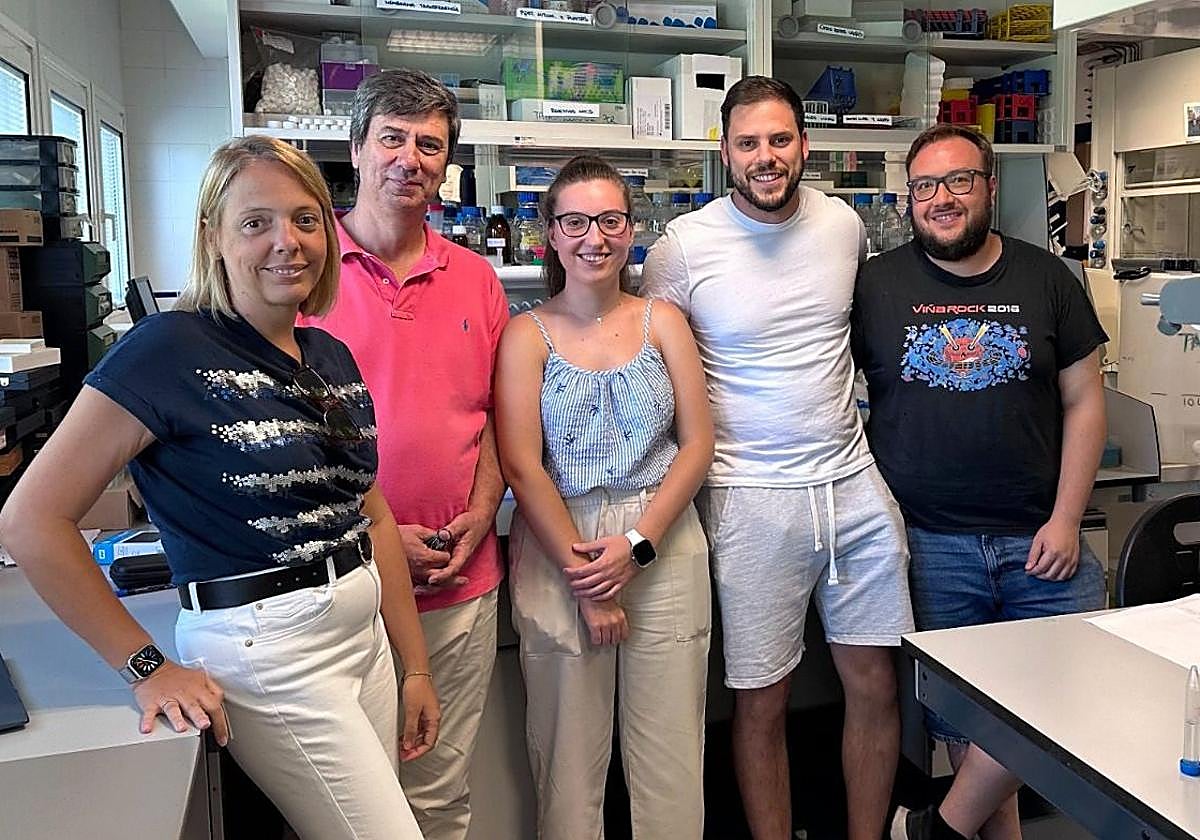
Europa Press
Malaga
A research team from the universities of Jaén, Malaga and Granada, alongside other science institutions in Spain, have identified two molecules involved in the formation of the epicardium - a layer that covers the heart, essential for its embryonic development. This has helped them draw a much more detailed molecular map, showing not only which genes are involved, but also how the different levels of regulation communicate with each other.
DNA is like the "instruction manual" for any living thing. From certain parts of the DNA, the cell makes a copy called RNA. This copy works like a messenger: it carries instructions for making proteins or for turning genes on or off.
Sometimes, that RNA is cut into very small fragments called microRNAs. These microRNAs are not used to make proteins, but instead they act as switches: they bind to other messenger RNAs and block their function. They control which genes are activated and which are not, allowing the body to function in a coordinated way.
Scientists analysed RNA at two key points in the development of the heart in mice
In a recent study, scientists analysed RNA at two key points in heart development in mice. In the paper 'Foxf1-mediated co-regulation of miR-495 and let-7c modulates epicardial cell migration and myocardial specification', published in the journal Cellular and Molecular Life Sciences, they show that two microRNAs (called miR-495 and let-7c) are particularly important. These two microRNAs help cells in the epicardium (a layer that lines the heart) to move and get where they need to go.
In addition, these microRNAs are controlled by a protein called Foxf1, which functions as a "conductor". Foxf1 activates let-7c, which in turn regulates other genes and microRNAs. All this creates a control network that allows cells to move and transform into the right cell types during heart formation.
As researcher and author of the study Estefanía Lozano explains, these microRNAs act as "master switches" in a much more complex genetic control system.
Although this work has been performed in mouse models and focuses on a very early stage of embryonic development, the regulatory networks described could be similar in humans. This opens the door to further research into how defects in these microRNAs or in Foxf1 could be linked to congenital heart malformations. "The bottom line is that the study shows that the heart is not only built by protein-coding genes, but also through a subtle dialogue between small molecules that fine-tune every cellular decision," Lozano says.
Genetic fingerprinting
The research is based on an approach that combines molecular biology, bioinformatics analysis and experimentation in cellular models to reveal previously invisible mechanisms. The scientists wanted to understand how the epicardium forms during embryonic development, so they compared two key stages in mice: the proepicardium, the initial structure and the established embryonic epicardium.
To carry out the study, the researchers took tissue samples at different stages of embryo development and analysed all types of RNA present at each stage. They were able to see which genes and microRNAs were more or less active as the tissue progressed from the proepicardium (early stage) to the epicardium (the layer that covers the heart).
From this analysis, they discovered that the microRNAs miR-495 and let-7c play a key role: they control the movement of epicardial cells and regulate other microRNAs. To test this, they performed experiments on cells grown in the lab and observed how these microRNAs influenced the cells' ability to move and transform into other cell types. They were also able to confirm that a protein called Foxf1 controls the activity of let-7c.
With all this data, the scientists created a "map" showing how genes, microRNAs and transcription factors interact to make the epicardium form correctly.
In the future, the researchers want to study how other microRNAs and proteins coordinate in this process and whether this same control network exists in the human heart. In doing so, they hope to better understand the origin of some congenital malformations. Furthermore, investigating what happens when these microRNAs or Foxf1 malfunction could help develop regenerative medicine therapies, for example, for recovery after a heart attack.
This study has been funded by projects within the regional government of university, research and innovation and the Ministry of Science, Innovation and Universities.
![[]](http://static.vocstatic.com/voc26/latest/assets/images/favicon/surinenglish/apple-touch-icon-57x57.png)