
Cemeteries
The gravedigger from Granada who learned the trade from his father
José Manuel Padial Fernández works at the Dúrcal cemetery which was built 110 years ago
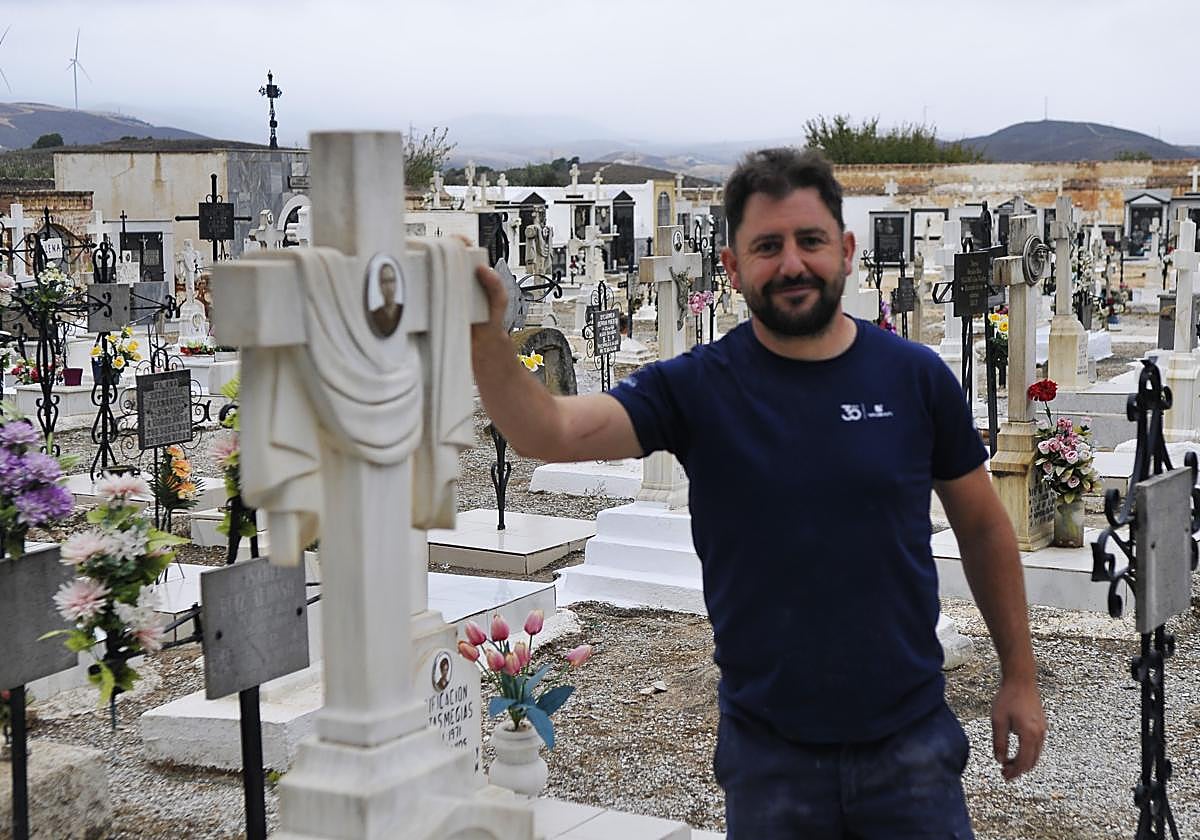

Rafael Vílchez
The Dúrcal cemetery in Granada province was inaugurated and blessed on 1 August 1915. Now in the countryside, it replaced the old cemetery located behind the village's church, where previously, burials took place inside the religious building's grounds.
In 1885 it was reported that the old Dúrcal cemetery was full and finally, in 1888, the then provincial governor ordered the construction of a new one because the old one did not comply with the hygiene and legal conditions.
Since that time a number of people have occupied the post of gravedigger. Some of them lived with their families in the undertaker's house, next to the cemetery, with a well in the courtyard and a century-old fig tree. The current incumbent is 38-year-old José Manuel Padial Fernández, who was born in Dúrcal. His father, José (now retired) also worked as the local gravedigger.
José Manuel is also the gravedigger at the Nigüelas, Cozvíjar and Cenes cemeteries and he manages the Dúrcal morgue, meaning he is responsible for all of the process from the moment he receives the first call from the family of the deceased until the funeral. He is also in charge of the exhumation of bodies.
Officially, José Manuel has been a gravedigger for five years, but he has helped his father in the cemetery since he was a child. In Dúrcal there are usually about fifty burials a year although recently there have been seven burials in one week.
In several locations
The Dúrcal cemetery has plenty of space and has been extended several times and the town hall makes sure that there is no shortage of niches. José Manuel is loved and respected by those who know him and they know how hard he works to make sure that the funeral process goes smoothly from beginning to the end . He works closely and professionally with the family of the deceased. José Manuel manages several public mortuaries together with Funeraria Romero in the Lecrin Valley.
In the past the Ánimas Benditas (Blessed Souls) would transport the mortal remains of the poorest, the neediest people who lacked the money to pay for a burial. Here the corpse was taken out and wrapped in a sheet to be placed in the grave. The coffins were made to measure by carpenters. A person would go from house to house giving the name of the person who had died and when the Mass was going to take place.
There is even an autopsy room, now disused, where detailed medical examinations were carried out on some corpses that required autopsies. There was also a space outside the Catholic Dúrcal cemetery to bury people who had taken their own lives.
Symbolism
The Dúrcal cemetery, like others, has large cypresses as a symbol of connection with the afterlife. They were planted in this and other places, according to some, "for their way of carrying souls to heaven and their evergreen foliage as a symbol of eternity, also being associated with mourning and the connection between heaven and earth".
Civilisations such as the Egyptians, Greeks and Romans placed flowers on graves, believing that they accompanied the deceased on their journey. In Dúrcal and other areas there were the so-called 'Lloronas', women hired to mourn the deceased at funerals, also known as 'plañideras'. Their function was to mourn in a disconsolate and theatrical manner during wakes to simulate the family's grief and enhance the reputation of the deceased, often speaking of his or her goodness. This tradition dates back to ancient Egypt and existed in various cultures.
In Dúrcal, as in other places, it is customary to bring many flowers to the cemetery on All Souls' Day or a few days before, as a symbol of respect, love and to honour the memory of loved ones. This custom dates back to ancient times and flowers have become a way of expressing feelings and remembrance of those who are no longer physically present.
The flowers are a bridge between the living and the deceased, representing the love and remembrance that endures. Some locals grow the most traditional flowers for this time of year on their farms to take them to the cemetery. The flowers that last longest in the cemetery are chrysanthemums, carnations and gladioli, thanks to their robustness. Other long-lasting options are roses, daisies and lilies.
All Saints' Day
The parish priest of Dúrcal, Don Joaquín, has revived the old tradition of holding a mass on All Souls' Day in the cemetery, which usually takes place in the context of the Solemnity of the Faithful Departed (2 November). A few days before, families clean and decorate the graves and niches of their ancestors.
Although 1 November is All Saints' Day and 2 November is All Souls' Day, they are often associated and celebrated together, especially on public holidays. All Souls' Day was instituted in the tenth century by Saint Odilon of France. The day is an opportunity to reflect on life after death and to honour the memory of those who have passed on.
Until a few decades ago, wakes in Dúrcal and other places were held in the home of the deceased, a custom that continued for a long time until social, health and town planning changes led to the birth of the funeral parlours. This homemade practice allowed the family and community to get together, say goodbye to their loved one and share the mourning, often for several days.
Relatives and neighbours often helped by bringing food and other supplies. One Dúrcal resident, Juan 'Regalo', who died recently at the age of 92, attended all the funerals in his village from when he was a young man and many people attended his own funeral.
![[]](http://static.vocstatic.com/voc26/latest/assets/images/favicon/surinenglish/apple-touch-icon-57x57.png)