
Wildlife
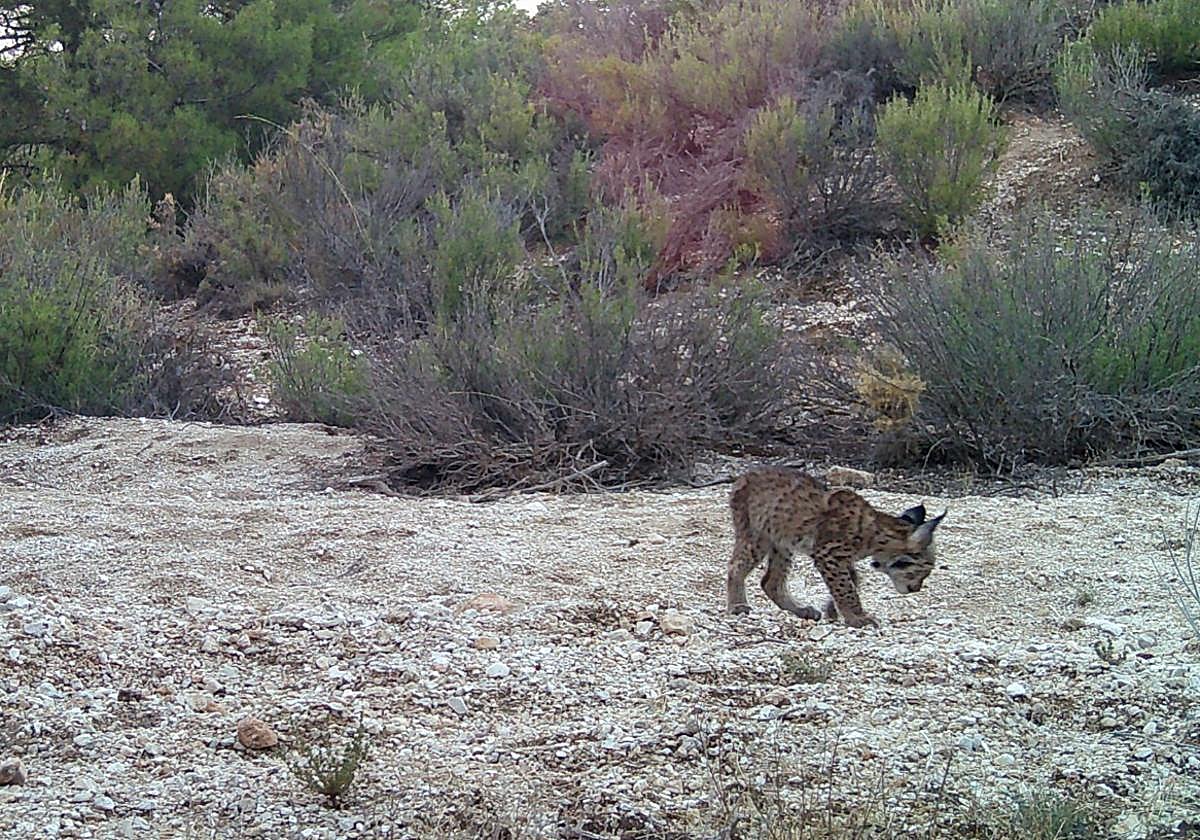
Four Iberian lynx kittens born this spring in Andalucía's Granada province
The recovery of this wild cat species which is native to Spain is an unprecedented success story, having gone from less than a hundred specimens to 2,400 in little more than twenty years
Inés Gallastegui
Granada
Three weeks ago, cameras installed to track bears and wolves captured for the first time the presence of an Iberian lynx in the Pyrenees. The case of 'Secreto' - released in the Sierra Norte de Sevilla and identified thanks to the chip it carries - is paradigmatic of the success of the lynx reintroduction programme, which prevented the risk of extinction: at the beginning of this century there were less than a hundred specimens left - all of which were in the Andalucía region - and today there are more than 2,400 throughout the Iberian Peninsula.
Granada province has played its part in this success: since December 2022, some 32 specimens have been introduced in Sierra Arana, most of them from captive breeding centres. Last year the first three cubs were born in the wild in decades - the lynx disappeared from the province more than 30 years ago - and this spring another four were born, according to Javier Salcedo, director of the Iberian Lynx Recovery Programme in Andalucía and coordinator of the LIFE Lynx Connect programme. "There may be more than four, because the photo-trapping cameras do not always show clear images," explains Salcedo. They are the offspring of two females, Toranja, from a breeding centre in Portugal (her name means 'grapefruit'), who also had a cub last year, as well as Uca.
The environmentalist explains, however, that it is not easy to determine how many lynx live in the province. He estimates "between 15 and 20", but explains that several of the released specimens have died - most of them as a result of being run over - while others move between different regions. For example, specimens have been located in Deifontes and Montefrío and thanks to their collars with locators we know that there are already exchanges in both directions between the population of Sierra Arana and Sierra Mágina, in Jaén. One of the felines released in Granada moved to Sierra de Gádor, in Almeria and was located in Alicante, where the battery of the chip ran out and contact was lost.
The LIFELynx Connect team traps individuals in special cages each autumn to check their health and fit them with a new monitoring device. With the babies it is necessary to wait until they reach a certain size so that the chips do not suffocate them as they grow.
The new Granada lynxes are offspring of the Portuguese Toranja, who also gave birth last year, and of Uca
"In conservation, you have to be patient," says the expert. The Sierra Arana area was chosen after seven years of exhaustive analysis of the area and was chosen because it is an "optimal habitat", connected to other lynx populations and with an abundance of rabbits, which are the main diet of this predator.
"Here they are the farmers' allies," he explains. In these areas between the Vega de Granada and Hoya de Guadix, the 'Lynx pardinus' "has an extensive area and it is only a matter of time before an important nucleus is formed". In the peninsula as a whole, the population has multiplied by 2.5 in the last five years of LIFELynx Connect, heir to other European programmes with the same objective.
The silent threat
"It is an international success story. Not even the most optimistic would have imagined this situation twenty years ago," says Salcedo. Serious problems such as the new variant of rabbit haemorrhagic disease (RHD), which decimated the population, especially in western Andalucía, put the reintroduction programme at risk. "When things are done well and the effort is maintained over time, results are achieved," he stresses.
The International Union for Conservation of Nature reclassified the Iberian lynx last year as a "vulnerable" species, after overcoming the "critical risk of extinction" it was at in 2002. However, the threats remain. On the one hand, road kill and occasional poaching. On the other, fluctuations in rabbit populations, on which their survival depends, although they sometimes also eat rodents, birds and young deer.
The lesser known "silent threat" is their low genetic diversity, which makes them more vulnerable to hereditary diseases. As the Andalusian regional government's spokesperson for sustainability and environment, Catalina García, highlighted last spring, "All the lynxes currently running in Spain and Portugal are the offspring, grandchildren and great-grandchildren of the 75 females that were still in Andalucía two decades ago".
![[]](http://static.vocstatic.com/voc26/latest/assets/images/favicon/surinenglish/apple-touch-icon-57x57.png)