
History
The oldest town in Spain, at 5,000 years, is in Andalucía
Los Millares in Almeria is considered the first town of the Iberian prehistoric period, a key settlement of the Copper Age

R. Pérez
Almería
Los Millares in Santa Fe de Mondújar (Almeria) is one of the most important sites for understanding prehistoric societies of Western Europe. It is considered the first prehistoric town on the Iberian Peninsula, founded more than 5,000 years ago.
It was then that a new funerary practice was established: a new type of megalithic burial, very different from the traditional dolmens.
With a surface area of 19 hectares (13 for the necropolis and six for the settlement), the site is considered a key settlement of the Copper Age for the richness of its grave goods made from exotic raw materials, the complexity of its structure with four concentric enclosures and the presence of forts in the surrounding area.
The people of Millares chose the site after consulting the stars and assessing the advantages of the environment protected by the Andarax river and the Huéchar valley. The land offered fertile opportunities for growing crops and livestock, with access to the river, the sea, water springs, copper mines, forests and abundant fauna.
Los Millares was one of the first sites to be recognised as a historic-artistic monument in 1931. In 1985, it became an asset of cultural interest. In 1996, the regional government of Andalucía declared its archaeological value. The settlement was occupied between 3250 and 2200 BC, making it the most important site in Western Europe. Its inhabitants took an important step on the road to civilisation.
These chambers were accessed through a corridor divided by stone slabs. The most distinctive feature was the covering of the burial chambers with false domes built using rings of stone. These structures, known as tholoi, represented a new ritual and funerary concept.

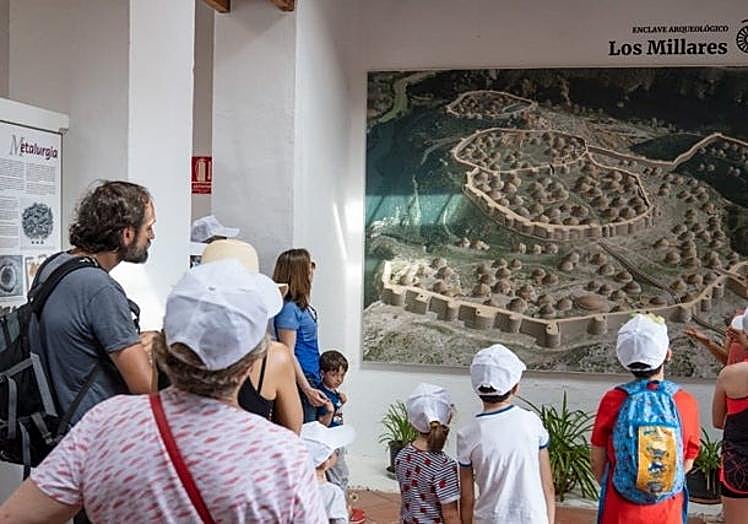
Los Millares is a European reference point for the Chalcolithic, as its spatial organisation demonstrates an extraordinary functional complexity for its time. The complex consists of a settlement surrounded by four concentric walls, a necropolis and 13 forts located on both sides of the Huéchar valley, which provided inhabitants with a powerful defensive system.
The necropolis consists of around 80 large graves and various ceremonial structures. The tombs are grouped in small clusters, reflecting the family, social and symbolic relationships of the Los Millares community.
Site visit
The Los Millares archaeological site consists of the archaeological site itself, a visitor reception centre and an interpretive area, with an independent visit. The visit begins at the reception centre, where you can find abundant information about the research that has been carried out.
The visit of the archaeological site, which is free and open to the public, begins with a tour of the necropolis along an itinerary along the sides of which you can see the burial mounds of the graves. Once you reach the settlement, you walk through the different enclosures defined by successive lines of concentric walls.
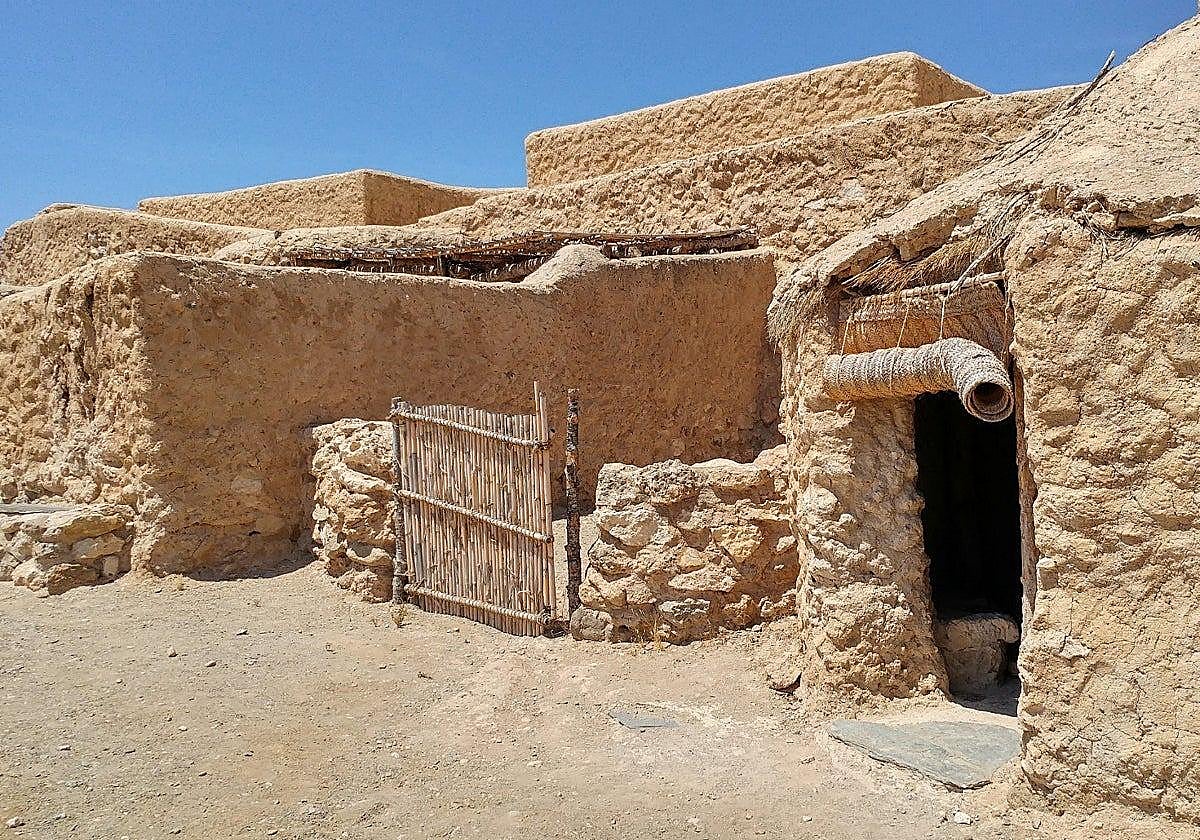
From the visitor reception centre, heading west, you reach an interpretive area where a section of the wall with towers or bastions and several huts have been recreated at full scale, showing the activities of the time. The full visit lasts between two and a half and three hours. It is also possible to visit only the interpretive area and the reception centre, which would take about an hour and a half.
![[]](http://static.vocstatic.com/voc26/latest/assets/images/favicon/surinenglish/apple-touch-icon-57x57.png)