
Emergency services
Andalucía successfully stages biggest-ever tsunami drill in Spain with 20,000 taking part
The rehearsal of this emergency situation also involved some 500 public buildings, nine schools, two hotels and a guesthouse near the coast

Seville
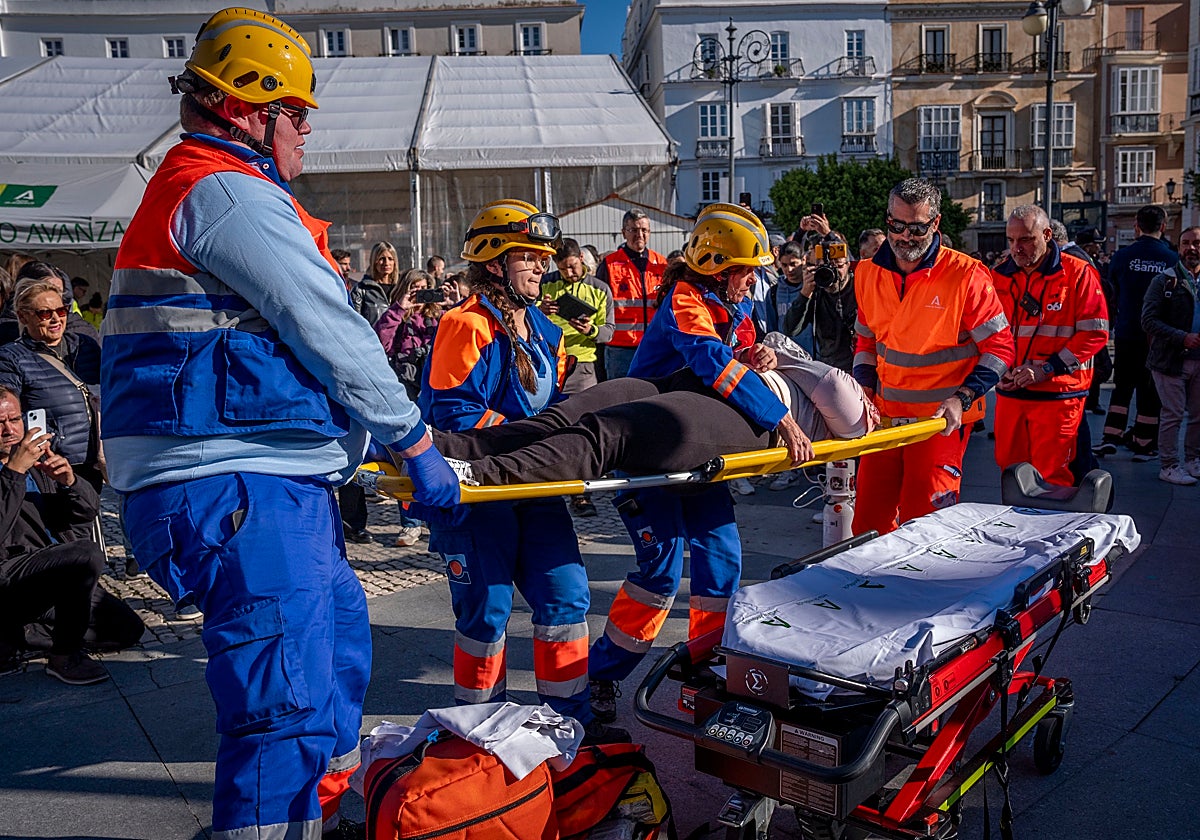
The Andalucía region carried out the largest ever tsunami drill in Spain on 20 November in Cadiz province. More than 20,000 people took part in the operation, with more than 1,000 emergency personnel from 40 different services. The rehearsal of this emergency situation also involved some 500 public buildings, nine schools, two hotels and a guesthouse near the coast.
Regional minister of health, the presidency and emergencies Antonio Sanz, who is also responsible for activating the emergency plan in the event of a tsunami, has stated that the test was carried out "successfully" and that it "has made history in Cadiz as the greatest milestone in emergency planning".
As Sanz explained, the operation started with the simulation of an earthquake similar to that of Lisbon in 1755, although with a magnitude of 7.6, to the south-west of Cabo de San Vicente. "The countdown to organise all the protection and response measures for people and property, as would be done in a real scenario, started at 10am," the minister said.
Mass ES-Alert message
The test conducted by the Andalusian emergency agency began with the civil protection service sending a mass ES-Alert message to all mobile phones in the municipalities along the Cadiz coast, which included information on the measures to be adopted and a warning that this was a drill.
The alert consisted of an easy-to-understand text asking residents to climb to a height of three or more floors or go to the established meeting point without delay. It also included a link to the 112 action advice. The regional minister said that an evaluation meeting will analyse the operation next week.
Sanz highlighted the importance of such exercises, which inform people how to act and how much time they have to get to a safe point. As the regional minister said, just this action alone could "save many lives".
Schools involved
The schools closest to the La Caleta beach, such as Santa Teresa, took 16 minutes to reach Plaza de San Antonio, which, together with Plaza de la Mina, had been declared a non-flood zone and, therefore, chosen as a meeting point. A total of 2,500 students gathered at these two locations.
The integrated operational coordination centre and an advanced command post have been deployed, from which the entire care and coordination system has been activated to assess the city of Cadiz's response to a tsunami, the response times of emergency services and of the population in a situation of this nature, as well as the operation of emergency sound systems such as loudspeakers or bells.
Pemea - the chat-based messaging service that allows people with functional disabilities, such as deaf users, to contact 112 - was another tool that was tested and evaluated. Officials also evaluated both vertical evacuation capacity (that is, moving to higher floors) and horizontal evacuation away from flood-prone areas. More than 500 public buildings, nine schools and three hotels took part. The regional minister thanked all of them for their cooperation.
Collaboration
Antonio Sanz highlighted the collaboration of the regional ministry of education, which has been responsible for raising awareness among students on how to act in such situations, "sowing the seed of self-protection in all of them, since the children of today will save lives tomorrow and education in emergencies prevents risks in both the present and the future".
The operation also included exercises to safeguard cultural heritage, with the participation of Archivo Histórico Provincial, Biblioteca Provincial and Centro de Arqueología Subacuática y el Museo de Cádiz. At these institutions, the simulation tested the reception and handling of artworks and artifacts arriving from other centers in the event of an emergency.
Warnings to surfers, rescues and forensic protocols were practiced at the beach of Santa María del Mar, while assessment of damage to buildings was carried out in Zona Franca.
![[]](http://static.vocstatic.com/voc26/latest/assets/images/favicon/surinenglish/apple-touch-icon-57x57.png)