“This discovery means that books on the History of Art are going to have to be changed”
One of the greatest experts on the history of Ardales and a key figure in the research, analyses the results of the study
FERNANDO TORRES
Lunes, 5 de marzo 2018, 14:26
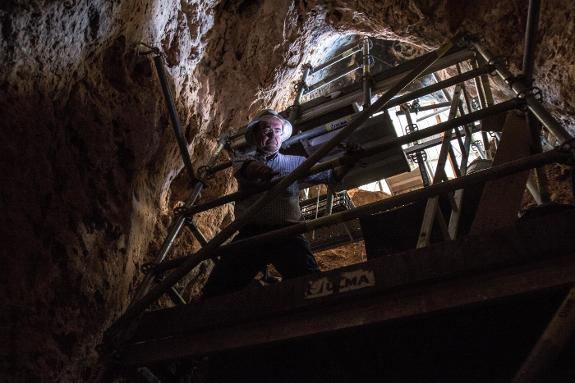
José Ramos, from the University of Cadiz, is the director of the excavation works in Ardales and Teba. He was involved in the project and coordinated part of the works, in which he has been involved since 1985. For him, these results are recognition of very essential work.
These results have led to numerous tributes from the scientific community. How do you feel?
So the Neanderthals are in the news again...
This changes the paradigm of what we have been studying in the past. There were signs beforehand, but the physical confirmation of these datings came from the Max Plank laboratory, which is a benchmark in science.
For those who don't know much about prehistory, how important is this finding?
It will change the books about History of Art. In science methodology it is what we call a change of paradigm. It means that everything we have been studying is, in fact, older than we realised. It was a really surprising result and has numerous cultural and anthropological implications. People have always thought that modern humans were the great artists and engineers, but the Neanderthals have their rightful place in history now.
They say the history books will have to be changed.
That's the change of paradigm. There will be other big surprises to come. Everything has to be looked at again. We have always said that art began 40,000 years ago with modern man and now we know it was 65,000 years ago. Neanderthals were very similar to us, that is the great lesson to be learned from all this.
Does it put an end to discussions about the cultural abilities of the Neanderthals?
The steps are the following: you measure the incrustations over the art with Uh/T. You do a battery of tests in one of the best laboratories in the world. The dates make sense. The Neanderthals were alive at that time. It was a hypothesis, and now the hypothesis has been proven.
How did you feel as the results came through?
We found out in the summer. We had met several times to check and collate the data. We prepared the article and the Science journal reviewed it extremely carefully. The fact that they published it says a great deal.
What does being the birthplace of cave art mean to Ardales?
In the cave there is still a lot of unexplored material which will lead to major discoveries. We mustn't be blasé; tomorrow it could turn out that another cave is 2,000 years older. However, we are looking at the result of a lifetime's work, with Pedro Cantalejo. Ardales is a small place but the council has supported us in every possible way. Despite its size, it has shown that with tenacity great things can be achieved.