
Toledo train disaster 2026
Why did the alarms at Atocha's control post not go off before the imminent collision in Toledo?
At least five operators had to monitor the train that resumed its journey at normal speed despite there being another train on the tracks
Octavio Igea
The Guardia Civil and members of Adif's railway accident investigation commission took a statement on Wednesday afternoon from the technician who, according to Minister of Transport Óscar Puente, had authorised the Renfe AVE train to resume its journey. Following this order, the AVE train crashed into an Iryo train that had stopped on the tracks.
Sources believe that, once the LZB safety system on the Madrid-Seville route was deactivated due to a computer failure, causing all trains to stop immediately, the Urda tragedy was the result of "multiple instances of negligence" committed at the CRC (Atocha regulation and control centre).
Related story
Why didn't anyone warn the Renfe train driver during the 17 long minutes he was travelling towards the fatal crash? Or perhaps by the time they did, it was already too late?
A high-speed train needs four kilometres to stop if it's travelling at 300km/h; three if it's travelling at 250km/h; at least two if it's travelling at 200km/h; and one at 150km/h. A little over 100 seconds at most.
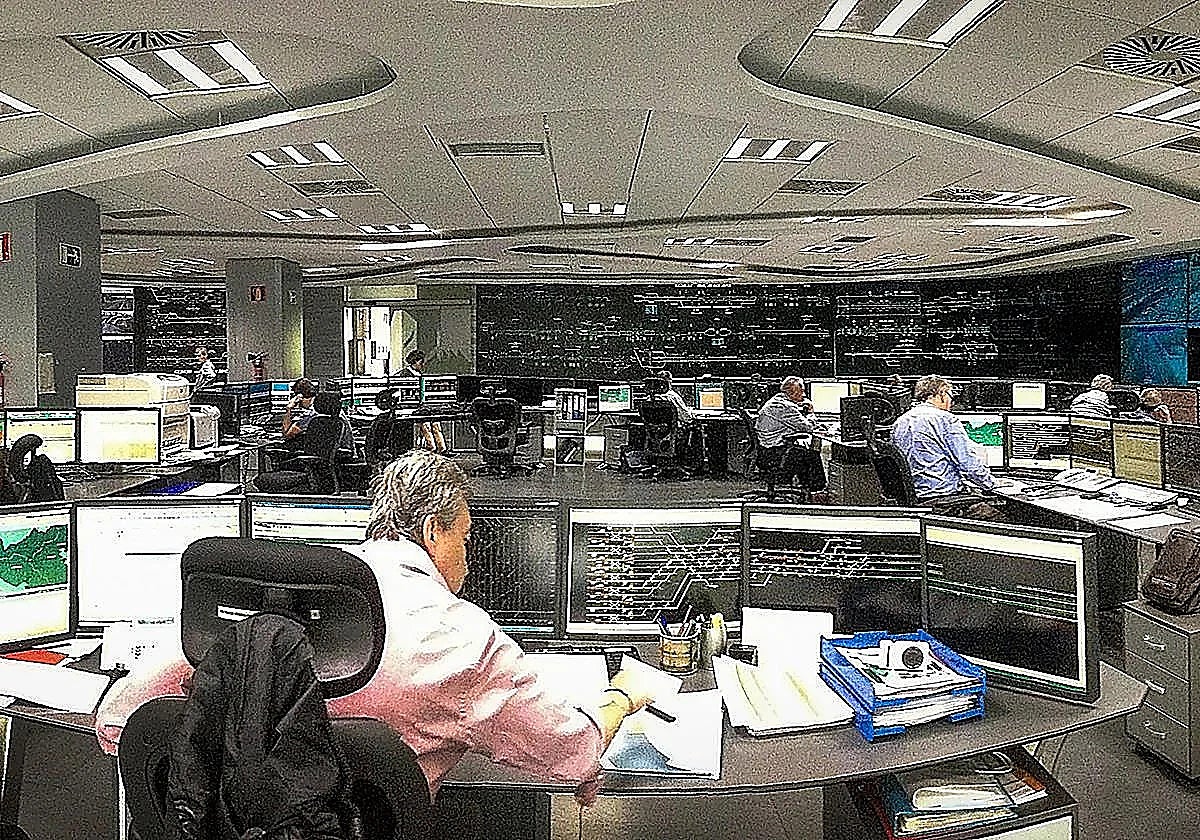
The CRC is a strategic infrastructure, on par with hospitals and airports, equipped with two independent power supply systems and a third, dedicated emergency system for essential buildings, as its 24-hour operation is a matter of national importance.
For example, a few years ago, someone left their motorcycle parked in front of the centre, located in a discreet corner of Atocha station. An army detachment was nearly mobilised to remove it. It is considered the "brain and eyes" of the entire AVE high-speed rail network.
There are three other "twins" in Zaragoza, Antequera and Albacete, which share the supervision of the high-speed lines, but only the Madrid centre has the capacity to assume command "within five minutes" in the event of any serious incident, including the remote control of any train.
Nothing happens on the high-speed rail lines without the knowledge or authorisation of the on-duty supervisors at Atocha station. Supervisors. Plural. At the time of the accident, at the CRC there must have been at least five people responsible for monitoring the condition of the track and the two AVE trains involved in the accident, from the moment the Renfe train began accelerating at 8.36am until it collided with the Iryo train at 8.53am.
The entire network is monitored in real time at the CRC: there is a traffic manager for every 200 kilometres. In the case of the Urda accident, the two trains were on the same section, so what happened cannot be attributed to a lack of coordination.
Above this section supervisor, there is also a manager for the entire Madrid-Seville route, who is focused on alerts that the trains may emit, another in charge of alerts that may occur exclusively with communications, a control room manager and staff who "constantly" monitor the security cameras.
Another question that remains unanswered is whether the control centre's supercomputers issued any alarm signals and, if so, why they were ignored.
Although the LZB system, which prevents trains from exceeding the required speed and two or more units from getting too close and running simultaneously on the same section of track, failed, there is another system above it called Da Vinci.
It was created specifically by Adif for the overall supervision of the entire AVE high-speed rail network and is responsible for coordinating the movement of trains. An algorithm organises the timetable, ensuring, among other things, that trains travelling in the same direction maintain an appropriate distance, that excessively long stops at a station do not cause traffic jams and that in large stations like Atocha, it is known from early morning which of the 15 platforms each train should be positioned on.
Da Vinci also manages the power systems and the passenger and driver information systems. This was the channel that allowed the control centre on Wednesday to order the Renfe train driver to resume the journey, even though the AVE was stopped at a red light indicating that it should not proceed because another train was already in the path.
The driver's response, who minutes before the tragedy had informed passengers that he was stopping due to "traffic density", is currently unknown. At the time of publication, he had still not been located. The Iryo driver also used the intercom to warn that her train was still stationary further ahead.
According to industry experts, in railway jargon, a train that has lost its safety systems, in this case the LZB (Lightning Lock), is considered unusable for operation and "unfit to carry passengers". Theoretically, in these cases, the train must be evacuated and remain stationary until another locomotive arrives to take it to the workshops.
In extreme cases, it may be allowed to proceed at 'marcha vista': a minimum speed that can never exceed 40 kilometres per hour. According to initial analyses, the Renfe AVE (high-speed train) reached the Urda straight at over 100km/h.
Access the broad Spain national news archive
