
Toledo train disaster 2026
Spain's Transport Minister puts blame on Adif control centre for Toledo train crash
Óscar Puente has stated that authorising the AVE train to proceed at normal speed when there was another train on the tracks was "an inexplicable decision"
José A. González
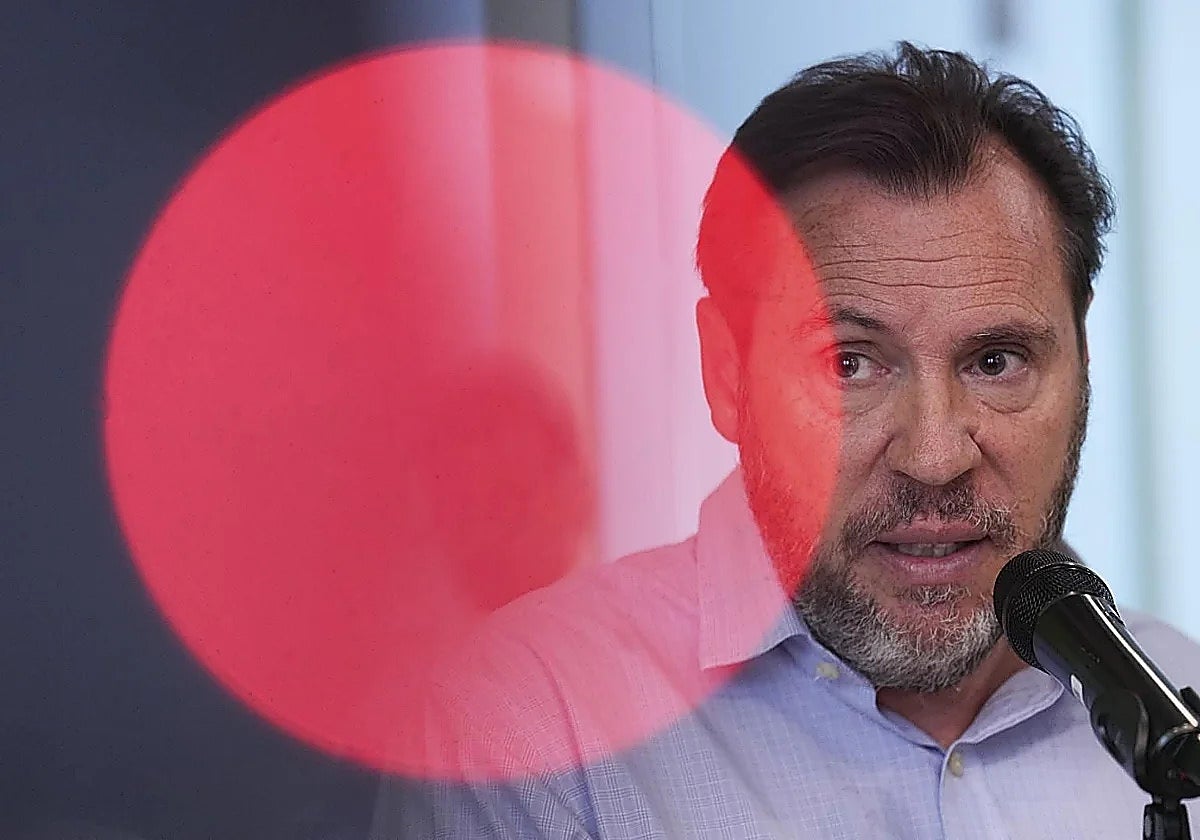
Spanish Transport Minister Óscar Puente has described the actions of the Adif control center at Atocha station prior to the fatal Urda (Toledo) train crash on Wednesday as "inexplicable".
At 8.54am on 28 October, a Renfe AVE high-speed train rear-ended a stationary Iryo train, killing at least 68 people.
Puente strongly criticiced the authorisation that allowed the AVE train to resume its journey at normal speed despite there being another train ahead. According to him, those responsible for traffic control were aware of the position of both trains at all times. For Puente, the order was incorrect, but there was still time to fix it before the collision.
Related story

The minister has zeroed in on the decisions of the operators at the Atocha control center, not on the train driver's actions. He explained that the AVE high-speed train had a target speed indication of zero and a red signal. Despite this, the driver received instructions to continue as normal, when he should have been operating under what is known as 'marcha vista', which requires trains to travel at a speed that allows them to stop in front of any obstacle.
Puente considers it particularly serious that this authorisation was given while another train was stopped in the same section.
The chain of events began at around 8.30am, when a computer communication failure knocked the LZB continuous monitoring system offline on a section of the Madrid-Seville high-speed line. The trains travelling on that section, about six according to the minister, automatically stopped.
Minutes later, the control center authorised the Renfe AVE train to resume its journey. The train travelled approximately 25 kilometers until it reached the Iryo train, which was stationary at the entrance to Urda station.
Puente stated that the safety mechanisms had responded correctly to the malfunction by stopping the trains. What he finds difficult to explain is the subsequent management from Atocha station.
According to his account, the trains were "perfectly positioned and located" and there was no emergency situation that justified a hasty decision. He stated that the instructions were handled by experienced personnel, with the involvement of an operator, a supervisor and another worker.
Puente said that there had been time to rectify the order before the collision. He explained that another train driver affected by the system failure had corrected the instructions the control centre had given him. In the case of the AVE train, however, that error correction did not take place.
The Iryo train also received authorisation to resume, but it is not yet clear why it failed to do so.
The investigation remains open to determine the circumstances of the stoppage and reconstruct the communications between the train drivers and the control center.
The minister avoided assigning individual responsibility before the investigation is complete, but he was particularly critical of the decision to restore service. He stated that the LZB outage was a computer malfunction that could occur and to which the system responded safely.
Access the broad Spain national news archive
