
Toledo train crash 2026
Urda accident AVE train driver received instructions to 'resume at normal speed' despite stationary Iryo train
"At normal speed?" asked the AVE driver. "Yes," the Adif controller replied, but 12 minutes later the Iryo driver reported that she was still unable to depart
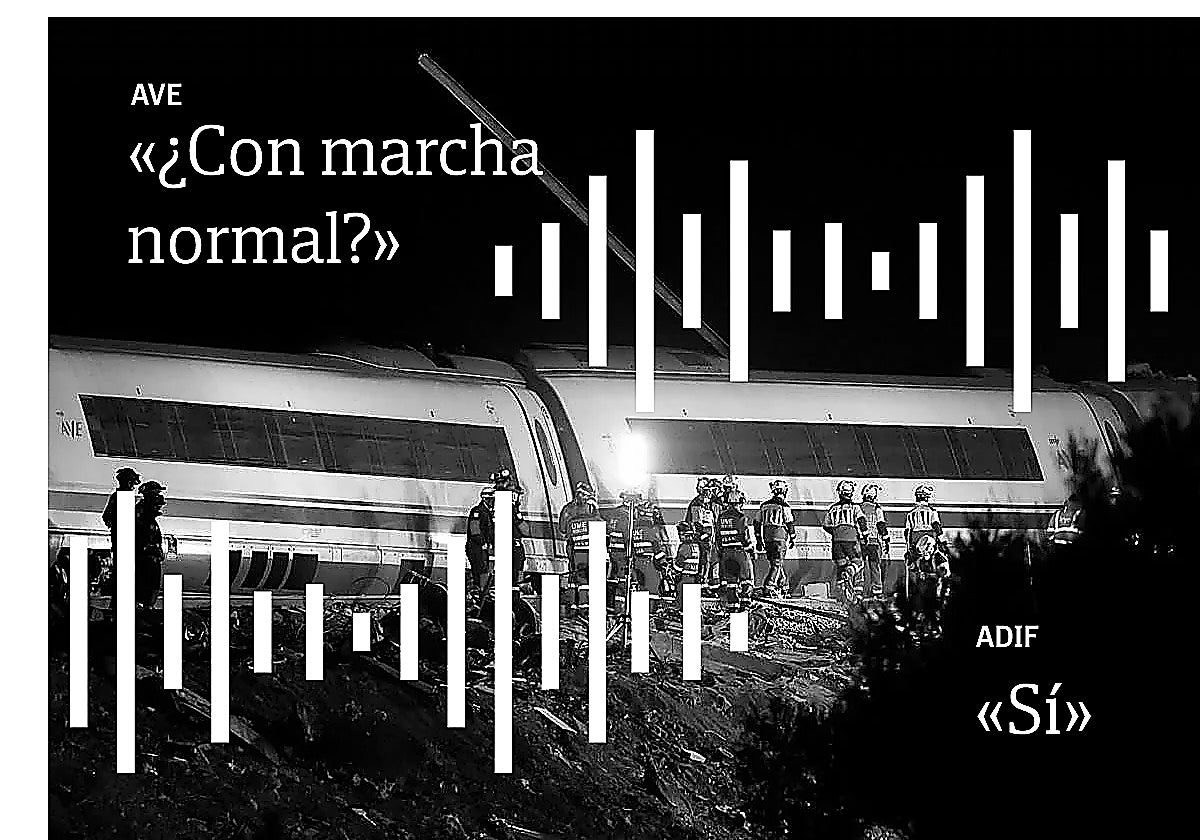

Audio recordings show that the Adif control centre authorised the driver of the Renfe AVE train involved in the accident at Urda (Toledo) to resume ... travel at "normal speed" following a fault in the LZB safety system. Just 12 minutes later, the driver of the Iryo train with which it would eventually collide reported that she was still stationary on the same track because she was unable to depart.
The three recorded conversations between the train drivers and the Atocha CRC (regulation and control centre), to which Sur has had access, reconstruct the minutes leading up to a tragedy that has claimed at least 68 lives. In them, one can hear the controllers' doubts, the instructions on how to get round the computer fault and confirmation that one of the trains remained stationary.
The first call came in at 8.31am. The driver of the AVE 2080, which was travelling towards Seville, reported a fault with the LZB system, which is responsible for continuously monitoring the speed and movement of trains. The Atocha control centre was aware of the problem. "The Urda control centre has gone down," explained one of its operators.
Related story
-
Toledo train crash 2026
Melchor Sáiz-Pardo
The operator stopped for a moment while he consulted his colleagues on how to proceed. "Hold on, we're considering whether to switch it off, just a moment," he said. A few moments later he said: "Hold on a moment, we're getting a bit confused because they say they're going to sort it out, just a moment."
The conversations suggest that the staff at Atocha were unsure how to deal with the incident.
Finally, at 8.36am, the controller issued the instruction, which was recorded as follows: "Driver of train 2080, switch the LZB off and on again and resume travel under the BSL at normal speed."
The authorisation omitted the requirement to proceed with caution set out in the provisions applicable to certain situations involving a loss of transmission.
The driver even doubted the instructions he had been given. "At normal speed?" The controller replied: "Yes."
Five minutes later, at 8.41am, it was the driver of the Iryo 6076 who called Atocha. Her report stated that the train was stationary in front of the Urda entry signal, precisely on the track along which the Renfe AVE was travelling.
"I've had a loss of transmission at target speed 40. I've been driving in BSL mode, passed the next CDI at 113 + 200, but haven't regained transmission. I'm currently stationary at the Urda entry sign," she explained.
The staff at Atocha then began to manage the signalling. "Pay close attention to the signals and I'll hand you over to my colleague," one of the operators said.
At 8.41am, she received a new formal instruction, very similar to the one sent to the AVE five minutes earlier: "Driver of train 6076. Switch the LZB system off and on again, and resume travel under the BSL at normal speed."
"Right, perfect, well, thank you very much," she replied. From Atocha they added: The conversation ended without the Iryo having confirmed that it was back in service.
The third call was made at 8.48am, just six minutes before the collision. The driver contacted Atocha again to explain that the previous instruction had not resolved the problem.
"The train won't let me restart the LZB system, which is why I'm still stopped at the entry signal," she reported.
The controller's reply was brief: "All right then, no problem, whenever you can, OK? And if you have any problems, give us a call."
"Right, perfect, I'll let them know now. Thanks," replied the train driver.
The recording went on to capture conversations between staff at the control centre itself. "Seriously, mate, seriously… 6076 is having problems with the equipment," one of them can be heard saying.
Another exchange highlights the doubts that persisted regarding the incidents. "Shouldn't we switch it off, or is this just a normal Meta 0? We've got a problem at Urda," one of the workers said.
By that point, the control centre at Atocha had received two reports from the Iryo train driver confirming that the train was stationary at the Urda entry signal. In the three conversations that have been released, no counter-order to the AVE can be heard, nor any warning to its driver regarding the presence of the other train.
Adif's directive COI 01/25, which comes into force in February 2025, stipulates that, in the event of a failure of the automatic block system, in order to resume travel using BSL, the block section through which the train is to pass must be "free of trains". It expressly extends this precaution to certain incidents involving the LZB system.
Railway traffic regulations also provide, in the event of certain transmission failures, for authorisation to continue under BSL by proceeding with caution and stopping at the first sign of any obstacle.
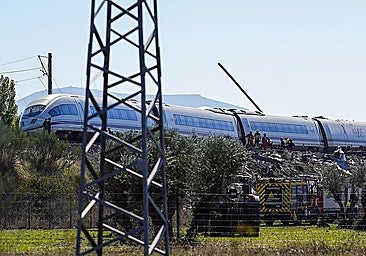
The collision occurred at around 8.54am, when the AVE caught up with the Iryo, which was stationary on track number two. Minister for Transport Óscar Puente has provisionally attributed the disaster to the decision to allow the train to resume its journey under those conditions and described the control centre's actions as "inexplicable".
The Guardia Civil and railway investigators are examining the communications and the circumstances under which the movements were authorised, while attempting to reconstruct the sequence of decisions leading up to the collision.
