
Toledo train disaster 2026
Death toll rises to 64 in Urda high-speed rail disaster as driver warns system was faulty night before
Catastrophic rear-end collision between Renfe AVE and stationary Iryo train leaves over 100 injured in Spain's second major rail tragedy in nine months

Málaga
The death toll from the high-speed rail collision in Toledo province has risen sharply to 64 fatalities, with over 100 people injured, as emergency ... services continue search and rescue operations in the wreckage.
Authorities from the Emergency and Civil Protection Services of Castilla-La Mancha updated the official casualty figures at 2pm on Wednesday, warning that the toll may rise further as search teams reach deeply damaged carriages.
The disaster occurred at 8.54am at kilometre marker 118 on the Madrid–Seville line, between Mora y Orgaz and Urda.
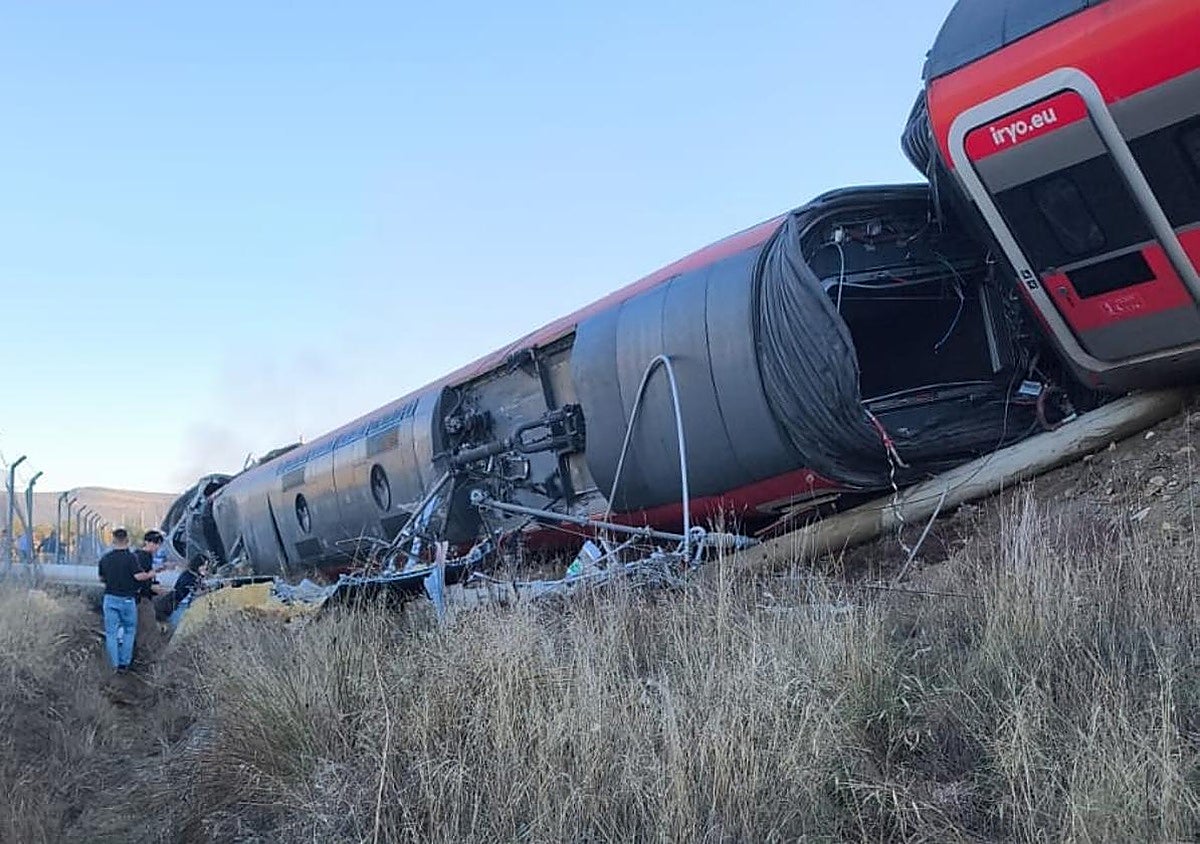
A Renfe AVE service (train 2080) collided from behind with a stationary Iryo service (train 6076). A total of 544 passengers were travelling across both trains - 147 on the AVE and 397 on the Iryo service.
The force of the impact derailed multiple carriages, sending at least two plunging down a steep embankment in a remote sector of the Montes de Toledo.
Malaga AVE driver reveals signalling system failed previous evening
As investigators examine the circumstances surrounding the crash, evidence is emerging regarding pre-existing technical failures along the line. A Malaga-based AVE train driver, speaking on condition of anonymity, revealed that the automatic signalling system at the exact location of the collision was already malfunctioning on Tuesday evening.
"I was driving the Madrid to Malaga service at around 8.30pm yesterday, and the train stopped exactly at kilometre 120 near Urda because the system failed to register our location," the driver explained.Civil engineer José María Goicolea Ruigómez noted that a technical failure in the LZB automatic signalling system - which continuously monitors speed and applies automatic emergency braking - would have forced controllers to switch to manual traffic management protocols.
Ministry of Transport sources confirmed that potential human error in manual traffic control authorisation remains a primary line of inquiry.
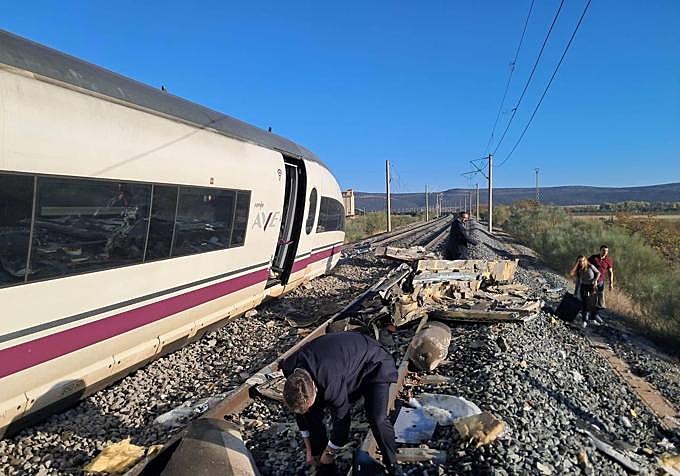
Journalist Miguel Ángel Pérez Laguna, who was aboard the AVE train, described the moment the trains crashed: "The impact was incredibly violent. The force of the crash threw wreckage through the air across the tracks."
Emergency response escalated as Andalusian leadership expresses concern
Emergency response escalated as Andalusian leadership expresses concern
Regional authorities in Castilla-La Mancha have escalated the Regional Emergency Plan (Platecam) to Level 2 and deployed the Military Emergency Unit (UME).
Firefighters from Alcázar de San Juan and Orgaz, Civil Protection units, and medical helicopters remain engaged at the scene.
Andalusian Regional President Juanma Moreno expressed deep concern over the disaster, describing it as "another nightmare" just nine months after the Adamuz (Cordoba) rail crash in January, which claimed 46 lives.
Moreno emphasised that a significant number of Andalusian residents were travelling on the two services.
Rail operator Renfe has suspended all high-speed rail links between Madrid and Andalucía indefinitely.
Renfe has enabled free cancellations and ticket modifications, while activating its helpline for victims and relatives (900 10 10 20). Dedicated support teams have also been established at Madrid-Atocha station.
