
Toledo train crash 2026
Malaga AVE train drivers report that signalling system was already faulty at Toledo collision point the day before
"The track monitoring system has been malfunctioning since Tuesday night," a driver who regularly travels between María Zambrano and Atocha said
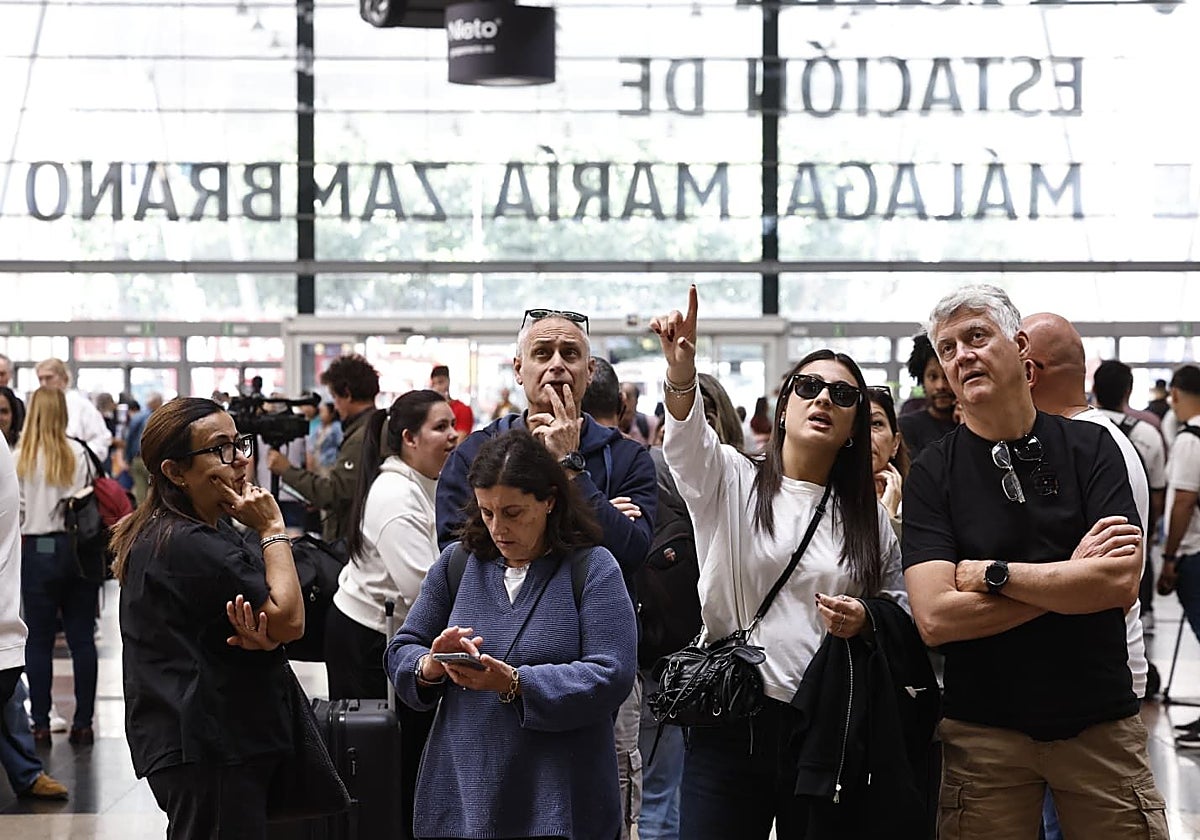

Málaga
Malaga train drivers have said that the "monitoring system" at the point where an AVE and an Iryo trains collided in Toledo province on Wednesday ... "had been malfunctioning" since Tuesday evening, the day before the incident.
One of the drivers, who regularly travels between Malaga and Madrid, said that he had passed that very spot at around 8.30pm on 27 October.
"I was travelling on the train from Madrid to Malaga and it stopped exactly at kilometre 120, which is Urda, because the system failed to recognise the location," the driver stated.
At that point, once it has been established that the digital signalling is not functioning due to "transmission problems", it becomes the driver's responsibility to monitor the situation and operate the train on "visual running" (at a reduced speed of no more than 200km/h, with the driver in control without automatic assistance) and in accordance with instructions from the Adif control centre.
It is worth noting that, at this point in the track, trains still operate under the old LZB signalling system (the rest of the more modern lines use ERTMS). Adif is currently working on a multi-million-euro modernisation programme under way. The use of LZB dates back to Spain's first ever high-speed line: Madrid-Seville, which began operating in 1992 using the technological protocols available at the time.
The Malaga driver suggested that, given that visibility was good at the time of the accident, this situation was most likely due to human error, as the driver of the AVE that collided with the Iryo had received "incorrect instructions".
"If we know that there have been problems since yesterday afternoon, why hasn't this been sorted out?" he asked.
Sources within the central government are already pointing to human error because, when the safety system failed, around eight trains were brought to a halt in the area. They were then ordered to set off again, but the Iryo was unable to do so immediately and remained stationary on the track.
According to initial analyses, a controller at the Atocha control centre mistakenly gave the Renfe train the order to continue, despite the fact that the Iryo was obstructing the track, which led to the Renfe AVE train colliding with the Iryo from behind at a speed that has not yet been determined.
