
Toledo train crash 2026
Double failure revealed in Toledo train disaster: LZB system failed before stationary Iryo wouldn't start
Renfe confirms AVE was ordered to proceed under manual fallback signalling as investigation focuses on control centre communications and why Italian service failed to restart
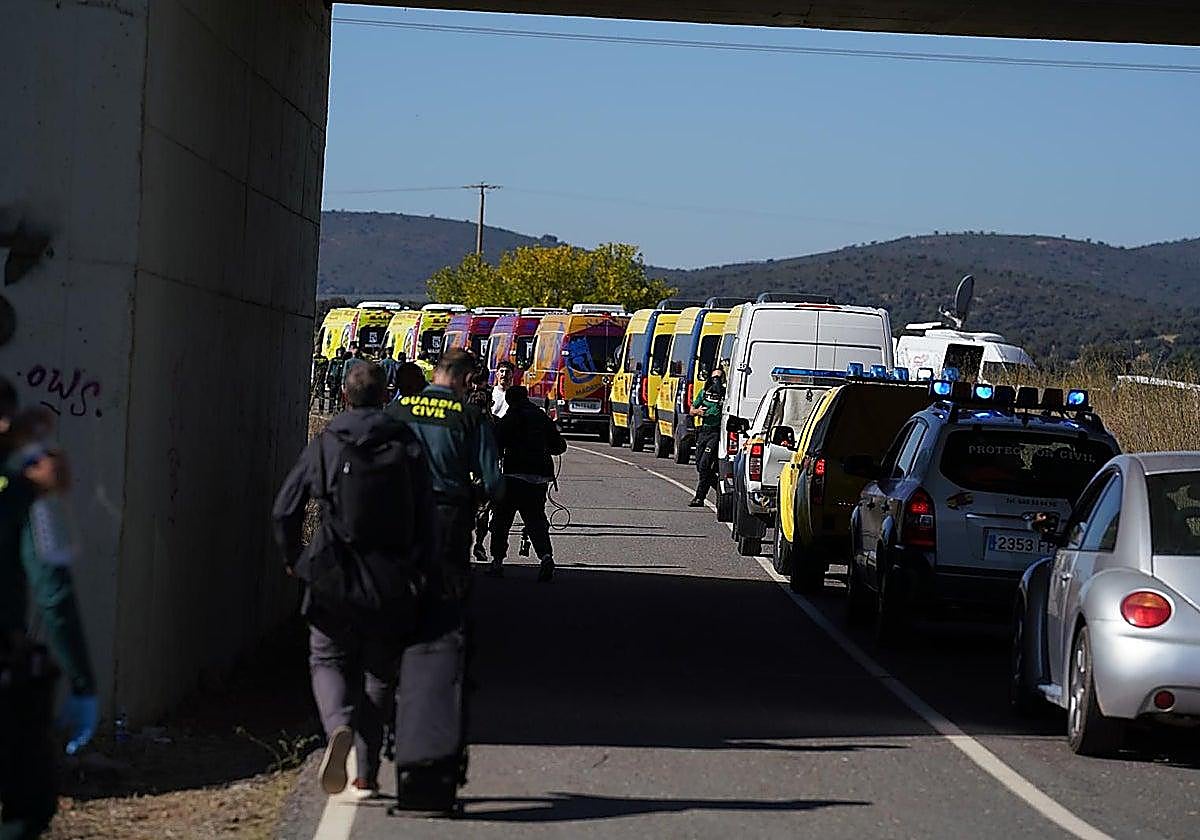

An AVE train that had been authorised to resume its journey and an Iryo train that remained stationary for reasons as yet unknown: this is ... the sequence of events state operator Renfe cites regarding the minutes leading up to the rail accident in Urda (Toledo) on Wednesday, 28 October.
Renfe maintains that its train proceeded in accordance with the instructions received. This places the focus of the investigation on the orders relayed to the train drivers and on the operation of the alternative signalling system.
At 8.30am, state infrastructure company Adif received a report of a fault in the signalling system at the Urda communications centre. From that moment onwards, the LZB, which is responsible for continuously monitoring train movements and activating automatic braking in certain high-risk situations, was disconnected. Trains temporarily halted and traffic was subsequently authorised to resume under the so-called BSL system.
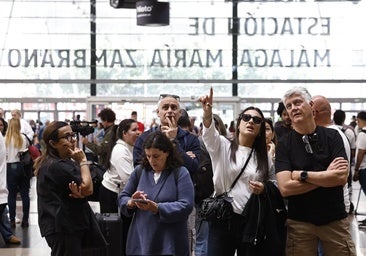
According to Renfe, its AVE received the necessary authorisation to continue, while the Iryo remained stationary for reasons the company claims to be unaware of.
"The Renfe train continued its journey as instructed and the collision occurred," the operator said. At 8.54am, just 24 minutes after Adif received notification of the incident, the AVE collided with the rear of the Iryo as it entered Urda station.
Renfe's account introduces a significant element to the investigation. If the AVE was travelling in accordance with the instructions received, it will be necessary to determine under what conditions it was authorised to proceed and what information was available regarding the position of the Iryo, which remained stationary.
It must also be clarified why this latter train had not resumed its journey. These are two circumstances which, for the time being, lack a full explanation and whose connection to the accident must be established by the investigation.
"It is too early to know the cause," Adif sources said. The Ministry of Transport lists possible human error as one of the main lines of inquiry. "It is at the heart of the investigation," sources said.
The aim is to determine whether any errors occurred in traffic management, in the instructions given to train drivers or in their compliance with those instructions, while not ruling out possible faults in the operation of the signalling and safety systems.
Renfe holds that its train received the necessary authorisation before resuming service. The company is refraining from commenting on the causes of the Iryo's stoppage and refers to the investigation to establish "the exact sequence of events, the operating conditions and the circumstances of the impact".
Its explanation does not yet allow us to determine whether there was any irregularity in the orders transmitted, but it makes those communications one of the key elements in reconstructing what happened.
The two trains were travelling between Madrid and Seville. Renfe's AVE 2080 had departed from Puerta de Atocha station at 8am bound for Seville-Santa Justa and was carrying 397 passengers. Travelling ahead of it was the Iryo 6076, with a further 146 passengers on board.
According to initial reports from the Ministry of Transport, a rear-end collision occurred in which a Series 103 AVE, known as the Velaro, crashed into an Iryo train of the Zefiro Frecciarossa ETR1000 model.
An alternative system
The difference between the two signalling systems is key to understanding the circumstances in which the trains were operating.
Under normal conditions, the LZB continuously monitors the train's speed and position and transmits the necessary instructions to the driver to ensure safe operation. If it detects that the permitted limits have been exceeded or that the train is not braking when it should, it can intervene automatically.
BSL, on the other hand, relies on light signals installed alongside the tracks, which operate in a similar way to traffic lights on a road. To prevent two trains from meeting on the same stretch of track, the line is divided into sections, known in railway jargon as 'cantons'. When one of these is occupied, the signalling system must secure it to prevent another train from entering, except under the exceptional circumstances for in the regulations.
This system enables train movements to continue when continuous LZB supervision is unavailable. However, it entails a significant change in driving conditions. The driver must pay attention to the indications by external signals and to any instructions regarding the route, although they can still rely on the protection provided by other devices, such as the Asfa, which are capable of initiating automatic braking in certain circumstances.
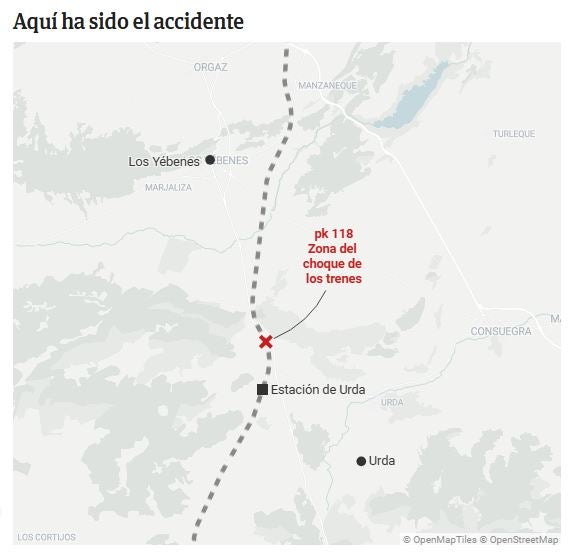
Precisely for this reason, one of the issues that the investigation will need to clarify is what the signals were indicating when the AVE resumed its journey and whether the authorisation was compatible with the presence of the stationary Iryo train ahead. It will also be necessary to establish whether the two trains came to be in the same block section, which safety mechanisms remained active, and whether these functioned as intended.
The disconnection of the LZB, on its own, does not explain why the collision occurred. The alternative system is designed to regulate traffic and maintain the separation between trains, even though its operating conditions are different. The investigation will now have to determine whether there was a fault in that safety system or in traffic management and why an AVE which, according to Renfe, had been authorised to proceed, ended up colliding with another train that was stationary on the same track.
