
Toledo train disaster 2026
Spanish engineers endorse safety of LZB system and point to rail network's lack of maintenance
SUR has gathered the opinions of four leading figures in the sector, who offer key insights in comparison with the more modern ERTMS system, which is already fully installed between Cordoba and Malaga
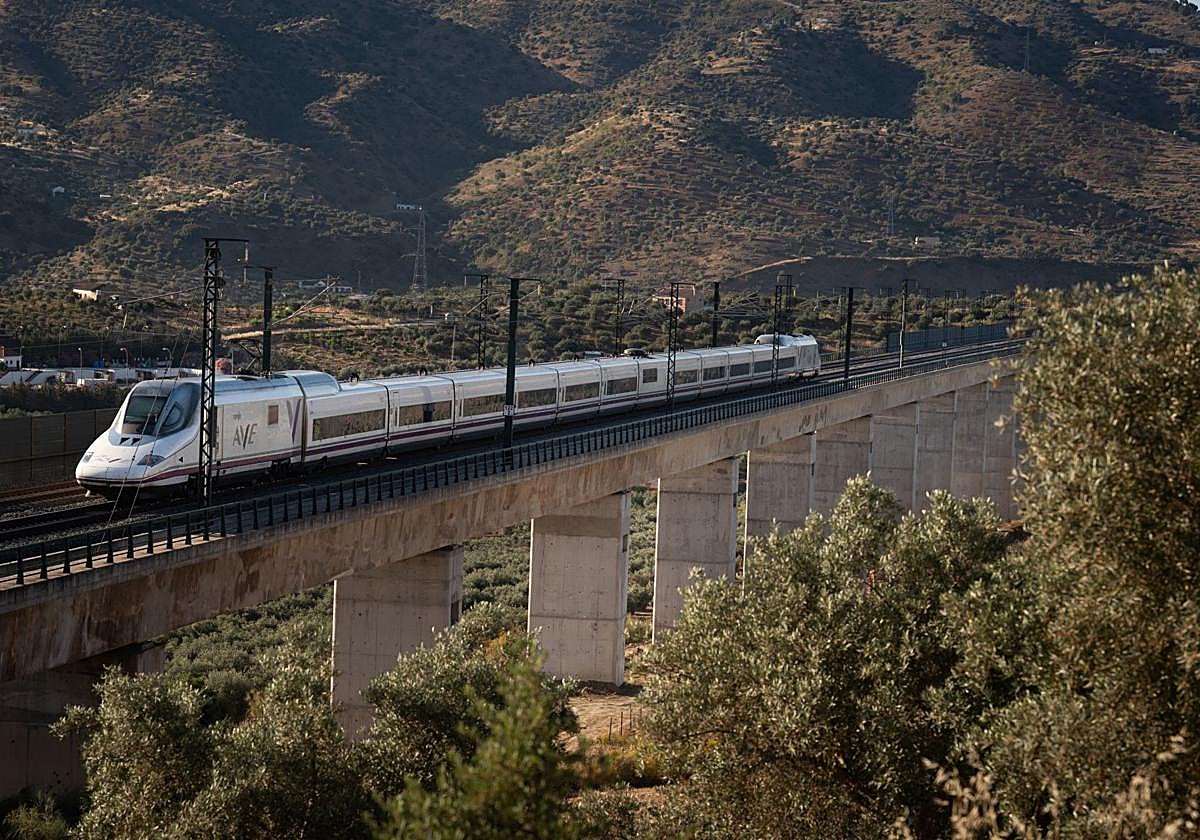

Official information provided by Spain's Minister for Transport Óscar Puente reveals that the LZB system, the original system used on the AVE in 1992, ... failed over a 69-kilometre stretch due to a computer fault. The trains then came to a halt automatically. Responsibility then passed to the control centre.
The conditions were not right for the trains to resume their journey, but, in any case, this would have had to be done under visual control, that is to say, at a slow speed and with the driver making decisions and manoeuvring the train.
However, the AVE train was ordered to continue at normal speed on Wednesday, travelling at over 200 kilometres per hour. In short: the LZB system recorded a rare failure and not only was an inappropriate order given, but nobody at the control centre seems to have realised what was happening during the 25 kilometres that the AVE travelled before crashing into the Iryo train.
Why had the Italian train not resumed its journey? There are many unanswered questions.
What significance does it have that the line in this area does not yet have EMRTS (currently in the trial phase) but still uses LZB?
President of the Spanish institute of enineering José Trigueros has responded to Sur's enquiry: "The line is fitted with LZB. It's safe and works well. The question is how a train can enter a block section, a stretch of track, where there is a stationary train. There's supposed to be a signal, a traffic light. If the driver doesn't stop, there's an emergency brake. Don't they track or monitor the trains from the Atocha control centre? It's incomprehensible how line was reopened."
"If a protocol allows you to operate, there should be additional staff to ensure there are more people on hand. It's all down to a glaring lack of maintenance. It's a disaster, as we have been highlighting from within the organisation. It is unacceptable that, in the 21st century, an accident of this nature should occur," he said.
Alberto García Álvarez was the first operations director of the AVE in Spain (the Seville line). He has spent much of his professional career at organisations such as Renfe, Adif (and its predecessor, GIF) and the railway foundation. His academic background is almost impossible to summarise.
He stated that he needs to study the entire sequence in depth, analyse both direct and indirect causes and asked for time to comment fully on the accident. However, he did make it clear that the LZB is a good system.
"It's the standard system in Germany. I was operations manager on that line for ten years. It can fail, like anything else, but that's not where the problem lies. This isn't a straightforward accident. I need to study it. I've spoken to a lot of people over the last few hours. It's not a straightforward matter," he said.
President of the general association of industrial engineers César Franco has analysed the transition from the LZB system to ERTMS on Spain's high-speed rail network and explained how railway signalling actually works.
He stressed the LZB's technical reliability despite the length of time since its initial roll-out in Spain: "It is a perfectly safe and verifiable system, certified for speeds of up to 300km/h. It was installed 35 years ago and we need to look closely at how it has been maintained over time. If it is failing, it is not due to a safety or design issue, but rather a maintenance issue."
The fundamental technological difference between the two systems lies in their transmission medium, he said. While the LZB operates via a cable laid alongside the track, the ERTMS relies on radio signals, increasing management capacity and interoperability across the continent: "The advantages of ERTMS are clear: it is more modern, more interoperable and facilitates a control system designed to enable an AVE to complete its journey, for example, to Berlin."
"The system has gradually been replaced. The tender was launched in 2019, the contract was awarded in 2021 and a three-year implementation period was set. However, the core problem remains maintenance," he told SUR.
Franco sought to dispel the popular misconception regarding these systems' ability to detect foreign objects on the tracks in real time, clarifying their direct role in train control: "Neither of the two systems has a radar that detects an obstacle on the track and automatically stops the train. Both operate via a speed control system: when the system detects an approaching bend where the speed must be reduced to 90km/h, if the train does not slow down, the system forces it to brake."
Following the resumption of services after the relevant technical checks, Franco said, traffic orders are always issued in a way that ensures compliance with the monitoring margins required by railway safety regulations. This raises general doubts about the instructions issued by the control centre.
Civil engineer Salvador García-Ayllón said: "The system is reliable. However, the debate that will arise is whether the accident could have been prevented with ERTMS. In fact, until now, most lines operated using LZB. Even so, in my opinion, what needs to be analysed is the loss of resilience across the entire rail system; the safety issue is merely the final red line that must never be crossed. In my view, this was not a symptom of a problem that has been getting worse over a long period of time."
The 21st-century European standard for rail traffic control, the ERTMS Level 2 system, is intended to replace the LZB. Although both systems continuously monitor the train's movement by calculating braking curves in real time to bring the train to a halt automatically if it exceeds the permitted speed, they operate in very different ways.
Furthermore, while in the LZB system much of the data is calculated on a central computer on the ground, the ERTMS performs the calculations on board the train itself in real time, based on information transmitted from the track and the characteristics of the train.
On the various Andalusian rail corridors currently in service, continuous traffic control technology has been fully integrated into commercial operations. Between Cordoba and Malaga, over a distance of 155 kilometres, the line has ERTMS Level 1 and Level 2 systems permanently installed and operational, with the older LZB technology retained solely as a backup system.
