
Rail transport
Urda rail accident judge authorises tracks' repair but places Adif under strict supervision
Former Transport Minister Óscar Puente assured that the repairs would not exceed ten days once the magistrate had given approval, but the demands of the investigating judge could delay the work
Juan Vicente Muñoz and Melchor Sáiz-Pardo
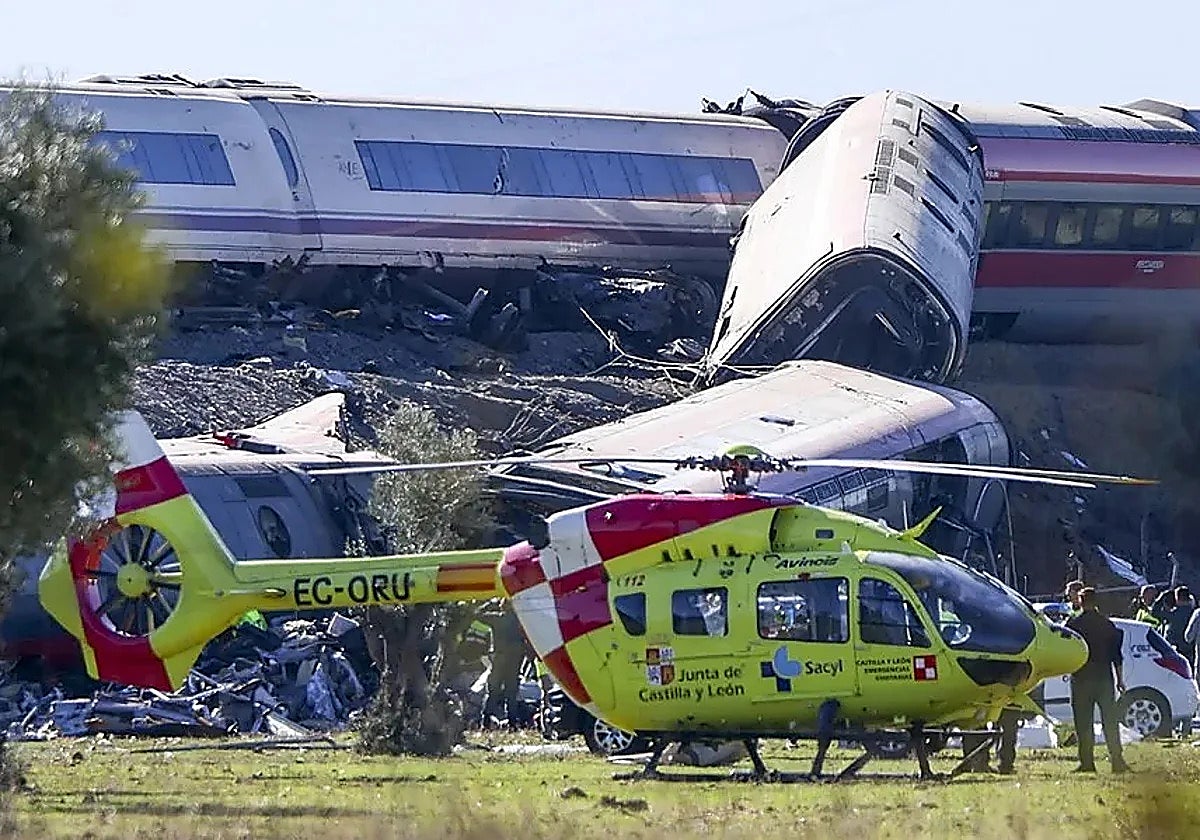
The judge investigating the Urda rail accident remains skeptical of infrastructure company Adif. Judge Aristea Afroditi Ortiz Tiliakou authorised on Thursday the Ministry of Transport to rebuild the tracks at the location where 69 people lost their lives on 28 October.
The entire process, however, will be subject to strict judicial oversight, requiring Adif's technicians to document every repaired or replaced part. Control over the Transport Ministry's work will be extremely tight, as can be inferred from the orders Judge Ortiz has issued.
The investigating judge, who had already restricted access to the accident site to preserve evidence, is now imposing two conditions that could complicate the repair timeline. She wants to know exactly which components were damaged, which ones are being replaced and where each intervention is taking place. This authorisation also comes on the heels of the controversy surrounding evidence preservation in Adamuz, where Transport Ministry workers removed debris from the accident without a court order.
Related story

The decision finally paves the way for the reopening of the high-speed rail line between Madrid and Andalucía, which has been closed since the day of the accident. It remains to be seen whether Adif will be able to meet the deadline former Minister of Transport Óscar Puente set. On November 3, he said that the work "would not exceed ten calendar days from the date of said authorisation", referring to the court order.
The authorisation took 16 days to arrive after those words. The conditions of the judge could add new demands to the timeline the government was working with.
The first condition comes from the prosecution. Once the inspection and surveying work are completed, Adif must submit a full list of the elements affected by the accident. The aim is to have a precise inventory of the damage before the reconstruction permanently alters the crash site.
The second requirement comes directly from the judge. After finishing with the work, Adif will have to submit a new report detailing "each and every element" that has been "modified, repaired and/or replaced", also indicating the exact location of each repair or modification.
Both inventories must be submitted to the court and incorporated into the proceedings. This allows for a comparison of the existing damage with the work carried out and maintains a documentary record of the changes to the infrastructure, the condition of which forms part of the evidence in an ongoing criminal investigation.
The decision aligns with the approach Ortiz Tiliakou has maintained since the beginning of the investigation: preserving evidence and keeping all interventions at the scene of the tragedy under judicial control. In the initial days, she restricted access to the area around the railway tracks to prevent unauthorised individuals from tampering with the evidence.
Those measures concern an area where forensic and judicial police specialists from the Guardia Civil were working. The investigators needed to inspect the wreckage, document the damage and recover materials that could provide information about the circumstances of the accident.
The Adamuz tragedy, where 46 people died in January, underscores the importance of these precautions. In that case, a conflict arose after Adif removed and relocated parts of the tracks without express judicial authorisation. The investigating judge in Montoro had to demand their return and restrict any further unauthorised interventions.
The investigation into the Urda accident continues under seal. The collision occurred on the Madrid-Seville line at 8.53am on 28 October. The Iryo 6076 was stationary at an entrance signal for Urda when it was struck by the AVE 2080, which was travelling on the same track.
The independent railway investigation authority, Aitat, has placed among the circumstances that must be clarified the failure of the LZB protection system, the instructions the Atocha control centre transmitted and the conditions in which the trains resumed circulation using the backup system.
Puente, who from the outset pointed to the operator of the Atocha control centre as responsible, said before Congreso that the control centre had authorised the AVE high-speed train to proceed at "normal speed" even though the Iryo train in front of it was not moving. The investigation will have to determine the responsibilities and any possible technical, human and organisational failures that contributed to the accident.
Access the broad Spain national news archive
