
Business
Spain's panic industry
Bunkers, courses and survival kits - the disaster readiness market generates a multi-million dollar turnover and is growing
Izaskun Errazti
For years, fiction has been feeding our fears with stories that seemed impossible but ended up becoming our reality. It happened with Contagion, the film featuring a virus that was related to Covid-19. It also happened with Civil War, a story about a conflict in the United States after the inauguration of an authoritarian president very reminiscent of Trump.
And now millions of viewers are wondering how Apagón (Power Cut), a TV miniseries filmed four years ago, could so truthfully reflect the reality of what happened on 28 April. A shockingly realistic representation of the unprecedented power failure which left 55 million people in the dark for more than 12 hours.
Coincidences for the most optimistic; warnings and serious concerns for those less so. There are already masses of people who, in view of growing geopolitical uncertainty, armed conflicts, natural disasters and other planet-wide catastrophes, are expecting the unexpected in preparation for what may come. For the moment, these tragedies are just imaginary, but they are flooding our TV screens on a daily basis.
In the heat of panic, which hasn't stopped growing since the pandemic in 2020, the survival industry has flourished. Businesses have skyrocketed in the last two years through the construction of bunkers, courses and survival kits. Globally, the disaster readiness market is worth around ten billion dollars a year, with more than four million confirmed 'preppers' in the US alone and 55 per cent of adults investing in emergency supplies.
Big business
Jorge Miñano, a self-proclaimed prepper, is making a killing in his shop FerreHogar. The Murcia-based shop specialises in mountain and survival gear. Miñano confirmed that people are getting more and more organised "for what might happen". His recent financial success comes after having "lowered prices", given the circumstances, and being "cheaper than Amazon".
He was not caught unawares by the big blackout. "I took it very calmly, because I knew I had hotplates, a cooker, radio, water and food."
When the European Union urged the population to stock up with 72-hour survival kits, Miñano felt the impact. "Everyone was telling me, 'You're going to sell out'". And he "had never seen anything like" the aftermath of the blackout.
"When the power came back on at half past ten at night and I got signal back, I couldn't believe the number of orders I had received. One per minute. Thank goodness we were fully stocked in the warehouse," he said.
A hundred radios sold in a single day, water purification tablets, portable cookers, gas cartridges and freeze-dried food - his customers requested "the one with the longest expiry date". The Murcia trader, who 14 years ago used YouTube as a tool to promote his business overseas, admitted that his sales "have tripled" in recent weeks. "But these are just peaks. In a couple of months the situation will balance out," he said.
Military instructors
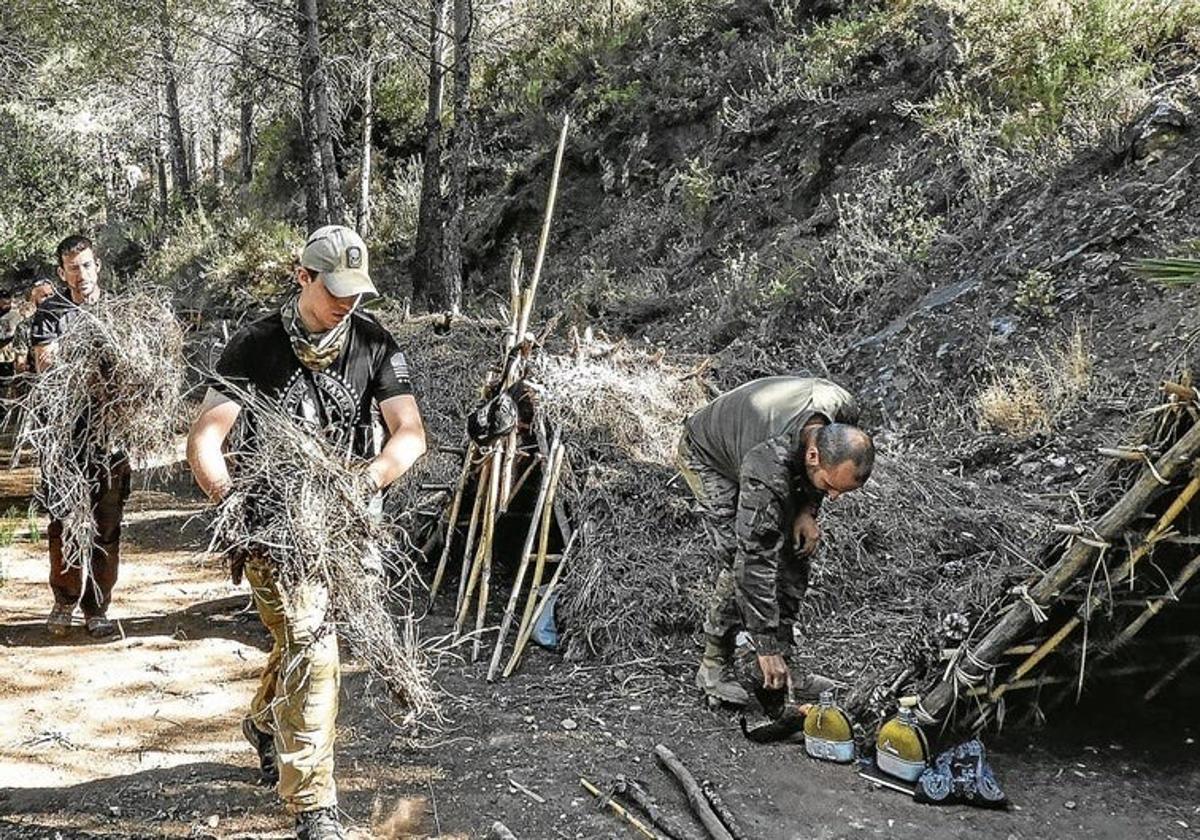
Located in the Sierra de las Nieves, in the Malaga municipality of Ojén, the Escuela de Supervivencia Anaconda (Anaconda Survival School) has been in operation for two decades. With a 13,000 square metre estate, the school aims to recreate the conditions found in real life disasters.
José Miguel Ogalla is the director of this centre which offers four-day, three-night courses for 326 euros (VAT included). This is targeted towards private individuals, because activities aimed at the Armed Forces, its main client, "are free of charge".
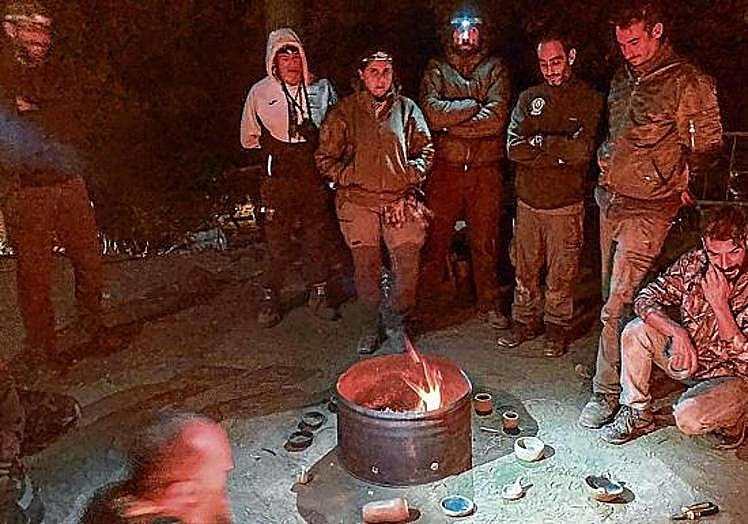
Doctors, lawyers, psychologists, engineers, mechanics and other people from Spain, England, Belgium, France, Holland, Bologna and even the United States attend these courses. Anaconda's courses are open to a wide range of people, but "due to their toughness" only those aged over 16 (with parental consent).
Participants "train, train and train", said Ogalla, who emphasised the necesity of 72-hour survival kits in case of crises such as cyber-attacks, pandemics or armed conflicts.
"You have to have it," he advised, despite warning: "It won't last you three days. Survival is archaic and primitive."
"It doesn't need batteries, nor materials. You only need what you can find in nature along with basic knowledge and techniques - training on how to make a fire, find shelter and food."
Shelter
Hotel Élbora in Toledo is home to the largest private bunker in the country, with a capacity for 400 people
To be "a superhero" requires "knowing the environment, generating the skills we need through experience and having a clear emotional state". Because, Ogalla argued, "our brain is our greatest weapon. 70 per cent of survival is psychological".
"The brain has muscle memory, and it remembers everything, but it needs to live the experience to commit it to memory. The students, so to speak, have to experience a mini-catastrophe first hand," he explained.
There is never a lack of demand at the survival school. "Many people want the experience of a lifetime and come here for it. But for some time now, since before the war in Ukraine, people have been coming here motivated by the concern that there is something brewing in the world," Ogalla said.
The interest has grown exponentially - in barely a decade the number of survival centres offering similar services in Spain has gone "from three or four to more than 300".
"There is a lot of unprofessional practice", warned the Anaconda instructor, advising people "to properly inform themselves and not throw their money away".
The construction of private bunkers, another pillar of the new panic industry, also moves hundreds of millions around the world - it's an expanding market that ranges from the most basic to super-luxury shelters. For example: Mark Zuckerberg, founder of Meta, has been building a bunker for four years on Hawaiian island Kauai with a budget of 170 million dollars.
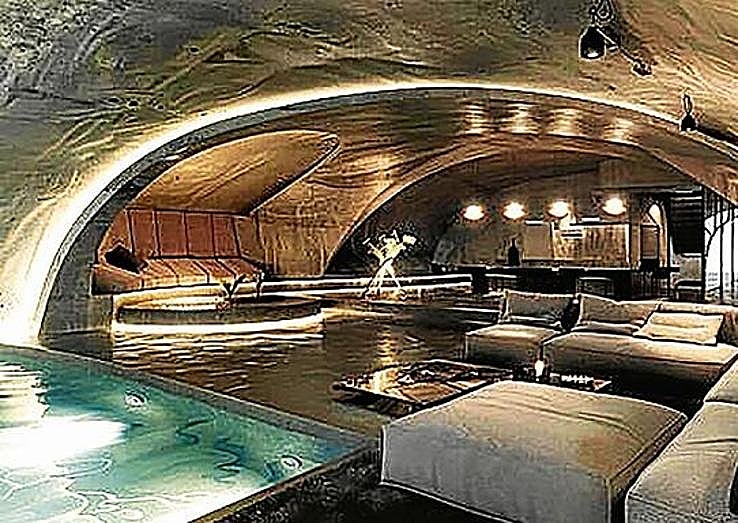
Engineer Antonio Alcahud opened the floodgates of this industry half a century ago in Spain. He boasts having built more than 400 refuge facilities with his company ABQ Refugios Atómicos. During the Cold War, Alcahud was commissioned by businessman Justino Pérez to build the largest private bunker in the country, with a capacity for 400 people, on the ground floor of the Hotel Ébora in Talavera de la Reina (Toledo).
A bunker in the basement
Búnker Zona, run by Esteban López, has been operating in Girona for a year now. The company has built up a strong portfolio of medium to high level clients and already has a twelve-month waiting list. Its catalogue offers a range of shelters, from modular shelters made of iron in pieces, with a delivery time of three months, to 40-square-metre bunkers for six people set up in new housing developments, which can take a year to build. "Projects cost from 120,000 euros up to anything you can imagine," said López.
Unprofessional practice
In ten years, the number of survival centres in Spain has gone "from three or four to more than 300"
A fully equipped kitchen, a 1,000-litre drinking water tank, free-flowing air and cleaning systems, bunk beds and a sofa make up a basic bunker. Divided into four compartments including a control room, you can stay in one of these bunkers "from six to eighteen months, depending on food supplies".
Guillermo Ortega, director of Búnker World, a Zaragoza-based company that distributes throughout Europe, claims "a 200 per cent increase in orders for underground shelters. Five or six years ago we would build one every two years, but with the blackout the demand has skyrocketed. The enquiries keep coming in and requests keep coming in. The expectation is that everyone is preparing in one way or another," he said.
Even if it's resorting to the cheapest option, around 20,000 euros: turing the storage room into a panic room "made of reinforced concrete, with a ventilation system and a watertight iron door". However, security in this type of refuge spaces cannot be guaranteed for more than 72 hours.
![[]](http://static.vocstatic.com/voc26/latest/assets/images/favicon/surinenglish/apple-touch-icon-57x57.png)