
Economy
Government backtracks on widely criticised payment structure for self-employed in Spain
After a wave of criticism from employers, trade unions and parliamentary groups, Social Security Minister Elma Saiz has presented a new proposal for the contribution quotas for 'autónomos'

Madrid
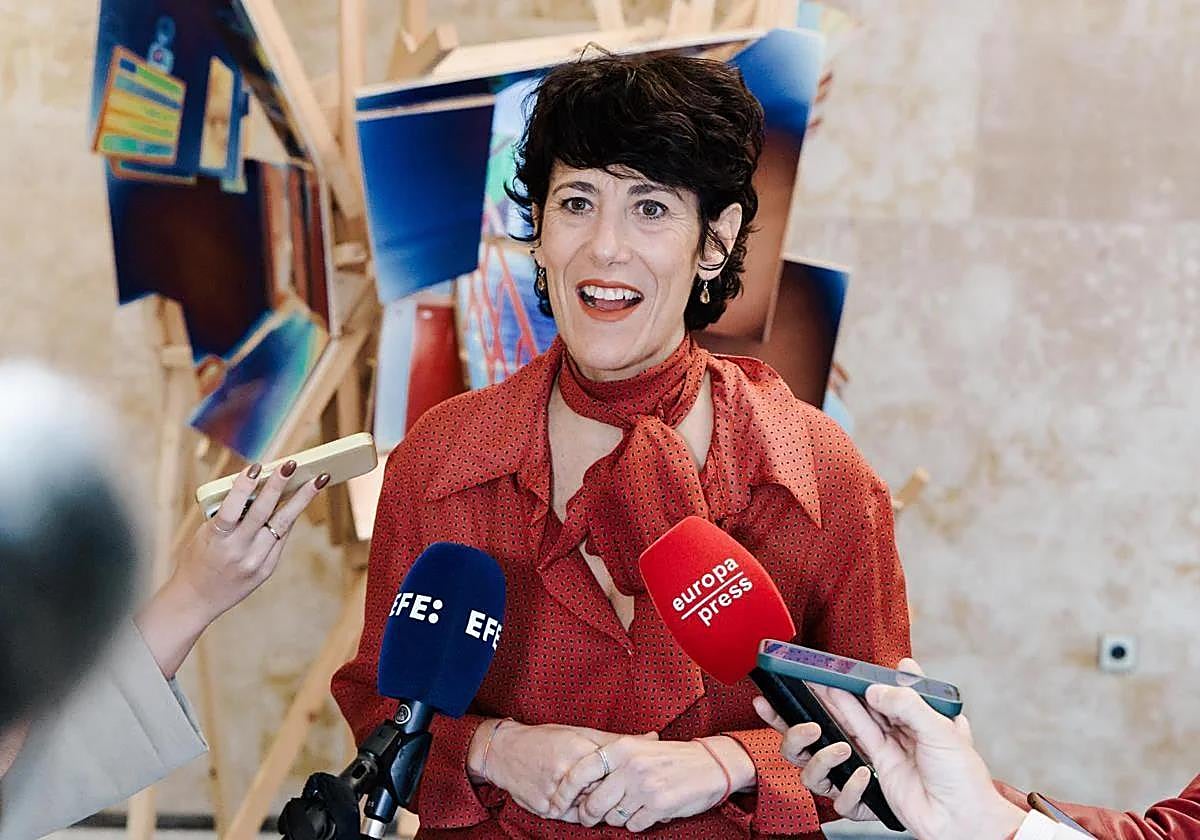
After a wave of criticism from employers, trade unions and parliamentary groups, the Minister for Inclusion, Social Security and Migration, Elma Saiz, has heeded the popular outcry and reversed the general increase in contributions for the self-employed starting next year. What is more, the about-face has been so significant that the increase in contributions for the highest earners will now be lower than what was proposed last week for those on the lowest incomes.
On Monday this week, the minister presented a new proposal that amends the entire document tabled at last week's negotiations with all interested parties that culminated in a unanimous rejection of the first proposal. The revised text from central government now proposes freezing contributions for one-third of self-employed workers - those with the lowest earnings - and raising them for the rest by between 2.50 and 14.75 euros per month.
More specifically, the new document includes a freeze on the first three income/contribution brackets, at the lowest end of the two tables (the so-called 'reduced table'), so that all self-employed workers earning less than 1,166.70 euros per month will not pay more to Social Security next year. This measure will benefit a third of the overall group, since this reduced table represents around 36% of all the self-employed in Spain, over 1.3 million people, according to 2023 data provided by the ministry after the regularisation (quota-setting and tweaking) process.
The initial proposal put forward just one week ago by the Ministry of Social Security was for there to be a general increase in the contributions paid by the more than 3.5 million self-employed in 2026, ranging from a minimum of 11 euros more per month to a maximum of 206 euros more. However, the increase was paradoxically greater for those earning the least, as it proposed an increase of 17 euros per month for those generating a net monthly income of up to 670 euros, as they currently pay the least (200 euros per month).
Likewise, self-employed workers with net incomes of between 670 and 900 euros per month will continue to pay a minimum of 220 euros per month. Those with monthly net incomes above 900 euros and up to 1,166.70 euros will also see their current contribution of 260 euros frozen in 2026. These first three brackets are the ones that will ultimately be frozen at the current rate of 200 euros, 220 euros and 260 euros respectively. Note, however, that this new proposal only addresses the next fiscal year - 2026 - and does not set out what the contributions will be for the following two years, unlike the first proposal.
Minimal increases
In contrast to this freeze for over 1.3 million self-employed, the remainder, around 2.2 million workers, those earning over 1,166 euros per month, will only see their contributions increase by between 1% and 2.5%, less than inflation. This would be equivalent to a monthly increase of between 2.50 and 14.75 euros, a far cry from the more than 200 euros per month put on the table in the initial proposal last week.
Thus, outside of the three income brackets in the reduced table, a 1% increase in contributions is proposed for 2026 for levels 1, 2 and 3 of the general table (from 1,166 to 1,700 in net income), while contributions for levels 4/5/6 (from 1,700 to 2,330 per month in net income) would increase by 1.5%, as explained by Eduardo Abad (president of the union of professionals and self-employed workers in Spain) after the meeting.
For levels 7, 8 and 9 (from 2,330 to 3,620 euros in monthly net income), the ministry-proposed contributions increase would be 2%. Finally, for levels 10 to 12 (from 3,620 to over 6,000 euros in monthly net income), the increase would be 2.5%, representing a maximum increase of 14.75 euros per month, 14 times less than what was proposed a week ago.
Congress approval is key
In any case, Elma Saiz acknowledges in her interview this Monday with El Pais newspaper that, if she does not receive parliamentary backing in Congress, all self-employed contribution quotas will be frozen for the coming year, since this law requires parliamentary support, which it is currently lacking.
![[]](http://static.vocstatic.com/voc26/latest/assets/images/favicon/surinenglish/apple-touch-icon-57x57.png)