
Politics
Spain withdraws from Eurovision for the first time after EBU backs Israel
The festival's management prevented a specific vote on the country's presence at the contest
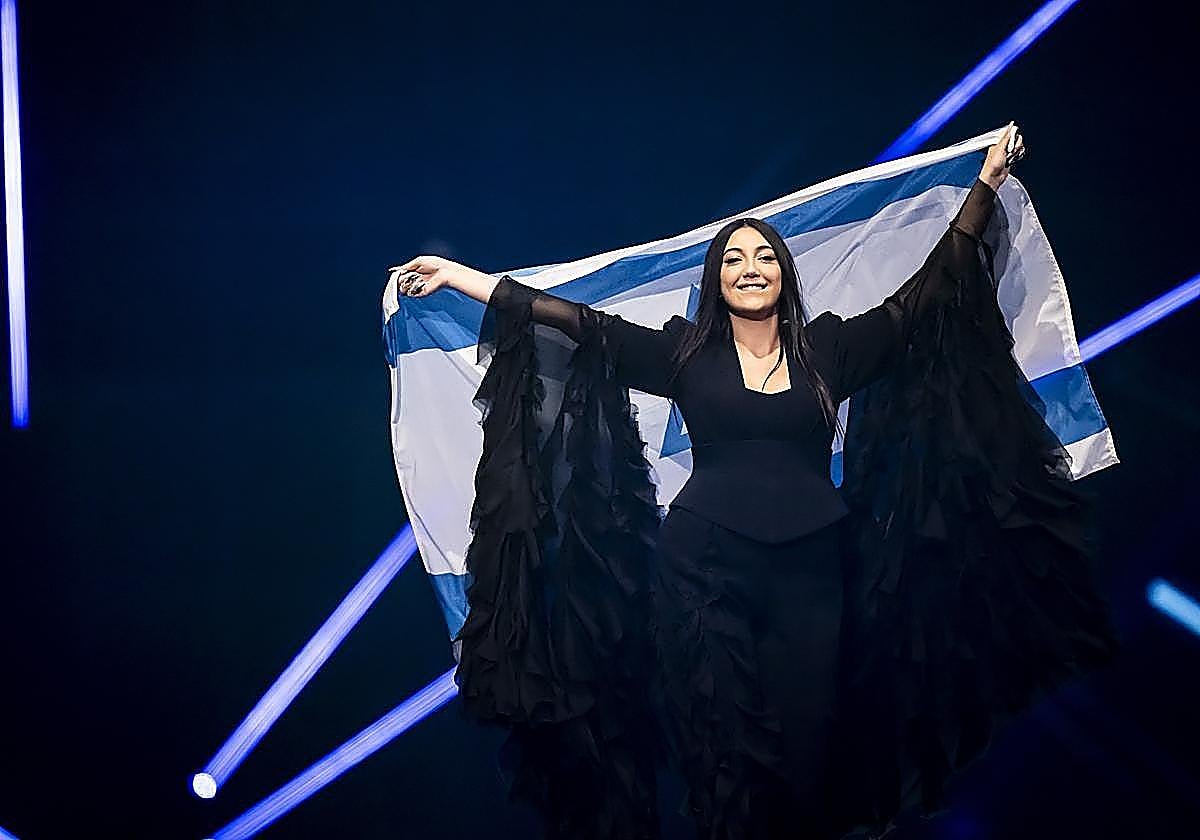

Spain will not take part in Eurovision for the first time since 1961, following the European Broadcasting Union's refusal on Thursday to allow the Spanish public broadcaster RTVE and seven other countries to hold a vote on Israel's participation in the contest during the 95th Ebu assembly.
After the approval of the new rules of the contest (738 votes in favour, 264 against and 120 abstentions), it was confirmed that Israel, despite the events in the Gaza Strip, will be able to take part in Eurovision. "This decision increases RTVE's distrust in the organisation of the contest and confirms the political pressures surrounding it," RTVE announced, accusing the EBU and the Eurovision management of causing "one of the greatest internal tensions in the history of the organisation".
As the EBU defended in a statement, the vote on participation did not take place because a "large majority" of members were in favour of not holding a new vote on countries' participation in the Eurovision song contest. "The result of this vote demonstrates the shared commitment of our members to protect transparency and trust in the Eurovision song contest," it said.
The assembly and vote ended months of tension over Israel's presence in a contest that calls itself "apolitical" and a nexus of "union" between countries. The truth is that after Thursday's non-vote, Eurovision 2026 can already be said to be unprecedented. "The situation in Gaza, despite the ceasefire and the approval of the peace process, and the use of the contest for political purposes by Israel, make it increasingly difficult to maintain Eurovision as a neutral cultural event," RTVE stated after learning of the decision. The Spanish broadcaster has already confirmed that it will not broadcast the contest to be held in Vienna (Austria) between 12 and 16 May.
Spain, the only member of the 'Big Five' that had called for Israel's expulsion, was joined by Ireland (the country that has won most times), Slovenia and the Netherlands, which considers that "participation in the current circumstances is incompatible with the public values that are essential to us". Iceland's broadcaster, RÚV, has indicated that the country may also withdraw, and if it does, the contest will shrink further and will no longer be able to maintain its usual "unity" narrative because of so many countries refusing to participate.
Spain's minister of culture, Ernest Urtasun, supported RTVE's decision. "Israel must not be whitewashed in the face of the geneocide in Gaza. Culture must be on the side of peace and justice," he said in a message on BlueSky, in which he stated that he was "proud of RTVE for putting human rights before any economic interest".
It was the war in the Gaza Strip, declared by the UN a "genocide", which prompted RTVE's management to agree in September that if the Ebu allowed Israel to be present, Spain would withdraw from the contest - a measure that raised serious criticism within the Ebu and even from other countries such as Germany, which warned that if it was finally decided to exclude Israel for these reasons, they would also withdraw. In other words, cross vetoes and politics dominated a debate that, however, did not take place when Russia attacked Ukraine in 2022. In just one day, the Russian delegation was expelled.
Double standards
In addition to the serious acts committed in Gaza, RTVE had also expressed concern about the instrumentalisation of the vote in past contests and the lack of sanctions in this regard. The EBU tried to stop the crisis with a series of measures, including reducing the number of televotes per viewer from 20 to ten and restoring the jury's vote in the semi-finals. For Spain, this is "insufficient".
"We should not accept double standards. Neutrality and transparency is a common objective to guarantee a truthful result that respects the audience and citizens," RTVE secretary general Alfonso Morales said during his participation in an assembly shrouded in controversy, given that the vote on Israel's presence should have been held in an extraordinary way in November. However, following the peace agreement signed in October between Israel and Hamas, the EBU considered that there was no longer any reason to do so and postponed the debate.
Before the start of the meeting, RTVE president José Pablo López criticised the Ebu and Eurovision management for subjecting the organisation to "the greatest internal tension in its history". "It should never have come to this point. The sanctions against Israel for its repeated breaches in Eurovision should have been adopted at the executive level and not by transferring the conflict to the assembly", said the head of RTVE, who denounced that the festival is "dominated by geopolitical interests and fractured".
Criticism from Israel
The Israeli government has reacted to the withdrawal of Spain and three other countries from the festival. Foreign minister Gideon Saar called their decision a "disgrace". President Isaac Herzog welcomed Israel's participation, stating that Eurovision is "an example of culture, music, friendship between nations and cross-border cultural understanding".
Previous participants support RTVE's decision
Spain's Eurovision representatives in previous years of the contest have shown their "pride" and "support" for RTVE's decision to withdraw from the next contest, scheduled for May 2026.
"All my support for RTVE’s historic decision regarding Israel’s participation in Eurovision," Blanca Paloma, Spain's representative at Eurovision 2023, wrote on X. Other former contestants also posted on X. Alfred García, who represented Spain at Eurovision 2018 alongside Amaia as part of a duo, also expressed his pride.
Blas Cantó, Spain’s 2021 representative, retweeted a message from RTVE president José Pablo López, in which he said that what happened at the EBU assembly confirmed that "Eurovision is not a song contest but a festival dominated by geopolitical interests and fractured".
![[]](http://static.vocstatic.com/voc26/latest/assets/images/favicon/surinenglish/apple-touch-icon-57x57.png)