
Crime
Spain claims to have smashed the largest narco-boat drug-running network operating in the Strait of Gibraltar
During 24 raids on properties - including the operations centre which was located on a luxury residential development - officers recovered firearms, around 1,400,000 euros in cash, 19 high-end vehicles, communication systems and computer equipment

Melchor Sáiz-Pardo / Juan Cano
Madrid / Malaga
Two months after the deaths of two Guardia Civil officers in Barbate (Cadiz province) after their boat was rammed by one of the alleged drug trafficking mafias operating in the Strait of Gibraltar, Spain's Ministry of the Interior announced today that it had dealt a severe blow to these organised crime groups after the "dismantling" of what it described as "the largest network of drug traffickers by sea using high-speed boats" that existed between the Spanish mainland and North Africa.
According to the department headed by Fernando Grande Marlaska, the so-called Operation Sherry-Katyn-Grajuela has made it possible to smash the infrastructure of the criminal organisation behind the latest seizures of 4,000 kilos of hashish and 627 kilos of cocaine.
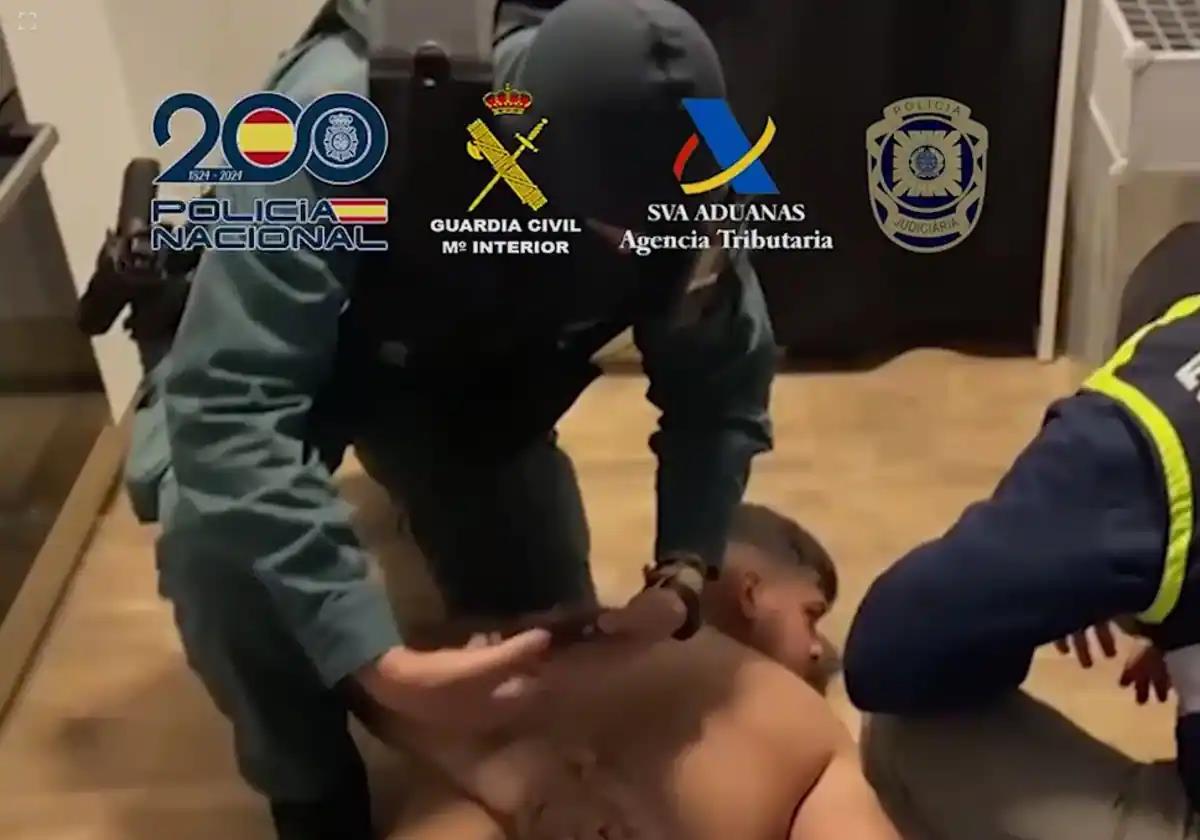
Up to 250 officers from the National Police, Guardia Civil, Spain's Aduana tax agency and the Portuguese judicial police took part in the huge operation. Carried out simultaneously in the two neighbouring Iberian countries and coordinated by the Special Anti-Drugs Prosecutor's Office in Jerez, the operation has ended with the identification and arrest of 19 people - added to another 12 who were already being held in prison - and the completion of 24 property searches. In addition, the officers seized three small firearms, around 1,400,000 euros in cash, 19 high-end vehicles, communication systems, computer equipment and two narco-boats in Portugal and three other boats in Spain.
Investigators, who claim to have forced the suspension of up to four of the organisation's recent operations to traffic drugs, insist that the dismantled network was the largest operating between the two continents because it had the capacity to have an average of eight to ten high-speed vessels with their respective crews on the water at the same time. In addition to these craft, they had a fleet of small boats that they used to provide the traffickers with everything they needed, such as food and petrol.
Police surveillance
The investigation began in May last year when officers detected that the organisation tried to pick up a shipment of 6,000 kilos of cocaine from a shipment coming from South America. However, mechanical problems suffered by the vessel during the crossing caused it to sink, which frustrated the landing of the large shipment. From then on police investigations focused on discovering the structure of this group and its workings and how far it extended its tentacles. The officers discovered that many of the ringleaders of the mafia group were based in the Cadiz province towns of Sanlúcar de Barrameda, Chipiona and El Cuervo.
Given the organisation's great economic power, its members had "strong security and self-protection measures". In this regard, they had the most advanced means of transmitting information both individually and through maritime communications.
Thanks to the close collaboration with the Portuguese Judicial Police, the investigators located the operations centre of the network, which was located in a luxurious residential development on the outskirts of Lisbon. At the head of this powerful infrastructure in the capital of the neighbouring country was a well-known drug trafficker, on the run from Spanish justice, who was in charge of directing and coordinating all the maritime operations.
The Lisbon control centre was equipped with state-of-the-art communications technology, which gave the drug traffickers "absolute control of all their vessels" (in loading, transporting and unloading the drugs), but also "total surveillance" of the air and maritime resources of the different state bodies operating in the Strait of Gibraltar.
Every time there was a major operation, the leaders of the organisation travelled from Spain to the large control centre in Lisbon to coordinate the necessary infrastructure to carry it out, establishing direct contact with those responsible for the narcotic merchandise.
The investigation established that the ringleaders of the organisation, originally from Sanlúcar de Barrameda, used the town in Cadiz as their operations base in Spain. This was due, on the one hand, to the local knowledge they had of the area and its orography and, on the other, to help create the large network of collaborators they used in the municipality.
![[]](http://static.vocstatic.com/voc26/latest/assets/images/favicon/surinenglish/apple-touch-icon-57x57.png)