
Child protection
Six out of ten children in Spain have social media accounts despite it being against the law
One in four youngsters aged 8 to 12 uses a mobile phone and surfs the internet with no restrictions or parental control

Madrid
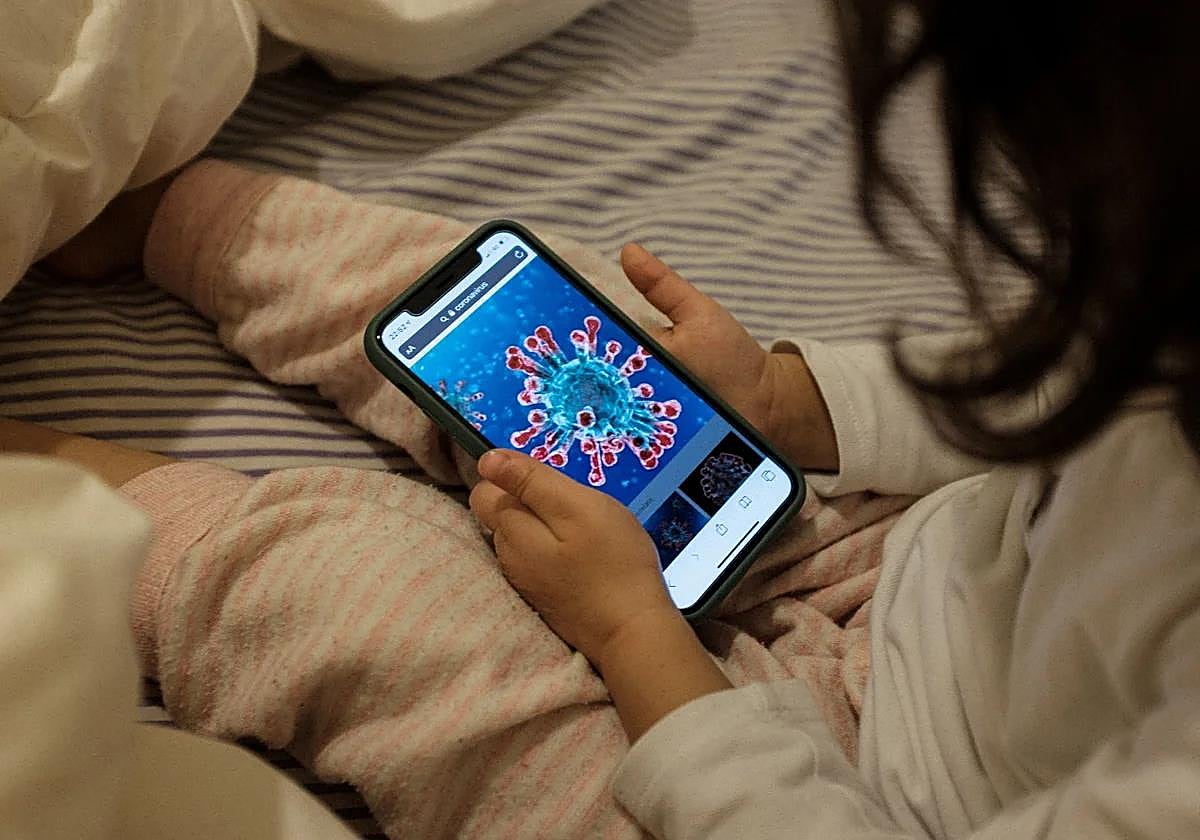
Various child health specialists, such as paediatricians, psychologists, neurologists and ophthalmologists, are having very little success sounding the alarm about the significant risks of premature, excessive and unsupervised use of mobile phones, tablets and computers by children. At least, that is what the results are showing from a survey conducted by the Eroski Foundation on electronic screen use among 2,581 primary school pupils aged between eight and 12 across Spain.
The study indicates that, despite specialist advice to the contrary, most children in Spain use all types of screens daily and that, in fact, a third of them already own a smartphone at such an early age, most often given to them by their parents or close relatives. In line with previous studies, two out of three primary school pupils use screens excessively, far exceeding the limit recommended by paediatricians to avoid health risks at this age (a maximum of one hour per day). Some 50% of them watch one to three or more hours of television, 30% spend more than an hour on their mobile phones and up to 12% spend more than three hours glued to their smartphones.
However, perhaps the most shocking fact is that all children aged 8-12 regularly use social media and up to six out of ten of them have their own account on one or more of these channels. This fact violates Spanish law (account registration is prohibited for the under-14s) and the rules of use of the digital platforms themselves.
Furthermore, 60% report having their own access codes and passwords, with 48% admitting to using their parents' accounts with parental consent, demonstrating a very high level of normalisation of social media use by children within the home environment. This permissiveness and low level of control contrasts with the warnings issued by specialists who, based on scientific and sociological studies, advise against premature access to social media because it exposes children to age-inappropriate or traumatic content, facilitates cyber-bullying and attacks on their sexual freedom and puts their privacy at risk, as well as potentially harming their ability to mature. The law on the protection of minors in the digital environment, drafted by the Spanish government and now being debated in Congress, explicitly prohibits anyone under 16 from registering on a social media platform and requires operators to implement truly effective age controls on their platforms in order to make this mandate a reality.
Exposure to explicit violence and unnecessary scares
The other aspect that medical specialists are insisting on is the need for parents to establish very specific and restrictive rules for electronic screen and internet use during childhood. This includes activating parental control devices and supervising compliance with these rules. Unfortunately, these do not appear to be a very widespread practice either. One in four of the 8- to 12-year-olds surveyed reported that they use their mobile phone, tablet, computer or television without any parental restrictions and that their parents never monitor them, accompany them or supervise them when using screens to prevent inappropriate or risky use. In fact, most of them believe that their parents are more attentive to managing their own electronic devices than to monitoring their children's use of them.
Some outcomes of this lack of supervision include the fact that 43% of primary school children admit to having been scared or shocked by some of the things they have read or seen on screens, that one in five have seen hate messages and insults and that one in ten have seen videos depicting violence and fighting.
"The inappropriate and excessive use of screens at key ages for children's cognitive, emotional and social development, as well as the lack of rules and adult supervision, reinforces the need for educational programmes and public policies that promote safe digital environments", says Alejandro Martínez, director of the Eroski Foundation, in light of the main findings of this study.
![[]](http://static.vocstatic.com/voc26/latest/assets/images/favicon/surinenglish/apple-touch-icon-57x57.png)