
Health and safety
Masks will not be compulsory in hospitals in Spain until high flu spread level is reached
The Ministry of Health will apply a single protocol throughout the country, including all regions, to curb the respiratory virus epidemic

Madrid
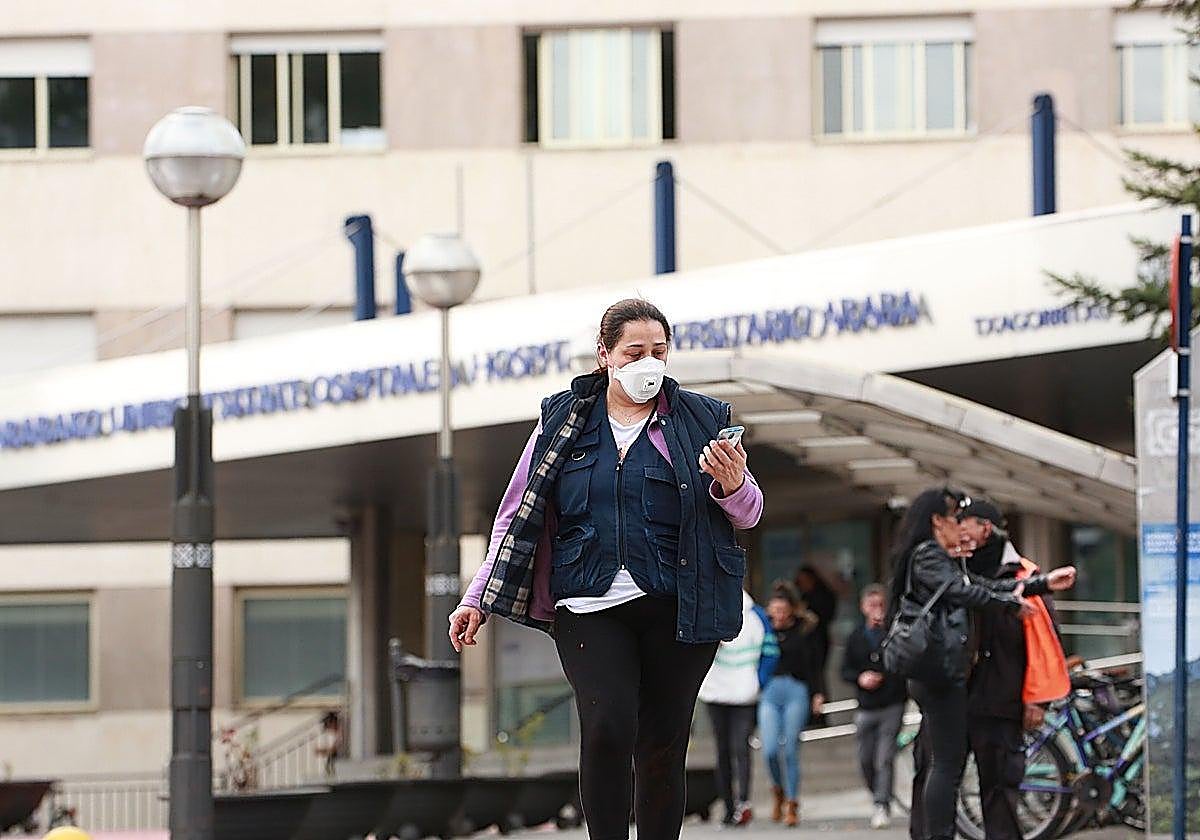
Masks will not be compulsory in Spanish health centres and nursing homes at least until the flu epidemic reaches a high level. This is established in the common protocol for action against respiratory illnesses that the Ministry of Health and the country's regional ministries agreed on 3 December. The protocol immediately comes into force, covering the entire country's healthcare system and population.
Unlike in previous years, the health authorities have left party politics aside and listened to the demands of medical specialists. They agreed on a single roadmap of measures and actions to try to minimise the spread of winter infections, even more urgent this autumn because the flu epidemic has already begun, a month earlier than usual. This year's virus threatens to cause more infections and hospitalisations than in previous years. "We said it was necessary and possible and we have achieved it," minister of health Mónica García said.
Masks are now recommended for anyone with symptoms, healthcare workers and patients undergoing chemotherapy and transplants
The single protocol, in addition to promoting maximum vaccination and basic hygiene measures (hand washing, avoidance of crowds or ventilation of rooms), introduces a recommendation or obligation to use a mask, depending on the case and the severity of each of the phases of the epidemic. Infected workers are advised to work from home (if possible), while nursing home employees are advised to take sick leave.
The spread of a virus occurs in three possible phases, according to the number of cases, hospitalisations, ICU admissions and mortality levels. There are no fixed state thresholds for jumping from one level to another. Instead, they will adapt to the specific and particular circumstances of each region.
Three levels
Level 1 corresponds to low and moderate transmission of the virus, at which point Spain is now. The use of masks and work from home (if possible) are recommended for all residents with symptoms. In addition, masks are to be worn by healthcare workers, patients and accompanying persons who enter high-risk units such as cancer treatment rooms or transplant units. Nursing home workers should ideally take sick leave for at least five days and wear a mask if the symptoms persist upon their return to work.
Infected people are asked to work from home if they can and home careworkers are asked to take sick leave
Level 2 is high transmission, when masks are recommended for healthcare workers, patients and accompanying persons in waiting rooms and emergency rooms of health centres and hospitals, as well as for all professionals in nursing homes and elderly people who are particularly vulnerable due to age and illness. In both cases, the protocol envisages the possibility of agreeing on the mandatory use of masks in clinics, hospitals or residences according to the "specific" situation of the region or the location of the centre. Visitors to nursing homes can be restricted at this stage.
Specific measures can be agreed by regional authorities or the management of affected centres. The protocol also considers it appropriate for all people who regularly work in front of the public to wear masks.
Any tightening of restrictions can take place to ensure the proper functioning of primary care, emergencies and ICUs.
If level 3 (very high or even pandemic) is reached, the ministry and the regions will meet urgently to increase coordination and agree on "additional and exceptional" measures.
The agreement respects the warnings issued by healthcare workers and GPs that, already two weeks ago, recommended extending vaccination to all risk groups and the use of masks in health centres and hospitals due to the early arrival of the flu season this year.
The epidemic is multiplying
The flu epidemic had arrived by the end of November this year. That was when cases detected in primary care reached 40 per 100,000 inhabitants (crossing the epidemic frontier of 37) and rose 14% in seven days. The spread of infections is growing very quickly, as evidenced by the fact that the current rate of infection detected in primary care in Madrid is already 112 per 100,000 inhabitants, almost three times higher than a week earlier. In the region of Valencia, it has reached 111 and 164 in Catalonia. The estimate is that this year the maximum epidemic peak could be reached between mid-December and early January, with Christmas as the most likely infection period.
The reason for the earlier epidemic and the expected increase in hospitalisations, medical experts suspect, is the H3H2 virus and its new subtype K. This means that there will be many more and faster infections because the H3H2 variant has had little prominence in recent years and people have a lower natural barrier. Subclade K is not among the components of the vaccine, which means that protection against this subtype will be very low and hospitalisation of the elderly and other at-risk groups will increase.
Despite it being considered one of the lowest epidemic seasons, last year's flu spread resulted in 33,000 hospitalisations and 1,825 deaths.
![[]](http://static.vocstatic.com/voc26/latest/assets/images/favicon/surinenglish/apple-touch-icon-57x57.png)