
Business
Government proposes an increase to self-employed contributions of between 10 and 200 euros a month
The Ministry of Social Security proposal means 'autonomos' would be making monthly payments ranging from 217 to 796 euros in 2026

Madrid
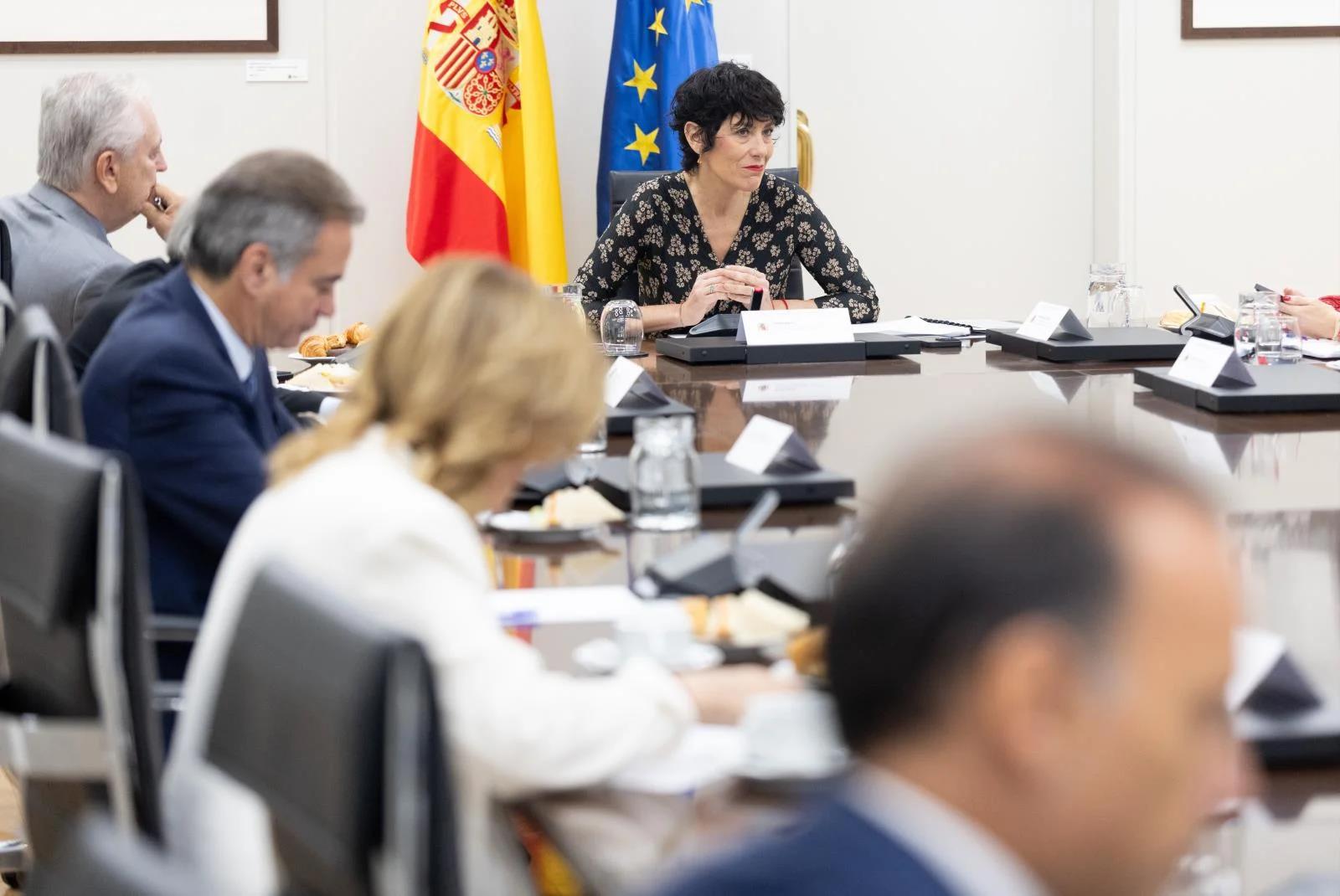
Representatives from tSpain's Ministry of Inclusion, Social Security and Migration met on Monday with trade unions and the main self-employed workers' organisations to try to bridge the gap and agree on self-employed workers' contributions for the 2026-2028 period. Furthermore, the ministry headed by Elma Saiz pledged to correct the shortcomings of the current contributions system and to facilitate access to unemployment benefits.
However, the meeting - the second since summer - ended without significant progress and with the various positions still far apart.
According to SUR sources, the second phase of the income-based contributions system, which will determine the monthly contributions for self-employed workers in 2026, 2027 and 2028, will entail an increase of between 10 and 200 euros per month for workers included in the RETA (Social Security's special scheme for the self-employed).
The proposal suggests an increase in both contributions and minimum income levels over the next three years. The amounts, to which SUR has had access, range from 217 euros per month for those with incomes of more than 710 euros per month, to 796 euros for those with incomes exceeding 6,000 euros.
"It's a rip-off," declared Lorenzo Amor, president of the national federation of self-employed workers' associations (ATA), who was present at the meeting held at the Ministry of Social Security's headquarters. "They can't count on us," he added in an audio recording released to the media after the meeting.
Negotiating the new RETA contribution quotas is the most pressing matter for the Ministry, as the current ones are only defined until 2025. The country's executive of senior ministers must agree on the new main categories and brackets within each before 1 January 2026, an obligation expressly included in the royal decree signed in 2022 that regulates the contributions system.
In the proposal presented to the partners to be consulted, Saiz's ministry team includes two main categories: one general and one reduced. The first comprises 12 brackets and it applies to those who exceed the minimum wage (SMI). At level one, with a monthly income of 1,166.70 euros, the minimum SS contribution would rise to 302 euros, compared to the current 291 euros. The increase is gradual and will reach 796.24 euros for those earning over 6,000 euros, meaning they would be paying in 200 euros more than in 2025.
According to ministry data, almost 40% of self-employed workers in Spain, 1.38 million, are in the first three brackets of the contributions table and "their contribution is lower than the accumulated inflation since 2022 and lower than the minimum in 2022", ministry sources argue.
By 2027, contributions under the general table - if the minimum base is paid - would range from 313 to 1,002.49 euros, while in 2028 they would go from 324.01 to 1,208.73 euros per month, according to the proposal submitted by the ministry to the various self-employed organisations and trade unions.
Within the reduced category, which includes the lowest income brackets, self-employed workers on the minimum income below 670 euros per month would pay a contribution of 217.37 euros per month in 2026, compared to the current 200 euros, with a minimum income of 710.35 euros, according to the ministry's proposal.
For his part, the president of UPTA (the union of professionals and self-employed workers), Eduardo Abad, indicated that the new table of contribution brackets is quite similar to the one agreed upon in 2022 between trade unions, employers and central government, although "observations" should be made, including establishing a lower bracket than the lowest current bracket for the self-employed in the artistic field or for content creators and including the adaptation of these brackets to the economic situations "that may arise".
Cessation of activity
Still, Social Security contribution negotiations are not the only pending issue on the negotiating table. "They have also spoken to us about the cessation of activity", said Amor. The Social Security proposal, according to those pushing it, is for "faster and more uniform recognition, avoiding differences between mutual insurance companies, to facilitate access to the benefit".
However, for those representing the self-employed, "nothing changes" - in the words of ATA's president - and that would mean denying this benefit by 40% or 50%, compared to the current 60%. "If you want ATA's agreement, this is not the way forward," he said.
UPTA, on the other hand, sees "substantial modifications" and indicated that his organisation will submit its proposal this week to improve the document provided by the ministry for further discussion.
![[]](http://static.vocstatic.com/voc26/latest/assets/images/favicon/surinenglish/apple-touch-icon-57x57.png)