
Fires have already destroyed three times as much forest in Spain as in 2022, the worst year of the century
Drought, early heatwaves and human activity have triggered an unprecedented 14 super-fires in the winter and spring months of this year
Alfonso Torices
Madrid
Flames reduced more than 268,000 hectares of forests, woodlands, scrubland and pastures to ashes in just twelve months in Spain last year.
The staggering figure is equivalent to the entire province of Vizcaya being razed to the ground by fire. Forest fires, caused by climate change, sparked the worst ecological disaster of the century in Spain in 2022, and left the largest area burnt in 28 years, since 1994.
The fires killed two people, injured dozens and forced the evacuation of 30,000. But if 2022 was considered a black year, the current year points to an even worse environmental disaster.
In the first five months of 2023, forest fires blackened 47,784 hectares in Spain, three times the amount of land devastated by fire during the same period last year. This is more than double the average damage caused by flames in the last decade and confirms that Spain is the European country most threatened by fire.
Between January and May, as much land was burned in Spain's rural areas as in the rest of the European Union, according to estimates by the Copernicus scientific satellite system. Only France comes close, but with not even a third of the devastation caused in Spain.
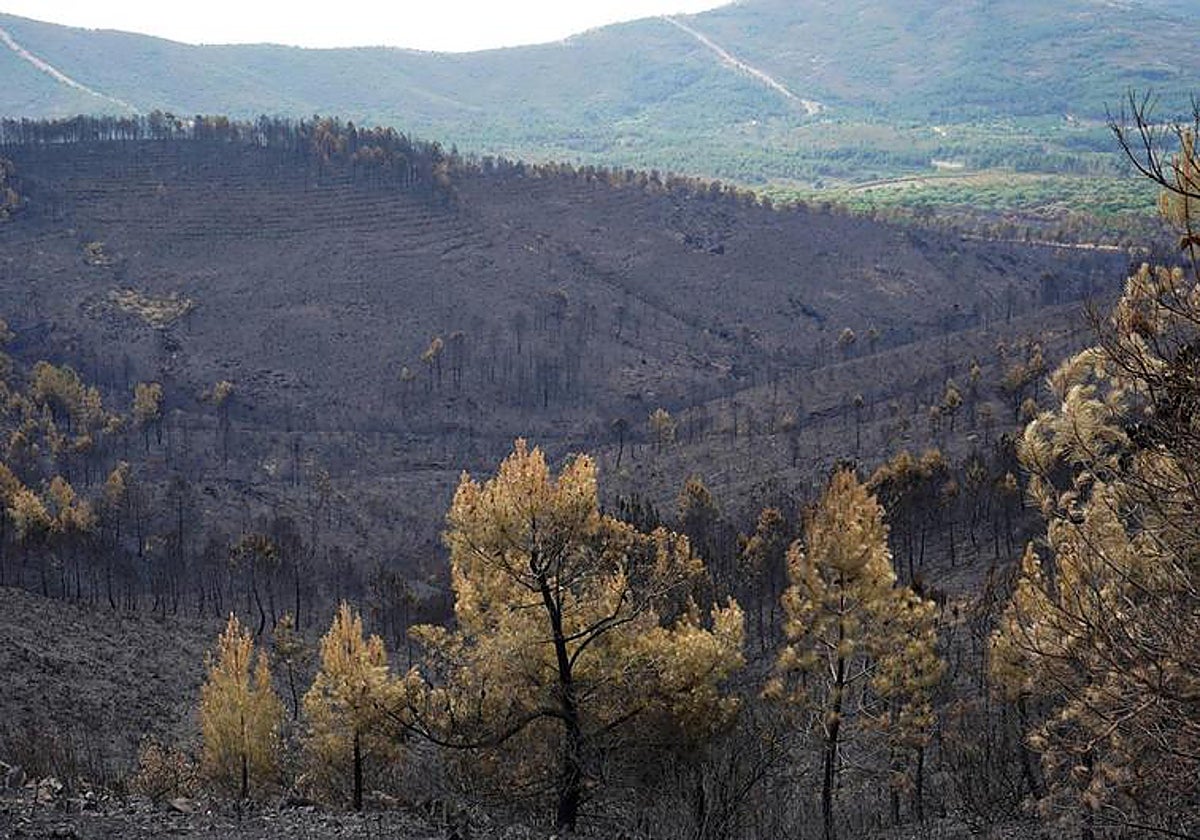
Most of the damage so far this year was between January and April in the forests and meadows of the northwest of the peninsula, with the most burned land in Galicia and Asturias. In May it moved inland, due to the super-fire that devastated Las Hurdes and the Sierra de Gata in Extremadura for days in the second half of last month, with some 12,000 hectares burned.
Firefighting experts and scientists have sounded the alarm in a bid to warn people to take all possible preventive and organisational measures before the arrival of summer, the season in which two out of every three hectares lost in 2022 is expected to be burned.
Despite the respite by recent rains, weather forecasts show that wet weather will not continue in the coming months. The government brought forward - by a month and a half - the start of the state fire prevention plan as a result, and the majority of the Spanish regions have already limited or banned planned burning, open fires or the use of machinery in forest areas.
The black start to 2023 is due to super-fires, infernos of more than 500 hectares, rampant and explosive, with an enormous heat power and a rapid speed of progression, which in a matter of minutes overwhelm extinguishing devices and can no longer be controlled.
An early summer
The super-fires have been occurring very early this year. Fourteen blazes have been recorded since 1 January, seven times more than in 2022 and five times more than in the last decade.
The reason is due to a combination of heat waves and dry undergrowth and scrubland as a result of drought. The land is already extremely dry after Spain enters its third year of drought where it has rained 20 per cent less than average since October last year.
This is coupled with a summer that arrived early in April, with a wave of days where temperatures ranged between 5 and 15 degrees above normal.
![[]](http://static.vocstatic.com/voc26/latest/assets/images/favicon/surinenglish/apple-touch-icon-57x57.png)