Robin Hood economics
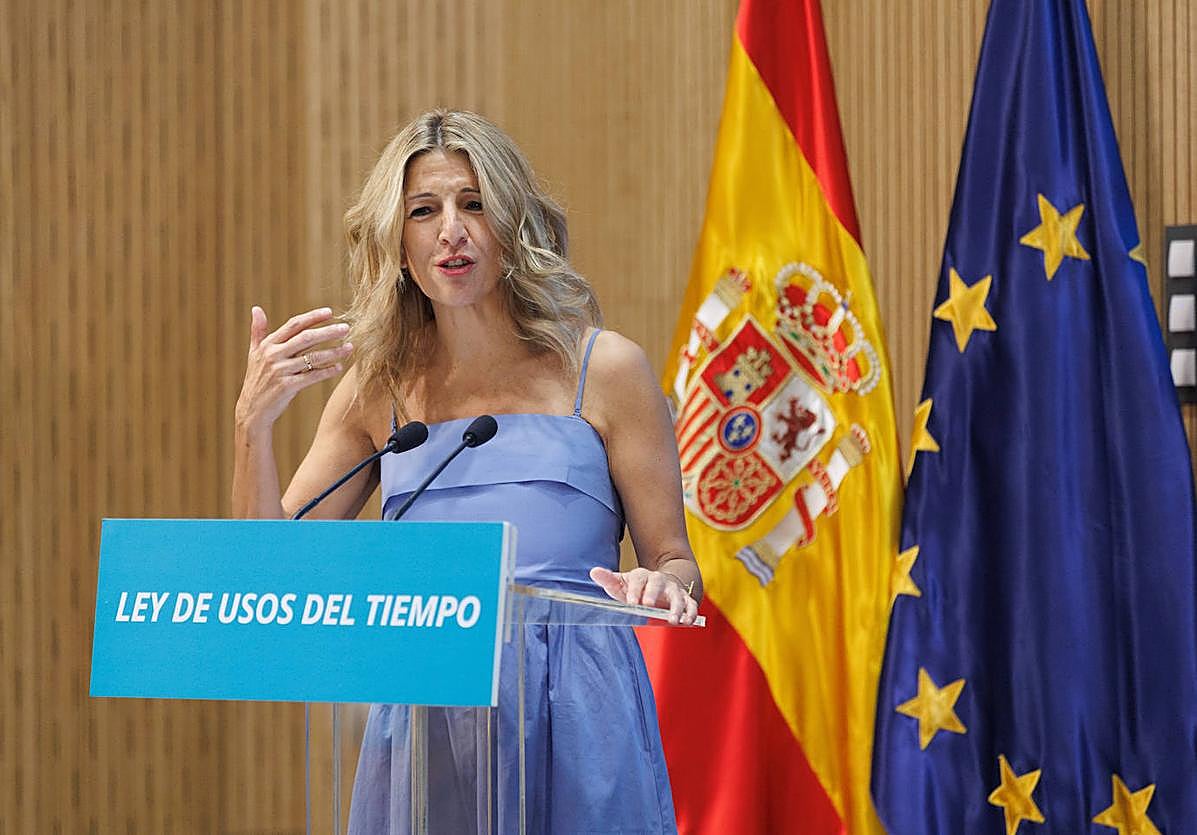
Yolanda Díaz wants a tax regime that demands more from high-net-worth individuals and large corporations as well as an increase in Spain's productivity

After Yolanda Díaz unveiled her proposed economic manifesto this week, Spain's wealthiest individuals and biggest companies are no doubt urgently assessing the probability of ... her becoming the nation's first woman prime minister.
The labour minister and founder of leftist group Sumar - which has agreed a partnership with Podemos ahead of the July 23 election - wants a tax regime that demands more from high-net-worth individuals and large corporations, as well as an increase in Spain's productivity, which is currently 25 points below the EU average.
Díaz wants to make permanent the temporary 'solidarity' wealth tax introduced by her government at the end of 2022. Yet there is little evidence to prove that such levies make a positive impact on a country; on the contrary, studies have shown annual taxes on large fortunes are difficult to administer, damage investment and encourage wealthy individuals to move abroad.
Most of Europe's wealth taxes have been abolished over recent decades, mainly because they didn't bring in enough revenue to justify the time and expense required for their management: in Spain in 2018, for example, net fortune levies accounted for just 0.5% of tax revenues. It's now one of only three EU countries to have one, along with Norway and Switzerland.
Governments fudge the distinction between businesses and individuals when they vow to take more money from the former and maintain low or introduce lower taxes for the latter. One has to ask, 'What, ultimately, is a corporation?'
Looked at in one way, it's a collection of individuals that produces a product or service for consumers (also individuals) to purchase. This means that ultimately it's individuals end up paying a higher corporate tax, whether through wage cuts, higher prices for products or services or slashed profits and (therefore) lower stock-market value.
A 2016 study by the American Economic Association, for example, found that shareholders and owners shoulder about 40% of corporate tax hikes and employees 30 to 35%: in other words, a 'corporation' is not a ghostly entity over and above its constituent elements, somehow different from the sum of its parts. Other studies have demonstrated that corporate tax cuts during a recession can stimulate economic activity, an important angle to consider in a post-Covid climate.
Díaz announced her economic plans as part of her bid - as leader of the Sumar-Podemos partnership - to become Spain's first female PM. But it's an unlikely prospect: even since 2015, when the traditional two-party system was exploded by the arrival of new political forces, Spain's PM's have still either been from the Socialist or Conservative parties, which remain the leading forces on the left and right, respectively. Spain-based corporations and high-net-worth individuals shouldn't pack their bags just yet.
¿Tienes una suscripción? Inicia sesión