Outgoing presidency
As Spain's occupancy of the EU presidency and the year draw to a close, it's a good time to look at what the country has actually achieved in the role

On Monday, as Europe recovers from its collective hangover, Spain will hand over the six month rotating presidency of the Council of the EU to ... Belgium.
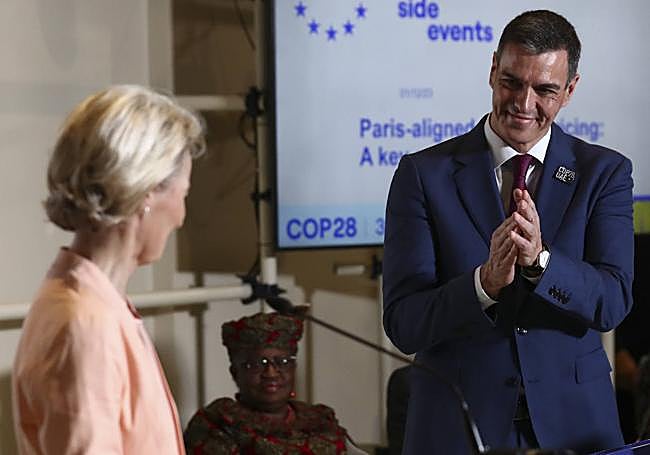
It assumed this largely symbolic administrative position on July 1st, a few weeks before an indecisive general election removed Pedro Sánchez from power, and won't hold it again for thirteen years. So, as Spain's occupancy of the presidency and the year draw to a close, it's a good time to look at what the country has actually achieved in the role.
The Council of the EU, not to be confused with the European Council, doesn't propose any new legislation itself. Rather, as one of the bloc's two legislative bodies, along with the EU Parliament, it amends, adopts or rejects laws proposed by the EU Commission: in that sense, it does have a substantial influence on EU policy-making - and it applies that influence through the bloc's most hallowed institution: the meeting.
It's the responsibility of the country that occupies the presidency of the Council to propose the agendas for and chair those meetings, of which there were over a thousand during Spain's six month-stint. The role is thus comparable to that of a referee in football or an umpire in tennis.
Spain has presided over some decidedly unglamorous and largely unnoticed developments since July. The EU signed a Free Trade agreement with New Zealand, for example, and some regulations restricting the use of fluorinated gases were passed. In September, something called the European Chips Act came into effect. By far the most significant development to occur during Spain's occupancy, though, was the EU's decision, a week before Christmas, to open accession talks with Ukraine. Sánchez said it was an 'honour' that the decision had been made 'under [Spain's] presidency'.
Exactly. Of every development over which the Council presides, one has to ask whether it happened because or while any given country holds the body's presidency - much as it made sense to ask, during the pandemic, whether people died from or with Covid. There's a big difference in both cases.
The extent to which any of the above developments happened because Spain, rather than any other member state, held the Council's presidency is probably fairly minimal.
That's not Spain's fault, of course - the role itself has no power of initiative. Similarly, a referee or an umpire isn't responsible for who wins a football or tennis match, although they do have the important task of ensuring that the match runs smoothly.
But Spain shouldn't have taken over the role at all until November, because it had no proper government until then. Arguably, ministers who have zero mandate in their own country shouldn't have the power to even set agendas for EU meetings.
Belgium should have started its term in the umpire's chair six months earlier than scheduled.
¿Tienes una suscripción? Inicia sesión