
Retail
Olive harvest forecast for Spain suggests oil prices will drop in the shops soon
Despite another drought-hit year for the sector in Malaga province, the main players locally all agree that there may be a "relaxation in prices" from early next year onwards

Malaga
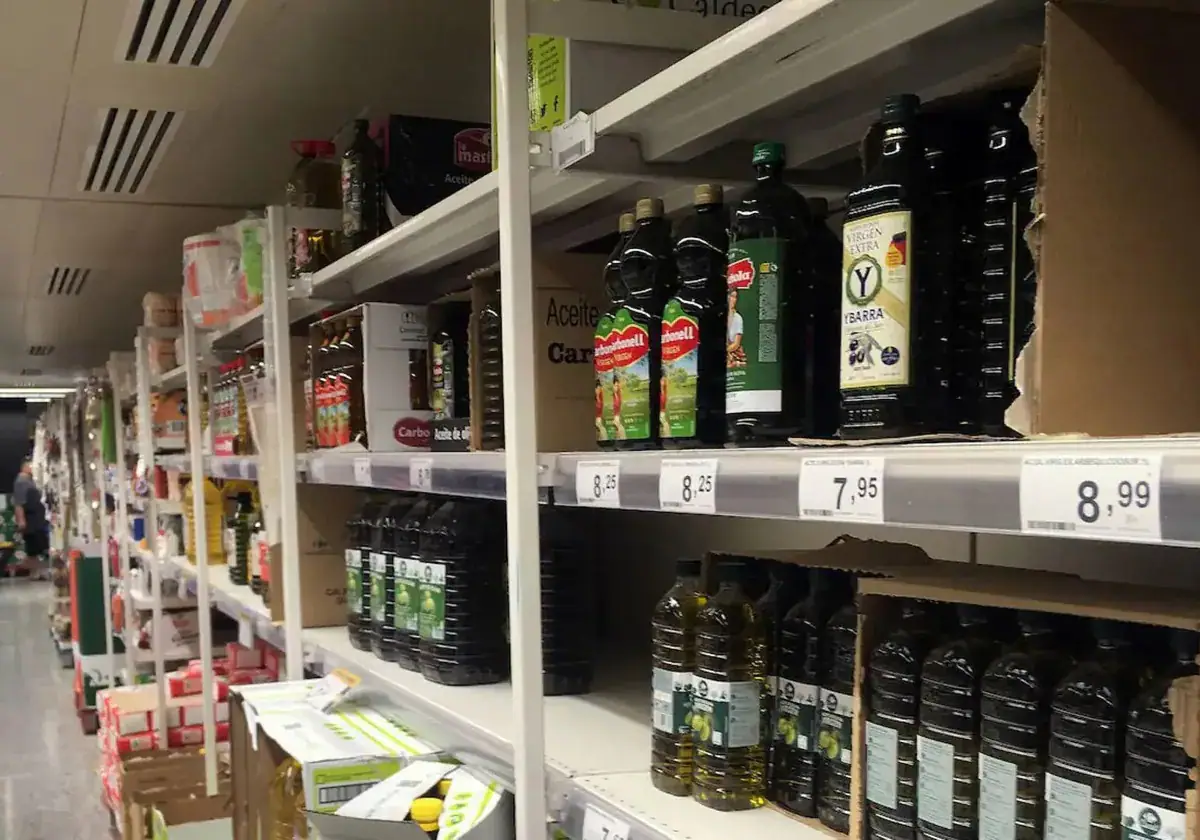
There is no single food item in our weekly shopping basket in Spain that generates as much controversy as olive oil does, or rather the price increases that this product has experienced in recent years. According to the national OCU (organisation of consumers and users), since 2020 the price increases have been between 175% and 225%. In the first half of this year alone the price of extra virgin olive oil (EVOO, or AOVE in Spanish) has risen by a further 7%. Paying between nine and ten euros per litre in the supermarket has become the norm. The reason for these record-breaking prices is to be found in the scarcity of the product due to the persistent drought affecting the olive harvest. For the first time in a good while the 2024-2025 season could bring some respite for consumers' wallets. When? SUR has consulted the main players in the olive oil industry in Malaga province to find the answer. Producers and those in charge of the agricultural associations don't want to be caught out by giving a set date, but they all agree that from February there could be a "relaxation in prices."
The new season's anticipated olive oil output, although still pretty much within the same parameters as in the past with regard to volumes, will be an improvement on the previous harvest. In Malaga production will reach 38,000 tonnes. This represents an increase of 8,000 tonnes on last year. This increase in the province is moderate compared to other provinces of Andalucía. On the national level the Spanish government's Ministry of Agriculture is projecting a production of 1.26 million tonnes. This is an increase of over 40% and it would serve to bring olive oil prices back to less angst-causing levels for the consumer. This is how the president of Asaja (the young farmers' association in Spain), Baldomero Bellido, sees it. Although he doesn't foresee a price drop in the short term, he does believe that, from the end of January or some time in February, there will be an "easing off" and this will be noticeable in the prices on the supermarket shelves.
"Production yield is better than in other years, but not in an over-the-top way. That's why I like to think of it as a relaxation rather than a reduction in prices," he said. What worries him most at the moment are the almost non-existent reserves of olive oil. "The lowest we've ever had," he sid. This means that the tension in the market will remain until the current production comes onto the market.
Bellido reminded us that there is a time lag between the moment when the oil leaves the mill, goes for bottling and is then distributed to the supermarkets. As such, when in mid-November the new crop arrives en masse for pressing, there is no immediate effect on prices. Bellido also raised another key point and he dod this by looking up at the sky: "If it rains in the next few weeks, it will give production in Malaga a boost."
Moderate optimism in the air
One of the major players in the Spanish olive industry is Dcoop. Based in Antequera in the north of Malaga province, it is the world's leading producer of olive oil and its president, Antonio Luque, is one of the most authoritative voices in the industry. Luque predicted a drop in prices, initially, for January. This is what he said in an interview with SUR back in July: "In January we will really see a significant drop in the price of oil on the shelves." His estimate then is still partly valid now, but it requires a subtle amendment. This is what official Dcoop sources are saying now to SUR, advising us to bear in mind that "we are going to have a better crop [than previous years] but we are not in for a bumper harvest."
The continuing lack of rain has painted a different picture to that which had been expected and so it has tempered some of the earlier optimism. According to the same Dcoop sources, the lack of oil reserves, together with a demand that remains high, means that the market remains "tense". In Dcoop prudence always prevails when talking about price movements, but the oil giant also agreed with the prediction of a "moderate" drop in prices for February.
![[]](http://static.vocstatic.com/voc26/latest/assets/images/favicon/surinenglish/apple-touch-icon-57x57.png)