
The majority of town halls in Malaga province have not adopted water-saving measures
In June the Junta de Andalucía ordered town halls in Malaga province to reduce their consumption of drinking water by up to 20 per cent
Eugenio Cabezas
MALAGA.
The extreme drought in Malaga province has already led to water cuts in at least eight towns and villages, including Vélez-Málaga, which is home to more than 83,000 inhabitants.
The seven reservoirs in Malaga are, on average, at 27.5 per cent of their capacity, with 168.2 hectometres stored, compared to the 287.5 they had a year ago. In the last week they have lost five hectometres. La Viñuela reservoir in the Axarquía is currently just 8.8 per cent of its capacity.
The Junta de Andalucía, as the authority with overall responsibility for water in Malaga, agreed in June that the 31 town councils in the Axarquía had to reduce their consumption by 20 per cent and in the rest of the province this figure is 10 per cent.
More than a month after the restrictions were put in place SUR has analysed how each town hall is dealing with the restrictions. In all municipalities declared to be in a situation of exceptional drought, according to the drought decree of June 2021, the use of drinking water for street cleaning, filling private swimming pools, watering gardens, public and private parks and golf courses and washing cars outside authorised establishments is prohibited.
However, few towns and villages, except for those that have introduced cuts to the supply at certain times of day, have gone far to meet the regional government requirement.
It is also worth remembering that the Junta de Andalucía has said that town halls are "free" to apply the measures they feel most appropriate, as long as they reduce consumption by 20 and 10 per cent depending on the area. The application of measures to achieve these savings is, therefore, very varied.
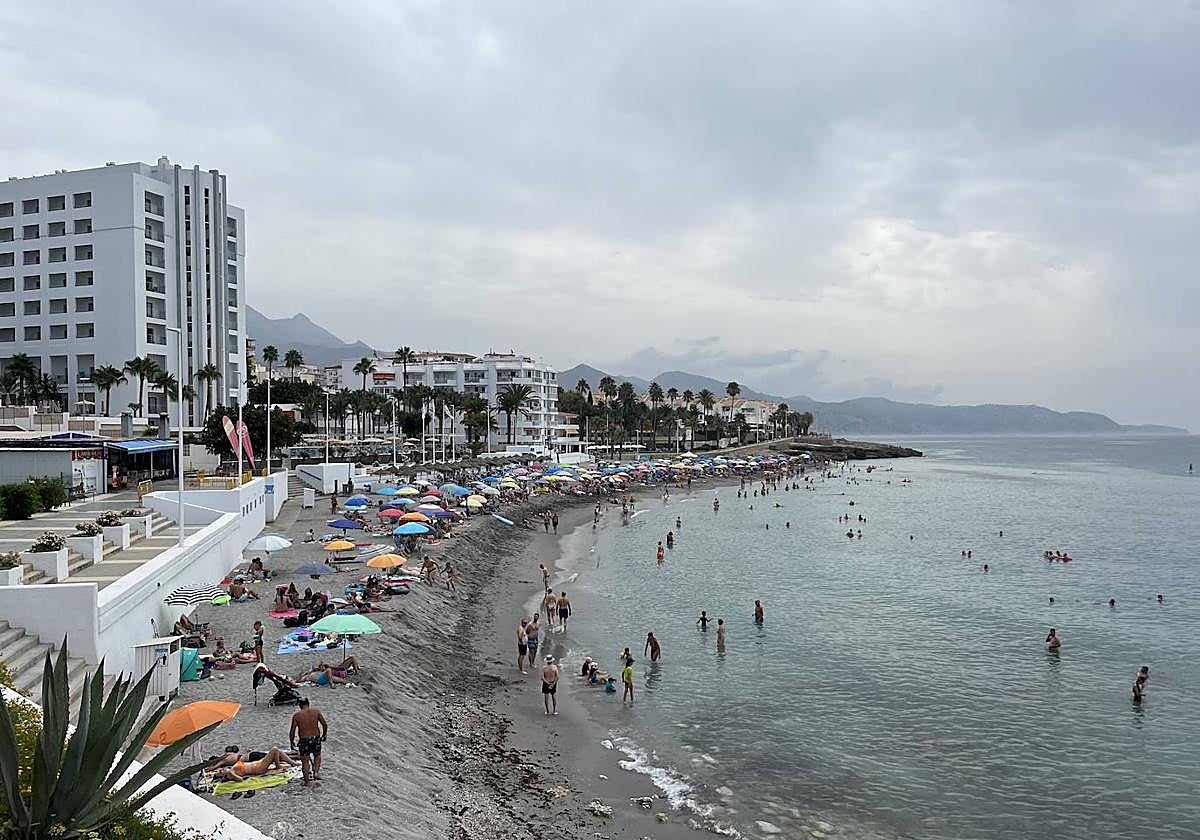
In Malaga, the city hall has not told SUR how they are achieving this reduction. The mayor, Francisco de la Torre, said on 10 July that "for now we have water reserves that are working acceptably well". He went on to say, "We are in a position to offer a normal service to the city today," adding that this means "using as little water as possible. We have to be prudent in our use, never waste water". The showers on the beaches are still working, unlike in the Axarquía, where four of the five towns have turned them off, with the exception of Nerja.
The Axarquía
In the Axarquía, the worst hit area, public water company Axaragua, which serves 14 of the 31 municipalities, says it has managed to reduce consumption by 19 per cent so far this month.
This has been achieved by imposing nighttime water cuts in Vélez-Málaga, Periana, Benamargosa, Moclinejo, Almáchar, El Borge and Iznate, and there are no beach showers or showers in use in public swimming pools in Vélez or Torre del Mar.
Axaragua is also currently running a water campaign in Spanish and English on its social media pages (Facebook, Twitter and Instagram) giving tips on how to save water at home.
Vélez-Málaga town hall is looking into ways to allow Aqualia, which operates water services, to identify excessive water consumption linked to the watering of gardens or the filling and refilling of swimming pools. The councillor for water, Jesús María Claros, said they want to follow the example of Rincón de la Victoria, where such measures are already in place to prevent noncompliance.
Marbella and Estepona
Marbella has reduced street cleaning and the watering of green spaces by 20 per cent, a measure adopted by the town's drought committee following the drought declaration by the Junta. The town hall, together with the public water companies, Hidralia and Acosol, are also planning a public awareness campaign and plan to reopen several wells. However, mayor Ángeles Muñoz said that there were no plans to turn off beach showers and drinking fountains as they "do not have much impact" in terms of the required reduction.
In Estepona, the town hall has agreed to implement urgent measures to reinforce water resources and "contribute to guaranteeing the water supply in the face of the existing water problem".
The construction of a desalination plant is part of the Estepona Water Supply Master Plan, which has projects under way including the expansion of the drinking water storage capacity of the Las Mesas reservoir, to provide the town with greater water independence.
Torremolinos & Benalmádena
In Benalmádena, the town hall has issued a decree and created a drought committee, which meets weekly to analyse the situation and take measures. So far these measures include modifying the buttons on the showers on the beaches so that they stop working as soon as they stop being pressed, instead of being set on a predetermined timer.
There has also been a 35 per cent reduction in the amount of water used for street cleaning which translates into a saving of 330,000 litres of water per week. Similarly, 10 per cent less water is being used to irrigate parks and gardens.
In Torremolinos, the town hall has turned off half of the beach showers and footbaths until 31 August. They have reduced water consumption for irrigation of green areas by 30 per cent, so that it is being limited to minimum maintenance.
In Fuengirola, the measures are focused on raising awareness among beach users by means of posters placed in the showers which call for responsible water consumption. The town hall is carrying out street cleaning with non-drinking water from a municipal well.
Guadalhorce valley
In the Guadalhorce valley, town halls have published notices with the different measures they have adopted. Currently Alhaurín de la Torre, Alhaurín el Grande, Cártama, Álora, Coín and Pizarra prohibit the use of drinking water for washing down streets, pavements, façades or any surface, both public and private.
However, in Coín water is used to clean children's playgrounds and surrounding areas, as "it is necessary to clean them for health and hygiene reasons", according to the town hall.
Guadalteba
In some parts of the Guadalteba area no specific measures have been taken as yet. The mayor of Teba, Cristóbal Corra, said that they are "very concerned about this issue" and have held a meeting to limit water for irrigation.
"Regarding drinking water, we have been fixing the network for months, but the work we are doing to increase the municipal reservoirs and the connection through a water ring has made it impossible for us to make cuts in the last month," said Corral.
In Ardales, mayor Juan Alberto Naranjo said that they have not yet had to take any restrictive measures "given that the water well that supplies the municipality is in optimum condition."
In Campillos, mayor Daniel Gómez said that they are also having problems with the drought and he does not rule out having to make water cuts. "The level of the wells is going down, all the water that enters the reservoirs is consumed and on many occasions the water consumption is even higher," he explained. However, so far, the only measure they have taken is to regulate the water pressure in the upper areas so that the cisterns are filled.
Antequera
In Antequera, "for now we have no water supply problem", as it depends on the La Villa well which is at the foot of El Torcal, according to the deputy mayor Antonio García.
"Our reserves are fine and if there are no problems, we will continue as we have been doing up to now, being very responsible with our consumption and hoping for rain in autumn," he pointed out.
Occasionally Antequera supplies water to neighbouring villages including Valle de Abdalajís, Casabermeja, Archidona, Campillos, Fuente de Piedra and Humilladero in the case of supply problems in those places.
In Fuente de Piedra, the filling of swimming pools with drinking water, street washing, watering of gardens and allotments has been prohibited since April. The mayor, Siro Pachón, announced at the time that residents would have to pay for water to be brought in by trucks if they wanted to fill their swimming pools.
The town hall has not had to make water cuts "for the moment", although they do not rule it out. "The month of June has been cooler and has allowed us to keep the tanks and everything more stable, but at any time if the tanks drop we may be forced to impose more restrictions," said Pachón.
In Casabermeja, the town has been experiencing daily water cuts from around 2pm until 8am the following morning. Those who have tanks or cisterns in their houses have not been affected, but those who do not have to go to the town's fountains or take advantage of the available hours - around six a day - to get water.
Ronda and Sierra de las Nieves
Ronda town hall has turned off almost all its fountains to save water, except those with a closed circuit. Although Aqualia, the company that manages the water service in the town, explained that the supply has not been compromised.
In Alozaina, no extra measures have been taken so far, but mayor Antonio Pérez has said that they will have to if the situation continues as it is. "The Jorox well, which is the one that mainly supplies Alozaina, has dropped by almost 50 per cent compared to last year," he said.
Finally, in Archidona there are no water restrictions for the moment in place, although the town hall is trying to avoid a future problem with a new well to guarantee supply.
![[]](http://static.vocstatic.com/voc26/latest/assets/images/favicon/surinenglish/apple-touch-icon-57x57.png)