
Environment
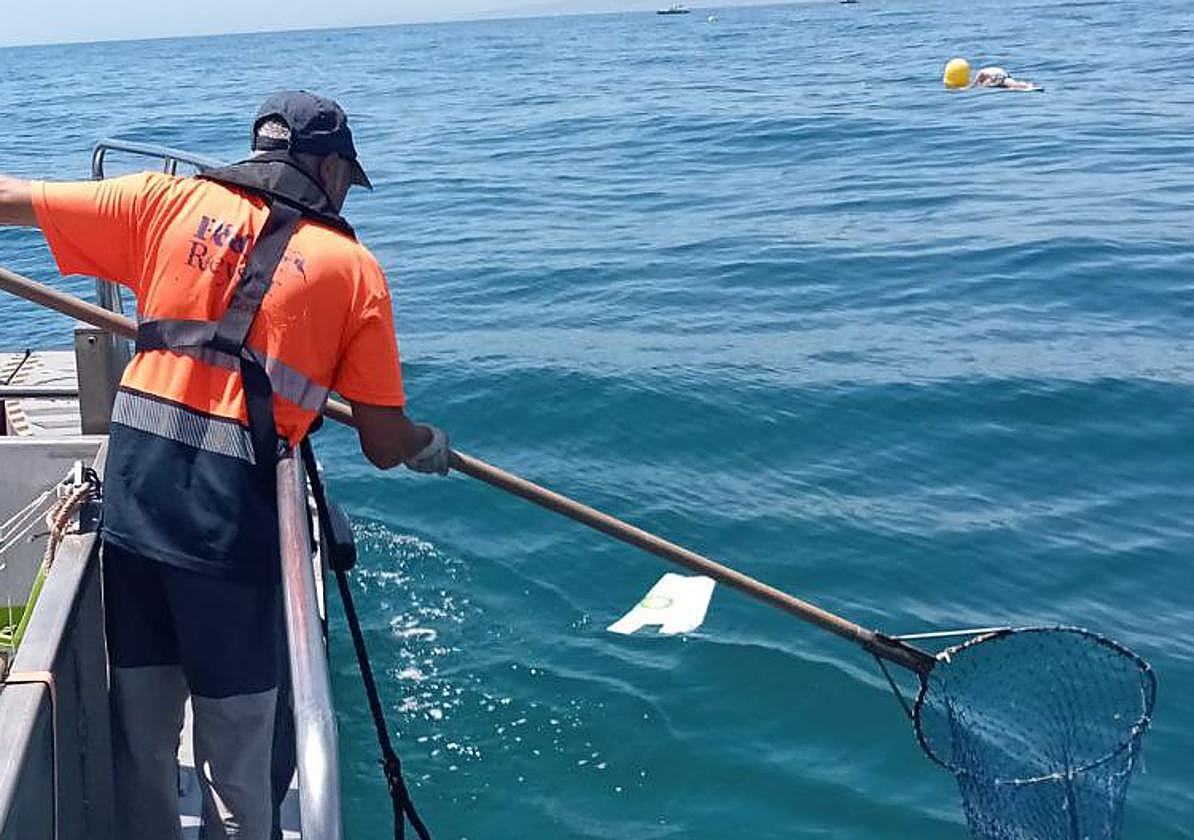
Plastics continue to be the main waste material collected by cleaning boats in Costa del Sol waters
In July, there was also a notable increase in the collection of algae, wood, other materials (such as glass) and organic matter on the western stretch of Malaga province's coastline
María Albarral
Marbella
The Mancomunidad association of western Costa del Sol municipalities has released the report on the amount and type of waste collected from the coastline this past July - a total of 40.48 cubic metres. This figure is higher than the one recorded in June (33.36 cubic metres). Once again, plastic is the predominant waste material in the sea.
According to the president of the Mancomunidad, Manuel Cardeña, the amount of plastics collected in July is slightly higher, but the most notable increase was in the collection of algae, wood, other materials (such as glass) and organic matter.
By municipalities, a total of 3.6 cubic metres was collected in the waters of Torremolinos (3.52 in June); 5.4 in Benalmádena (4.52 in June); 3.94 in Fuengirola (4.5 in June); 5.9 in Mijas (5.07 in June); 8.41 in Marbella (6.3 in June); 10.05 in Estepona (7.64 in June); 0.64 in Casares (0.44 in June); 2.54 in Manilva (1.77 in June). As mentioned, plastics accounted for the greatest portion of waste, but there were also higher amounts of driftwood, rods, polystyrene boxes, buoys
In the case of Mijas and Casares, there were also organic remains of food. The notable increase in Marbella may be related to the coincidentally growing beach activity, although the amount of waste collected in this town was exceeded by Estepona.
The cleaning actions are part of the Mancomunidad water quality plan, launched once again this year thanks to an investment of 635,312.15 euros. The cost of the service, which will last until September, is borne by the Mancomunidad (60%) and the municipalities (40%).
Delegate for tourism and beaches of the Mancomunidad Francisco Cerdán stated that "the service consists of a total of 15 boats, four on the coast and 11 on the beach, for the collection of floating or semi-submerged solids, as well as hydrocarbons and oil".
In 2024, the service resulted in the collection of 120 cubic metres of waste.
![[]](http://static.vocstatic.com/voc26/latest/assets/images/favicon/surinenglish/apple-touch-icon-57x57.png)