
Drought crisis
Malaga Port prepares to ship in tankers of water by next summer if drought continues
The bulk of the infrastructure needed to unload water from tanker ships of up to 100,000 cubic metres is already in place
Ignacio Lillo / Chus Heredia
Malaga
Ships loaded with water could dock in the Port of Malaga to supply the province if rainfall continues to be scarce in the province. The Junta de Andalucía and port authorities have been explaining plans this week as Malaga continues to be plagued by drought and water levels at various reservoirs remain at record lows.
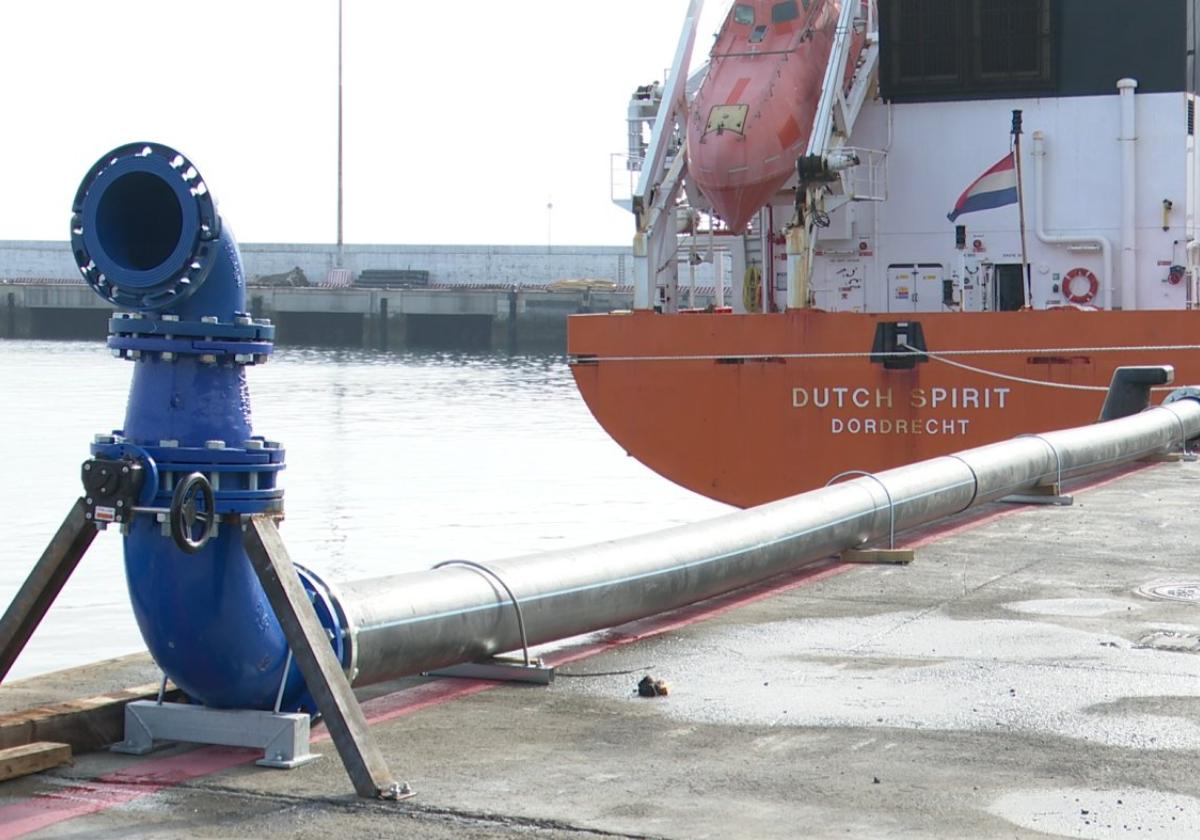
The city's docks already have the bulk of the infrastructure and pipelines ready to transport water to distribution centres in Malaga city, mainly to the water treatment plant of El Atabal. But to be put into service, the pipeline will need to be extended by about 100 metres to Pier 9 (the container pier), which is where the tankers loaded with up to 100,000 cubic metres of raw (untreated) water would dock. The capacity for treated water ready for consumption would be 40,000 cubic metres
The pipeline to El Atabal - which has never been used - would also need a maintenance check as it is 30 years old. The low-cost operation would involve robot devices, which would inspect the pipeline with cameras and assess if any repairs are needed.
The Junta and Port of Malaga want the pipeline to be complete and operational within three to four months, while shipping companies such as Noatum would be responsible for organising the shiploads of water.
"Maritime operators have been asked to look for tankers that can hold 100,000 m3 of raw water that will be delivered to El Atabal," the Junta's delegate for Malaga province, Carmen Crespo, confirmed.
Malaga and Algeciras would be the two main points from where water would be distributed to Malaga city, the Costa del Sol and Axarquía, among other parts of the Andalusian coastline, thanks to the interconnection of the system.
Meanwhile, there are currently works under way to increase the amount of water transferred along the coast from the Campo de Gibraltar to Nerja, with the Malaga city plant acting as the backbone for treatment and distribution to both sides of the Costa del Sol.
Last resort
There are many factors that can affect the cost. The main ones are the size and characteristics of the vessel, the distance it has to travel and the price of the raw material. Whether potable or raw water is transported also has a major impact on budgets. Firstly, because the water at source is not worth the same price. Secondly, because transport and the on-board requirements are not the same. And third, because the size of the tanker also varies.
Technical sources explained that the cost of each boat could be in the region of one million euros. Other experts say that in no case would it be less than 500,000-700,000 euros. A third group of those consulted put these cost estimates even higher.
Both the Junta de Andalucía and the public companies that supply water to residents have already initiated contacts with shipping companies, as confirmed to SUR by several sources in the sector.
The water due to be transported to Malaga could, according to some sources, come from the port of Lisbon, which is close to the gigantic Alqueva reservoir. Opened in 2002, this is the largest dam in western Europe and regulates the River Guadiana, in the Alentejo region. Another option is that the water could come from the Carboneras desalination plant in Almeria.
More demand
Catalonia has already published the details of its plan which will cost 22 million euros per month and involve ten ships. The ships will come from Tarragona, Carboneras and Marseille to avoid water restrictions in the city next summer.
Meanwhile the Bilbao Bizkaia water consortium in the Basque Country has put out to tender the supply of water for 16 municipalities in the Busturialdea region for 4,000-cubic-metre boats to transport water from Santurce to Bermeo. The monthly cost is 1.17 million euros.
Bringing in water supplies by sea is by no means a new idea in Spain.
It was in the drought of 1995 that the pipeline that could be used next year was first laid in Malaga. This was never needed on the Costa del Sol, although in that same year water from the Chanza reservoir in Huelva was shipped to Cadiz and Ceuta.
In the drought of 2005, according to a retired manager of the city's water company Emasa, talks were under way to bring tankers of water from Norway. "The process was quite advanced," said José Luis Rodríguez, "but fortunately it started to rain."
Further afield the drought situation was so serious in Benidorm in 1978 that water had to be shipped in. And the same happened in Barcelona in 2008
Meanwhile the Basque Country started shipping water between ports within the region last year.
Bringing in water by sea as an emergency measure is being developed in parallel to other schemes such as the installation of portable desalination plants, announced last week by the Junta de Andalucía.
![[]](http://static.vocstatic.com/voc26/latest/assets/images/favicon/surinenglish/apple-touch-icon-57x57.png)