
History
Malaga keeps alive the memory of Torrijos, the martyr for freedom
With a floral tribute and the vindication of his values, the city commemorated the 194th anniversary of the execution of the liberal general and 48 companions on the beach of San Andrés for attempting to overthrow the absolutist monarch Fernando VII

Málaga
On 11 December 1831, at 11.30am, the beach of San Andrés, in the then humble neighbourhood of El Bulto, was the scene where 49 men - including a child - who had led a conspiracy to try to overthrow the absolutist regime of Ferdinand VII were executed.
The visible head of that movement for freedom, whose aim was to restore the Constitution of 1812 and put an end to the so-called 'ominous decade', was General José María Torrijos Uriarte, a prestigious military man and hero of the War of Independence.
Torrijos, who was betrayed by the then governor of Malaga, Vicente González Moreno (known as Viriato), had, just a few hours earlier, written his last letter to his wife in the refectory of the nearby convent of El Carmen.
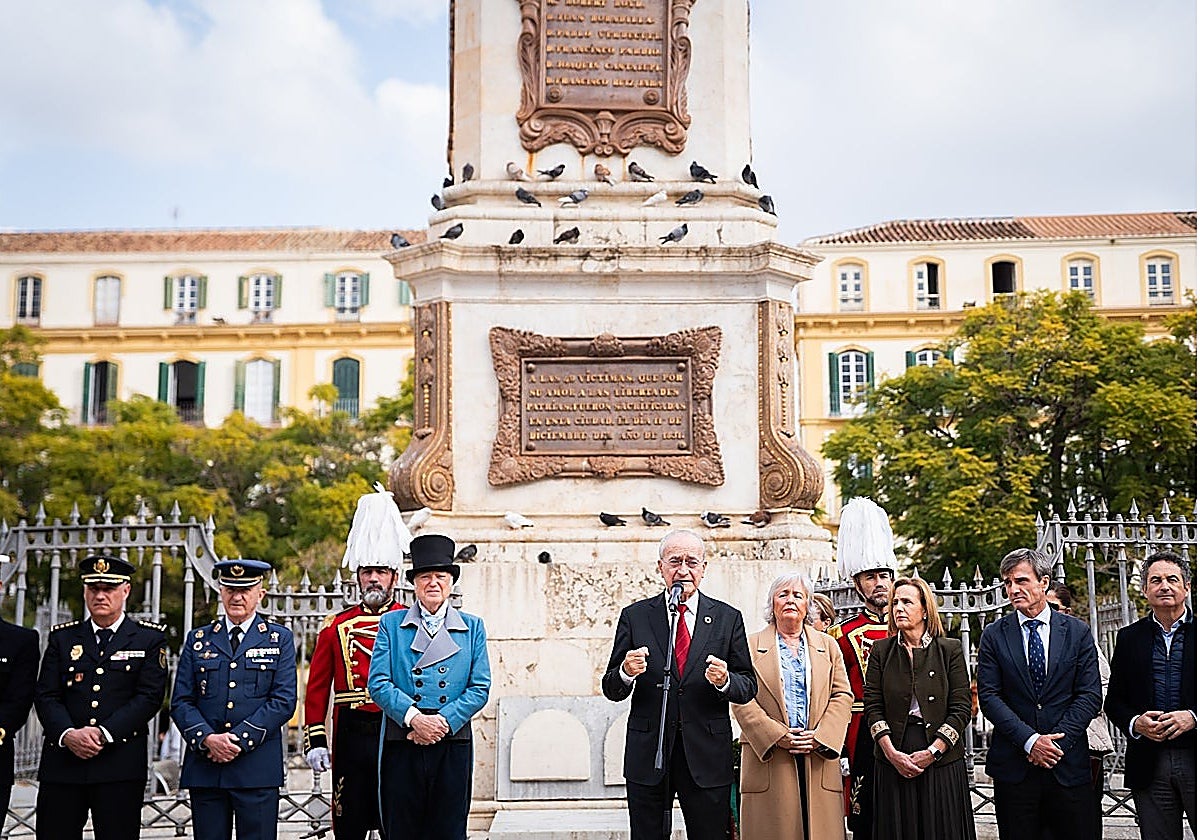
Since that date, Torrijos and his companions have been considered martyrs to freedom, and every year Malaga keeps alive the memory of this episode in Spanish history. Thus, on Wednesday, on the 194th anniversary of that execution, which is reflected in the painting by Antonio Gisbert, the city paid tribute in front of the funeral monument erected by public subscription in 1842 in the then Plaza de Riego (now Plaza de la Merced), under whose obelisk lie the remains of most of those executed by firing squad.
The event was presided over by the mayor of the city, Francisco de la Torre, who defined Torrijos as "a formidable example of bravery, courage, honesty, dedication, sacrifice and trust". He also vindicated the liberal values defended by the general and his companions and "many other Spaniards" throughout the 19th century so that Spain "would modernise".
Drawing a parallel with the recent anniversary of the current Constitution, De la Torre said that Torrijos would have felt “fully acknowledged and happy” to know that Spain has a Constitution “with as many principles and powers to defend liberal values as the one from 1978". "The best tribute to those who lost their lives in the nineteenth century for freedom is to defend and improve, in the sense of making possible the development of all the values implicit within it, a Constitution like that of 1978,” he said.
Collectives
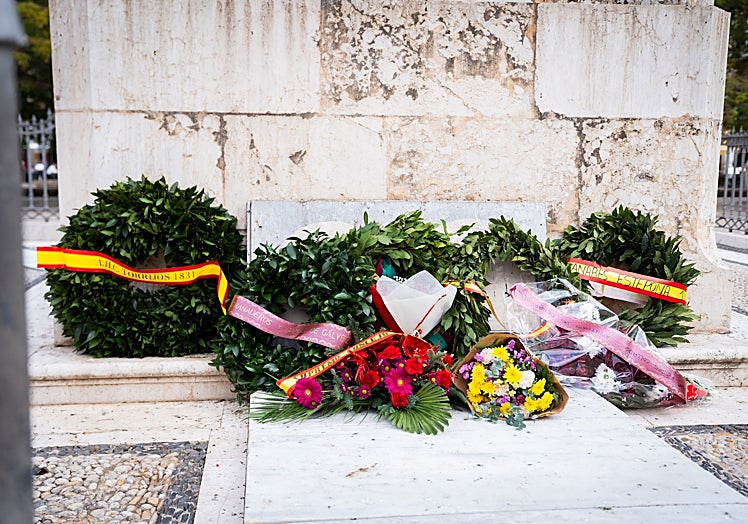
The mayor's words were followed by the floral offering with laurel wreaths laid by the Club Liberal 1812, the Orden de Granaderos y Damas de Gálvez de Macharaviaya, the Asociación Torrijos 1831, the Asociación Manzanares de Estepona 1831, the Asociación de los Colorados de Almería, the Fundación Andrés Collado (one of those shot along with Torrijos) and the Malaga chapter of the Supremo Concejo del GR 33. While the offering was taking place, the municipal band played the piece 'immortal heroes', followed by the Andalusian and Spanish anthems.
The re-enactment - featuring performers in period costume - of the Requiem for Torrijos by the Torrijos 1831 association, chaired by Esteban Alcántara, together with the reading of the final letter written by the executed general to his wife and a recital in defence of freedom, brought to a close the commemoration of “the 49 victims who, for their love of liberty, were sacrificed in this city,” as stated on the plaque inscribed on the monolith in Plaza de la Merced.
![[]](http://static.vocstatic.com/voc26/latest/assets/images/favicon/surinenglish/apple-touch-icon-57x57.png)