
Infrastructure
Spain's government goes 1,000 days without a budget, leaving major projects in Malaga province at a standstill
The upgrading of the Bobadilla-Algeciras railway line, the Baños del Carmen and the national library, all of which have been in the pipeline for a very long time, are the only noteworthy investments

Spain's central government has gone 1,000 days without a new budget, which means that the 2023 budget keeps getting extended. This has a ... direct impact on the ability to make major long-term commitments and invest in projects that are long overdue.
When a new general state budget (PGE) is not approved, the Constitution provides for the automatic extension of the previous year's budget. This has been the case since 1 January 2024, when the last approved budget was extended. Consequently, 2024, 2025 and 2026 have passed without a PGE and all the signs suggest that 2027 will face the same situation.
The 2023 accounts
In the 2023 general state budget, Malaga province did not fare particularly well. In terms of investment per inhabitant, it ranked third from last: only Jaén and Alicante had a worse ratio.
The investment for 2023 was set at 222 million, already noticeably lower than that of the previous financial year (over 400 million).
Bobadilla-Ronda-Algeciras: the driving force behind the figures
The rail link between Bobadilla, Ronda and Algeciras is the largest item in the currently extended budget, amounting to 84.7 million. This has long been a priority for the province and work is finally under way on doubling the track.
All this forms part of a far-reaching logistics strategy: the 'rail motorway', which will enable large convoys and lorries to board trains and improve efficiency in a landscape where competitiveness stems from strengthening the partnership between railways and ports. The 'dry port' freight hub of Antequera and the port of Algeciras are key.
Baños del Carmen
The regeneration of the Baños del Carmen beach is another major project currently under way, with a budget of one million euros. It is also a project that has been in the pipeline for decades. Essentially, the aim is to increase the beach area fivefold and protect the former spa grounds and the sandy beach with a semi-submerged breakwater.
San Agustín
The third major project currently under way has a history of delays and has been further complicated by cost overruns and archaeological finds: the state library in the former convent of San Agustín, which is currently undergoing renovation. It had a budget of four million euros for 2023.
That is as far as the major budgetary spending goes, because the refurbishment of the tax office building has only a moderate impact on the public. The project is currently at a standstill because the contractor has requested an upward revision of the price for a contract that was awarded at 18 per cent below the tender price.
Another major project that is making significant progress after many years of delays is the upgrade to the high-speed rail line between Bobadilla and Granada, although the bulk of the investment is being channelled into the Granada area.
Meanwhile, in Cordoba province, work on the Almodóvar del Río bypass, which is intended to cut the rail journey between Malaga and Seville by 20 minutes, is still under way, albeit with a significant delay.
There is indeed a commitment to the future expansion of Malaga Airport to meet the major challenge its growth is posing, but this is because the funds come from airport operator Aena's own resources and merely require cabinet's authorisation. The Dora III plan allocates 830 million euros for the period 2027-2031.
A similar situation applies to the Port Authority's self-funded projects. In this case, the largest project in the pipeline is quay eight, which is currently out to tender: a key logistics facility with a budget of 48 million to transform the fishing harbour into a large multi-purpose esplanade covering more than 70,000 square metres.
Traffic gridlock and the coastal railway
There is little or no trace of major road projects in the accounts. In 2023, 740,000 euros were earmarked for the northern access road to the airport. After decades on the agenda of successive governments, there is still no sign of it, despite the existence of a project and an environmental impact assessment.
A further 500,000 euros was also allocated to extend the western ring road between Malaga and Torremolinos, a project for which funding has been earmarked since as far back as 2006. What began as a simple bus-and-high-occupancy-vehicle lane has turned into a road-widening project that includes a new bridge over the Guadalhorce.
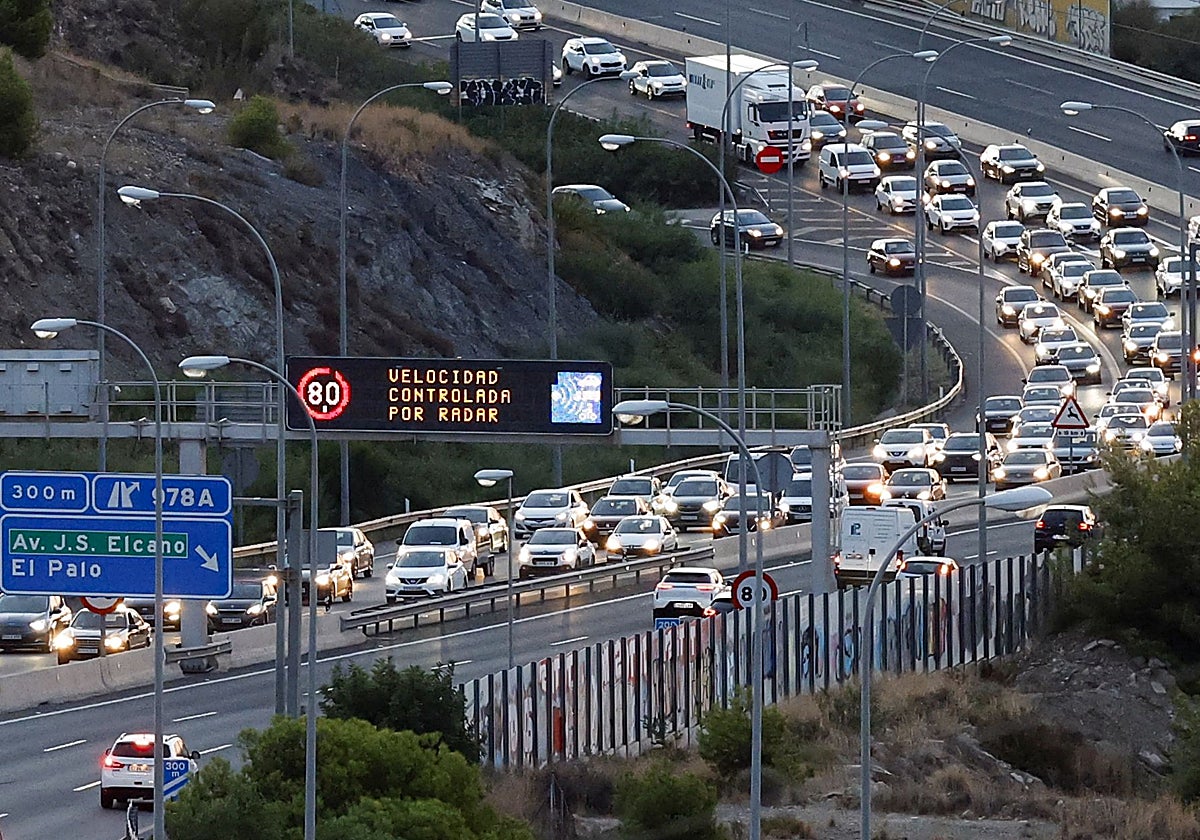
Meanwhile, the process of preliminary studies and exploring alternatives serves to breathe new life into projects to put an end to the chronic traffic jams between Rincón de la Victoria and Malaga, improve transport links between Torremolinos and Torreguadiaro and the connections between the A-7 and the AP-7 or the never-ending study of the Costa del Sol rail corridor.
When it comes to water, the government's failure to act over recent decades is undeniable. Many projects declared to be in the general interest of the state remain pending and the only commitment is the Axarquía desalination plant. The regional government has even taken over projects falling within the state's remit, such as improvements to the Marbella desalination plant, the Gibralmedina dam project, the drafting of alternatives for the Cerro Blanco dam or work on the wells and pipelines in the lower Guadalhorce area.
![[]](http://static.vocstatic.com/voc26/latest/assets/images/favicon/surinenglish/apple-touch-icon-57x57.png)