
Infrastructure
Malaga’s San Agustín library project halted again over rising costs
Refurbishment of the historic former school on Calle Pedro de Toledo stalls as budget hits €21 million following Phoenician and Roman discoveries
Jesús Hinojosa
Malaga
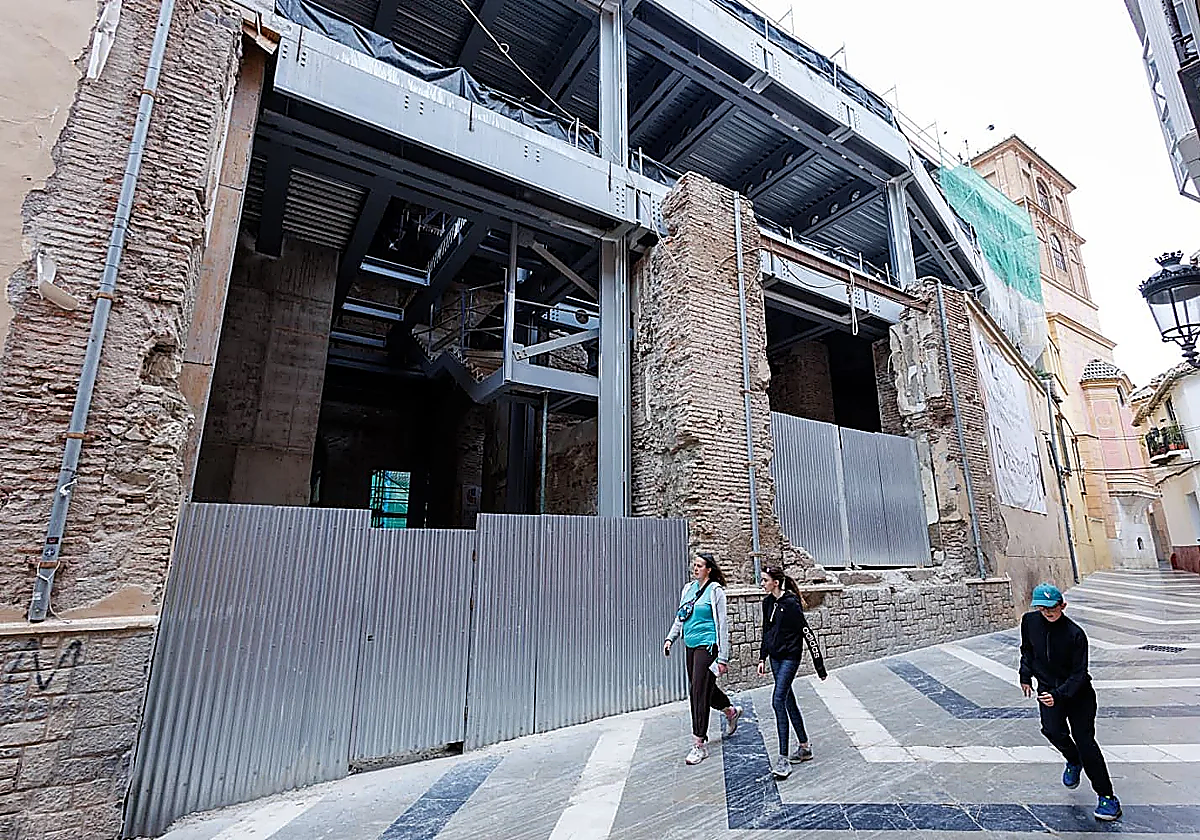
History is repeating itself at the former San Agustín school in Malaga. As happened in early 2024, the plan to convert this building into the new headquarters of the state library in the city has been put on hold, once again due to cost overruns.
In early March, Minister of Culture Ernest Urtasun said that the budget had increased by another three million euros due to adaptations to the project based on archaeological remains construction had uncovered.
During Urtasun's visit to Malaga for the film festival, the minister hesitated to confirm that the building's renovation would be completed this year, as initially planned. Several weeks after those statements, the work halt demonstrates that the project is once again facing difficulties and it remains unclear when these will be resolved.
According to sources, the work began to slow down in February and has now come to a halt, causing concern among the Augustinian friars who run the adjacent church of San Agustín. Sources have indicated that the temporary state of the former Augustinian convent and school due to the ongoing construction, is detrimental to the church, especially during periods of rain.
Urtasun announced last month that, with this second budget amendment, the cost of the project will reach 21 million euros, compared to the 18 million just a year ago. However, given the current standstill in the works, it does not appear that the construction companies and the central government have fully agreed upon this second cost increase.
Related story
Construction of the new state library in Malaga began in early 2022, with a project by architect Luis Arranz, the joint venture of Valencian construction companies Ecsa and Bañuls and Malaga-based engineering company Reca. The initial cost was 14.9 million, but it has now reached approximately 21 million after two modifications of around three million euros each.
Archaeological 'Garum' factory and Phoenician walls
-
The primary cause of the delay is the sensitivity of the site. Archaeologists led by Ana Arancibia have identified:
-
Phoenician city walls: Critical remnants of Malaga’s earliest urban history.
-
- Roman fish-curing factory: A series of basins used for the production of garum (a fermented fish sauce), linked to the nearby Roman Theatre and Calle Alcazabilla.
-
- Augustinian Crypts: Numerous burial chambers from the building’s time as a convent.
The work stoppage two years ago lasted about five months. Authorisation from the Spanish cabinet allowed increasing the budget by almost three million euros. The largest amount was allocated to stabilising the structures, floor slabs and staircases, representing 61 per cent of the increase.
Other significant items that increased the cost of the renovation included foundations and micropiling (an additional 383,244 euros, bringing this item to a total of 1.95 million euros), archaeological supervision (an increase of 169,439 euros), demolitions (an additional 155,286 euros), protection and preliminary work (an additional 110,361 euros) and the recovery and restoration of unique elements and excavations (an additional 101,136 euros).
The central government has not yet released details of this second amendment, which is currently under consideration. Based on the minister's statements last month, the need to adapt the project to the archaeological findings is the main purpose of this adaptation of the budget.
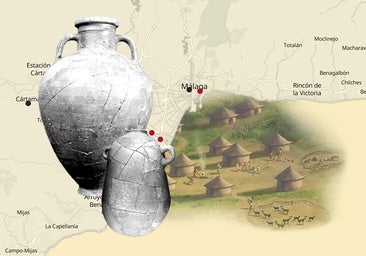
Research led by Ana Arancibia, from the archaeological research workshop, has identified the city's Phoenician walls in this area, as well as significant Roman remains, including a series of basins from a fish-curing factory. Production from the garum factory extended from the Roman Theatre, Calle Alcazabilla and the current UMA rectorate towards the neighbouring area later occupied by the former convent of San Agustín.
Roman remains
One of the changes to the renovation project approved two years ago was the integration of these Roman remains from the excavations, so that they could be displayed in the basement, where the old wine cellar was located. Alongside the Phoenician and Roman remains at San Agustín, the work also uncovered numerous crypts from the former Augustinian convent.
The 5,300 square metres of the new state library will be arranged around a central glass-roofed courtyard and the premises will house a collection of over 227,000 volumes, 12,000 of which are considered historical. The new library will bring to an end more than 30 years of temporary accommodation on Avenida de Europa.
![[]](http://static.vocstatic.com/voc26/latest/assets/images/favicon/surinenglish/apple-touch-icon-57x57.png)