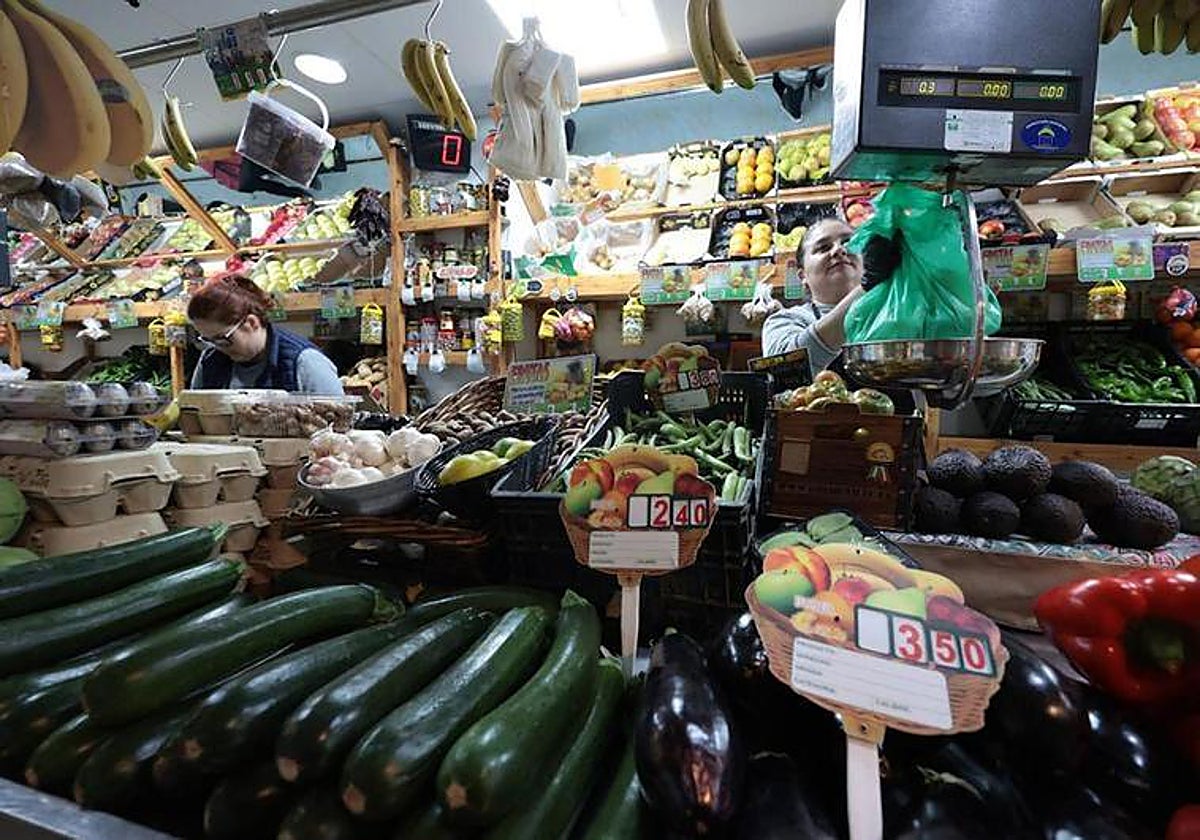
Food prices steady in Malaga but inflation remains above national average
The price of groceries rose by 12.7% in the province last month, while the increase across the rest of Spain was below 12%
Cristina Vallejo
Thursday, 15 June 2023, 20:40
Food prices in Malaga have continued to rise in May, with inflation remaining above the national average.
Groceries were 12.7% more expensive in the province last month, while prices across the rest of the country rose less than 12% on average, according to data released on Tuesday 13 June by Spain's INE national statistics institute (INE).
In the country as a whole, food inflation fell by nine tenths of a percentage point from April to May, while in Malaga the drop was only seven tenths of a percentage point.
In April it rose at a year-on-year rate of 13.4%, and in May at 12.7%, four tenths of a percentage point above the Andalusian average (12.3%). It shows a significant easing from the inflation highs reached in February, when food prices rose at a year-on-year rate of 18.8% in the province.
At national level, the increase in food prices was 0.4% in May compared with April. But in Malaga the rise was just 0.2%, five tenths of a percentage point below the rate of increase of a month earlier (0.7%).
This makes it one of the Andalusian provinces where food prices rose the least in May. Although in Huelva (0.1%) prices went up less, and Almeria recorded a 0.3% cut in these prices. The rise in Cordoba however was 1.3%, and in Seville, 0.8%.
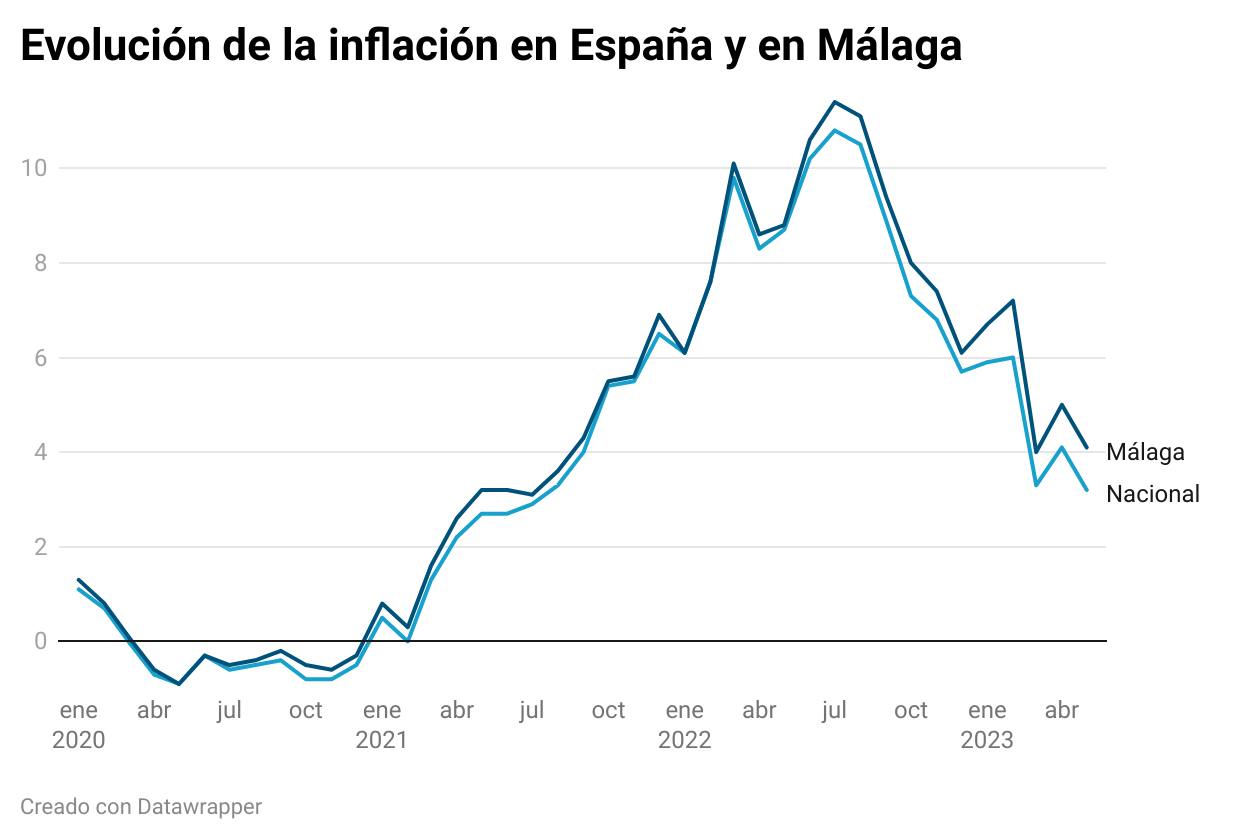
The general CPI index in Spain stands at 3.2%, a drop of nine tenths of a percentage point compared to April’s figure - its lowest level in almost two years, since the summer of 2021. In Malaga, the general inflation rate also continues to be above the Spanish average, standing at 4.1% in May, compared with 5% a month earlier.
Zoom
According to the figures, Malaga is among the half-dozen provinces where prices are rising the most. Santa Cruz de Tenerife tops the ranking, with a year-on-year increase in its consumer price index (CPI) of 5.1%, followed by Las Palmas and Melilla, with increases of 4.7%, Zamora (4.3%) and then Malaga and Cadiz (4.1%).
The general CPI figures for both Spain and Malaga are moving away from the maximum levels they reached a year ago, above 10% at national level and above 11% in the province, the figures also showed.
In addition to the rise in food prices, higher inflation in Malaga compared to Spain could also be explained due to restaurant and hotel prices rising in Malaga at a year-on-year rate of 9.9%, compared with the 7.2% in the rest of Spain. Health and education are also more expensive in Malaga than in Spain, as well as prices for furniture and household goods, alcohol and tobacco.
Costs for housing, water, electricity, gas and other fuels fell by 11.3% in Malaga, compared to an average of 10.5% in Spain.
Higher rates of inflation can be linked to greater economic activity and demand, where according to a recent report by Analistas Económicos de Andalucía and published by Unicaja Banco, Malaga will be the province with the highest growth in the region this year, with a GDP growth of 2.2%, compared to the 1.3% average for Andalucía.