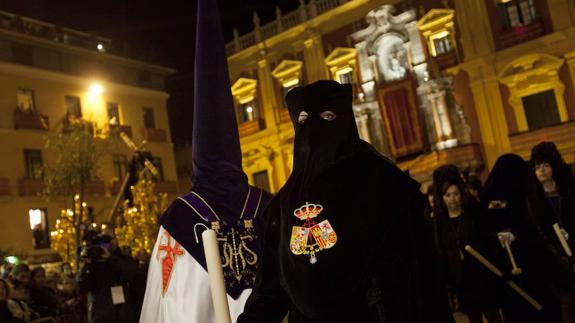
Dismay as Holy Week brotherhood is forced to break 257-year-old tradition of freeing a prisoner
The cabinet did not agree on any candidate this year in time for the historic ritual in the procession by ‘Jesús El Rico’, however a release could be planned later this spring
sur
Lunes, 17 de abril 2017, 13:12
Malagas Holy Week is famous for the rituals and ceremonies of its more than forty brotherhoods. There is perhaps no better-known tradition than the freeing of a prisoner on the steps of Malaga cathedral every Wednesday of Holy Week as part of the procession of the Jesús El Rico brotherhood.
A plague in 1759 and a miraculous prison-break are behind the customary release
-
The tradition of freeing a prisoner during the Jesús El Rico procession in Malaga, which was broken for the first time in peacetime this week, dates back to a plague epidemic in the city in 1759. During the outbreak, normal Holy Week ceremonies were suspended but the convicts in the city jail asked permission to be allowed to parade the Jesús El Rico image instead. When this was denied, they broke out of prison, took the image of Christ through the streets on their shoulders, visiting parts most hit by the disease. They then broke back into the jail and the plague miraculously disappeared. On hearing of the prisoners act of faith, Spanish king at the time, Charles III, gave permission for the Jesús El Rico brotherhood to release a prisoner each year.
This year, for the first time in 257 years outside periods of war, the tradition was abandoned to the embarrassment of authorities and anger of Semana Santa devotees in Malaga.
The approval for the liberation of a prisoner, normally a nonviolent offender who has been sentenced on a grade two offence, is a drawn-out process where a shortlist of names is suggested weeks before by the local Alhaurín de la Torre prison which has then to pass through the courts that carried out the sentencing, the Ministry of Justice and finally the Spanish cabinet to decide.
However this year, none of the three nominated candidates was approved in time and it was too late to find better-suited alternatives, despite a frantic last-minute search and negotiation among authorities.
A proposal to hold a smaller, second procession after Easter to release a prisoner, once a new candidate has been approved, appeared to gain acceptance, as the Bishop of Malaga has expressed reservations about a separate full-scale event, suggesting instead that the brotherhood should carry out a simpler ceremony.
The annual release of a prisoner in Malaga is especially well known, although other brotherhoods in Spain can request the same. This year the government has agreed to just seven people being set free across the country from several hundred requests.