
Gardening in southern Spain
Recommended for your garden in the south of Spain: Cotoneaster coriaceus
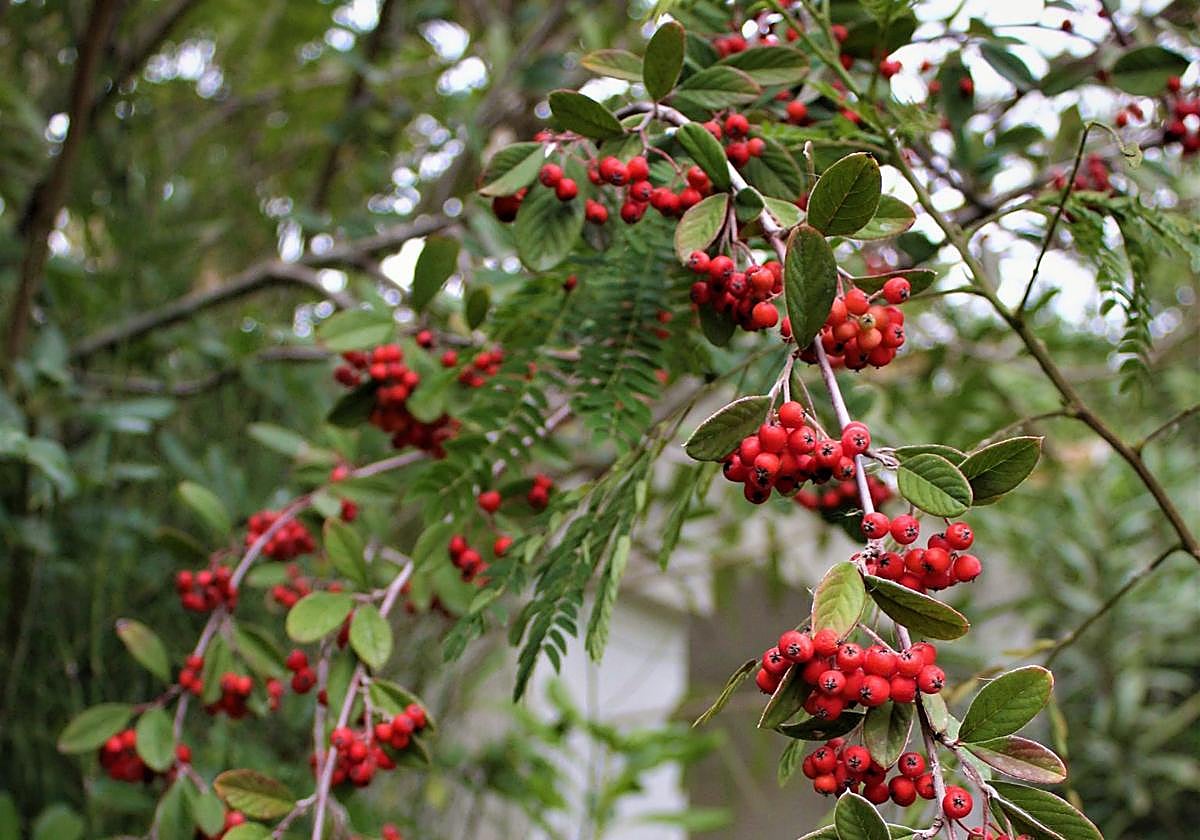
An attractive addition to the garden, with dark-green, deeply veined leaves, clusters of small white flowers in summer followed by stunning bunches of hanging red berries in autumn
Denise Bush
Native to China, Cotoneaster coriaceus is an evergreen shrub with loose, arching branches up to four metres tall when fully mature (10 to 20 years).
A member of the Rosaceae (rose) family, it is a very attractive addition to the garden, with dark-green, deeply veined leaves which are paler underneath and clusters of small white flowers in summer. The blooms are followed by stunning bunches of hanging red berries in autumn. The flowers attract bees and other pollinating insects while the berries provide an important food source for birds in the winter. The berries are toxic to humans and animals.
Commonly called milk flower cotoneaster, this plant will grow in sun or partial shade and in poor soils. It is also moderately tolerant of maritime locations and extremely cold resistant. It will tolerate up to 30º in the summer. Above that there may be some yellowing of the leaves.
Although drought resistant, it will need regular watering during dry months until fully established.
Cotoneaster coriaceus can be propagated by semi-ripe stem cuttings in summer or by seed, however this plant hybridises easily and seed sown may not produce plants the same as the parent.
Light pruning when dormant (winter) will encourage healthier growth and plenty of flowers the following season.
The berries were once used to extract a pinkish-tan-coloured dye.
![[]](http://static.vocstatic.com/voc26/latest/assets/images/favicon/surinenglish/apple-touch-icon-57x57.png)